Why a suitcase turns into a jumble
A suitcase is a flexible container, not a set of fixed shelves. As it is carried, tilted, and squeezed into overhead bins, soft clothes shift into empty spaces. Smaller items can slip between larger ones, while opening the case to retrieve one thing disturbs whatever was stacked above it. The result is familiar: the item you need is often buried beneath everything you packed.
Cubes make the contents move together
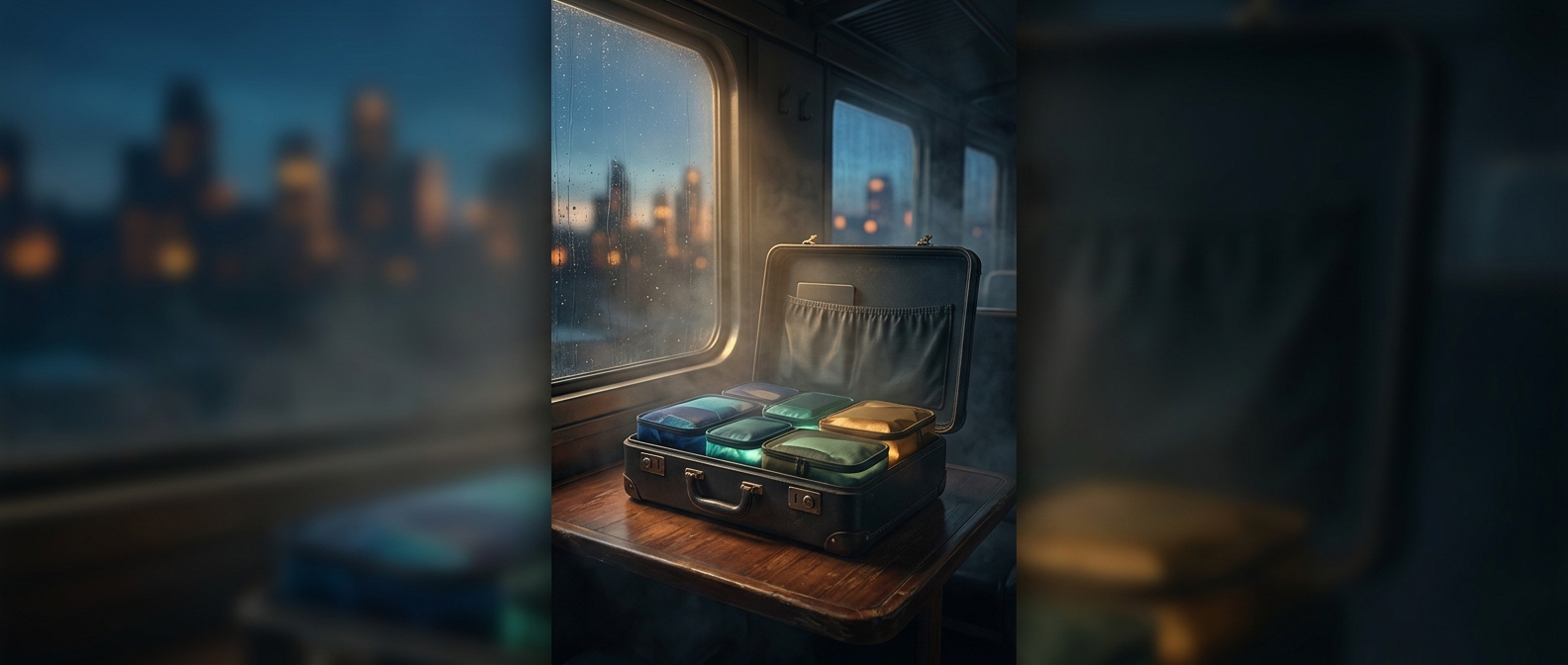
A packing cube gives a group of belongings a soft, zipped boundary. Instead of each shirt or pair of socks sliding separately, the cube holds them as one bundle. Several cubes can be arranged side by side or stacked, making it easier to assign areas for clothing, toiletries, or electronics and to lift out one category without scattering the rest.
That boundary is the key improvement. It does not lock items in place or add capacity; it reduces how much the contents shift as a group. Cubes also make the suitcase easier to repack because the traveler can return each bundle to its own section rather than rebuild a loose stack.
Organization, not extra room
A cube can even make a suitcase feel fuller: its fabric and seams take up some space, and tidy bundles may leave gaps that loose clothing could otherwise fill. Its advantage is access and order, not compression by default. The practical payoff comes at the hotel or airport: open the case, remove the cube with what you need, and leave the other bundles largely undisturbed.