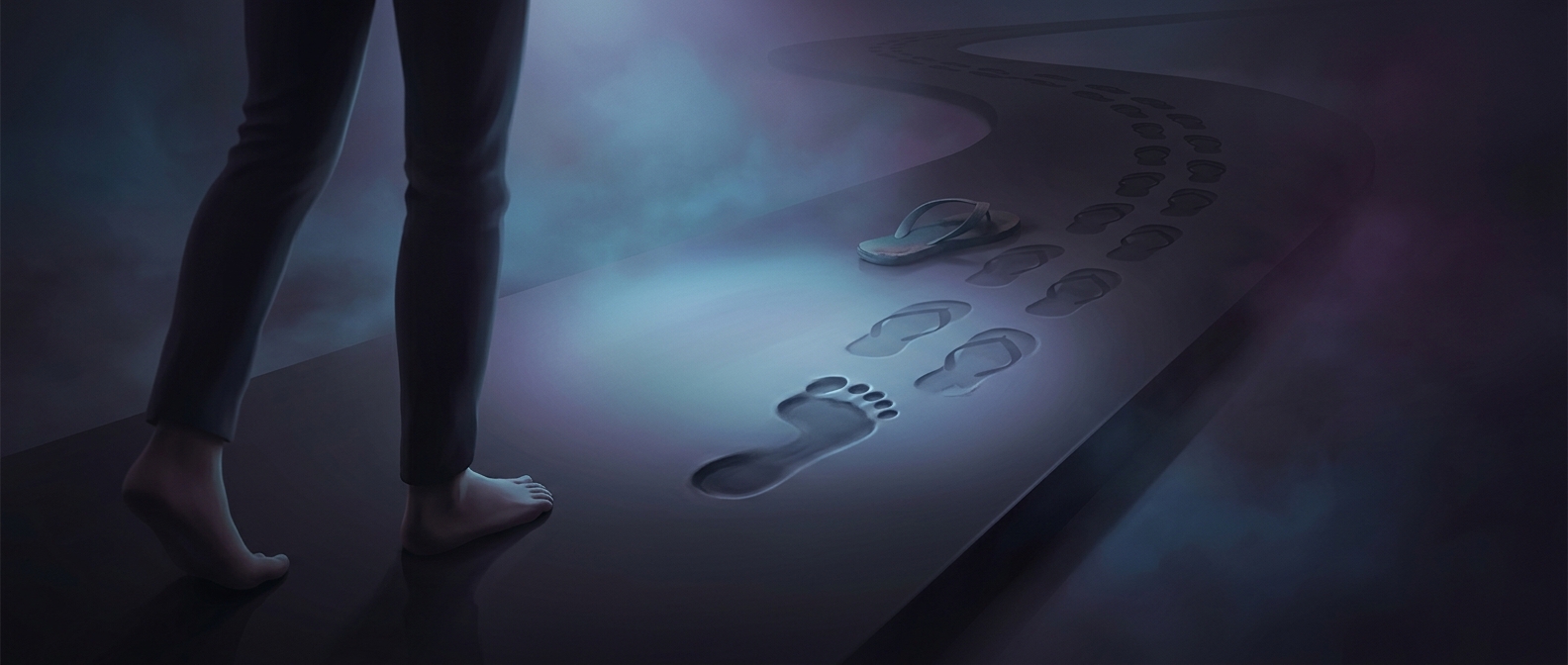
The small motion that keeps a flip-flop on
A flip-flop has no heel strap to hold it against the foot. As the foot swings forward, the loose sole can lag behind or drop away, so the toes flex around the thin strap to keep the sandal in place. That grip is especially noticeable during the moment the heel lifts and the sandal would otherwise start to slide off.
Why the gait changes
Walking in a flip-flop asks the foot to do more than propel the body: it must also manage a piece of footwear that is only loosely attached. Toe flexion helps control the sole, while the muscles in the foot and lower leg adjust to keep each step steady. The result is a subtle change from walking in a shoe that stays secured by its upper or heel counter.
The tradeoff is practical. A flip-flop is light, open, and easy to slip on, but its minimal attachment gives the foot less control over the sole. The toes’ repeated grip is the mechanism that makes this simple design wearable—and the reason a long walk can feel different from a short trip across the sand.