The edge of sight is an alarm, not a second screen
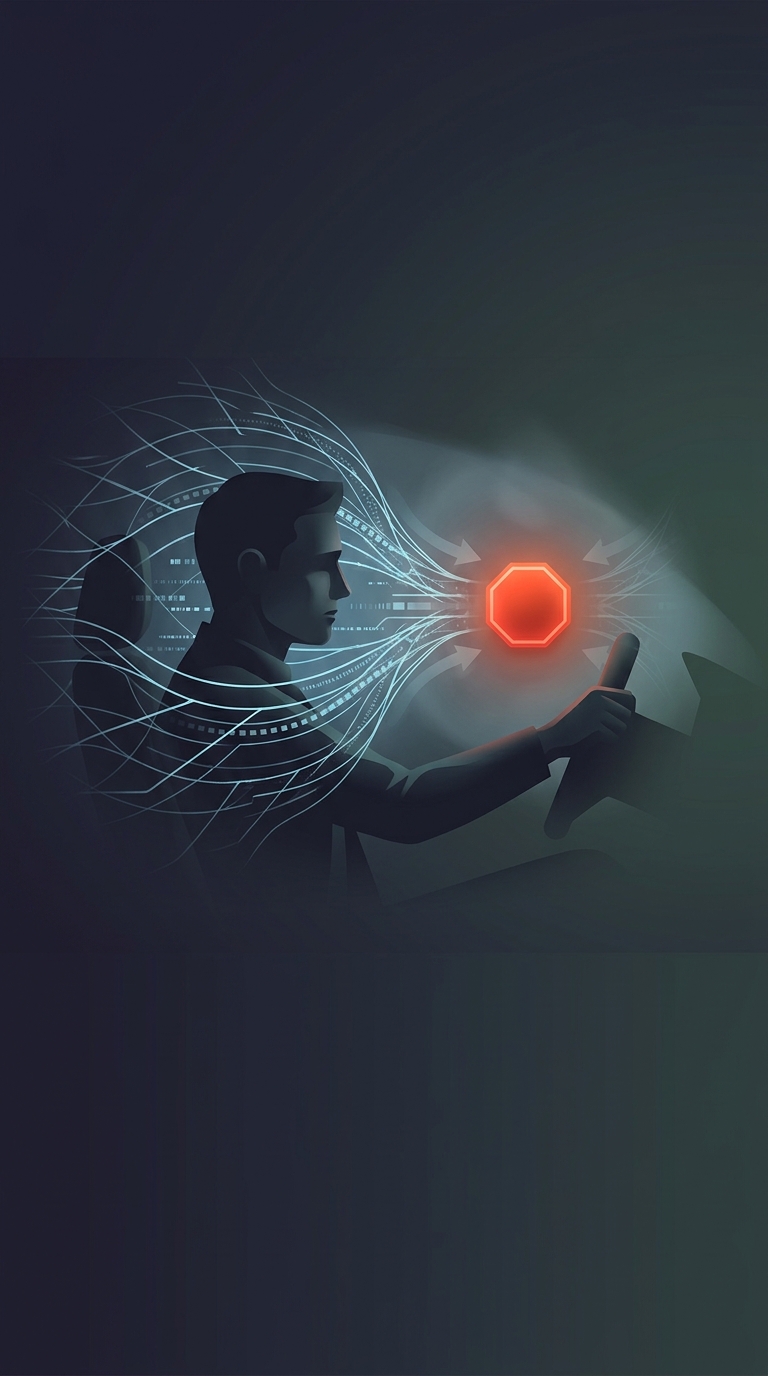
The center of your vision is built for detail: it lets you read small text and recognize faces. Farther from that center, vision is blurrier, but changes across the scene can still stand out. That makes peripheral vision useful for flagging that something has entered your path before you have clearly identified what it is.
A texter may therefore react to a person’s approach without looking up. But noticing movement is not the same as knowing who is moving, how fast, or exactly where they will be. For those details, the eyes usually need to turn and bring the scene into sharper focus.
Why a sidestep can be a rough guess
When someone walks while reading, attention is divided: the phone demands close, precise focus, while the surroundings are monitored less deliberately. A movement at the edge of sight can prompt a quick course correction, but the person may have little time to check whether the other pedestrian is also changing direction. Both can dodge the same way, or one can miss a stationary obstacle that never triggered the same motion alert.
That is why peripheral vision helps with a narrow task—catching change—without replacing a glance up. It can buy a texter a moment to move; it cannot provide the full, detailed picture needed to navigate a crowded sidewalk reliably.