The scooter makes the effort visible
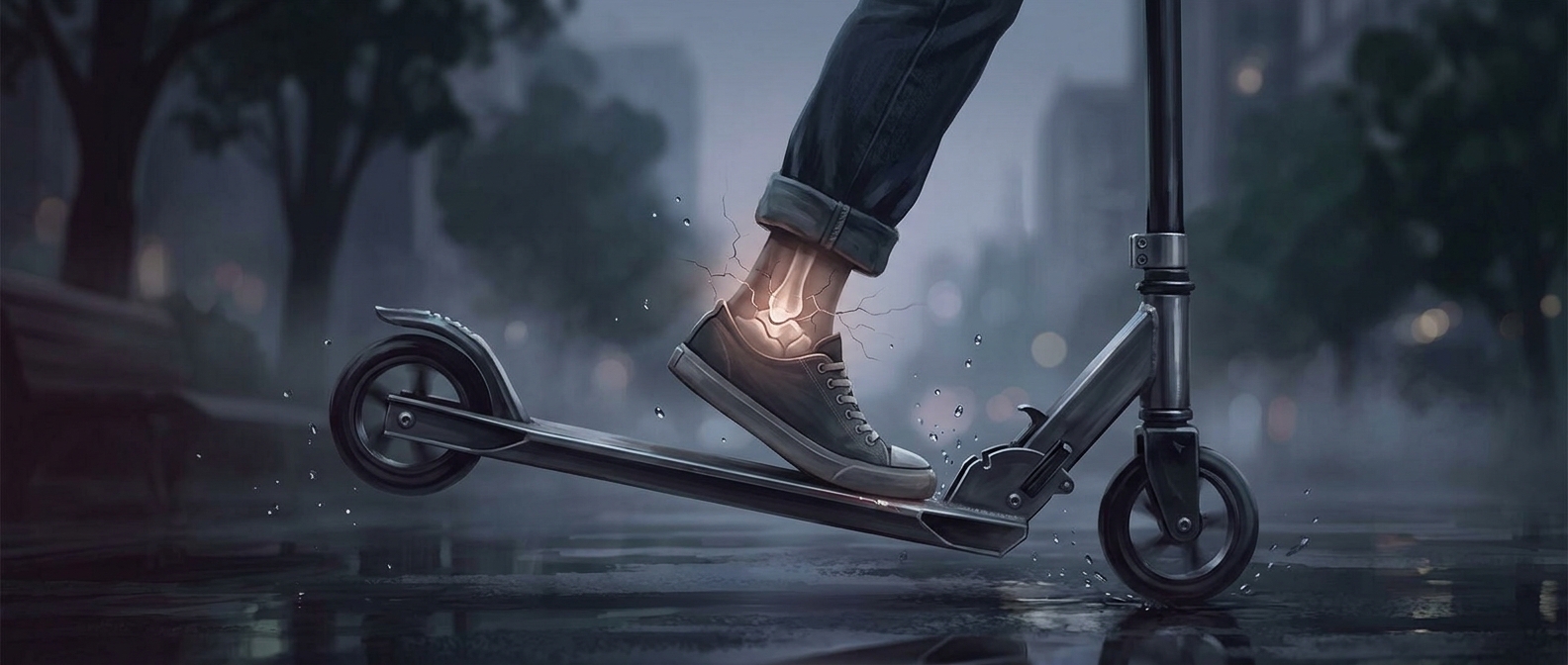
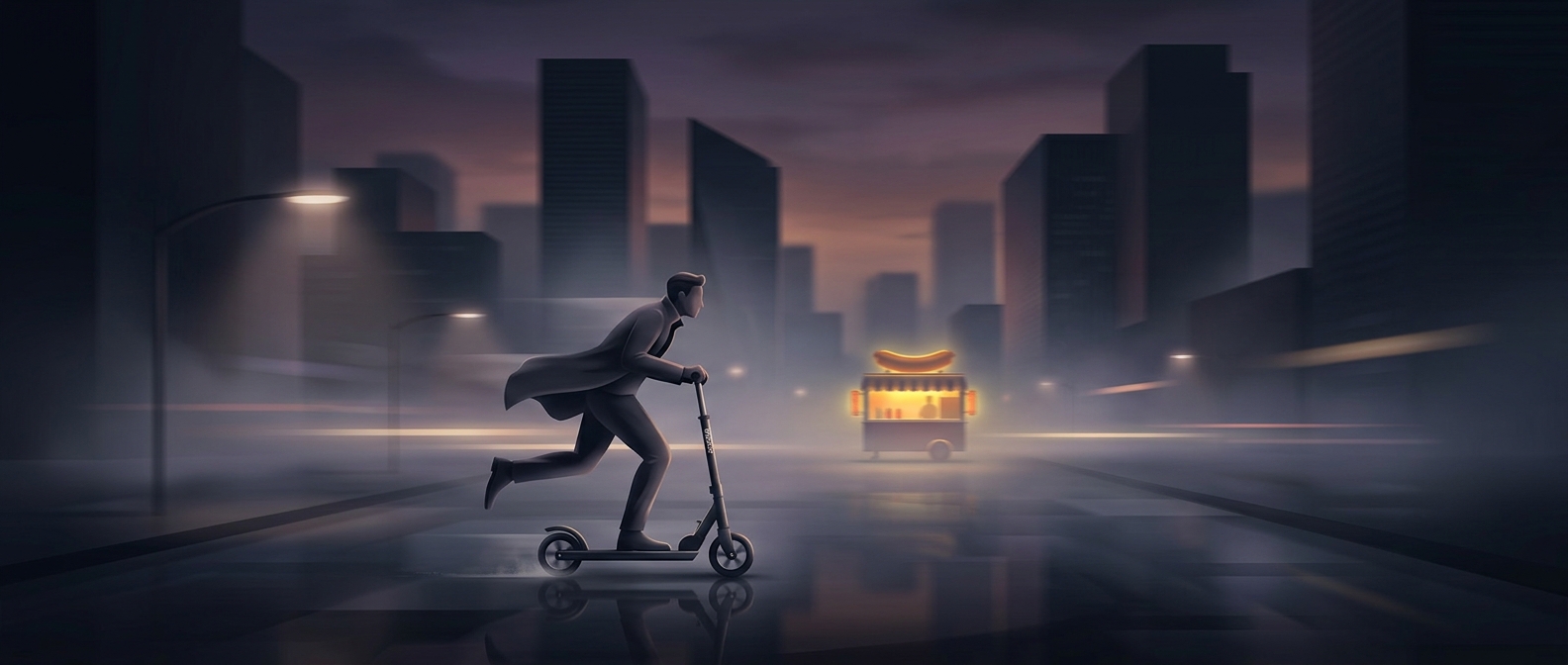
A kick scooter is built around a simple bargain: it is light and easy to step onto, but it has no pedals or motor to keep it moving. The rider supplies each burst of power with a foot, then coasts until the next push. That stop-and-start rhythm is hard to disguise. The body keeps announcing the practical task—push, balance, steer—rather than settling into a fast, continuous glide.
Its compact geometry reinforces the impression. With both hands on a narrow handlebar and the rider standing upright, there is little room to crouch into a dramatic pose. Small wheels also transmit more of the pavement’s bumps than larger wheels do, so the rider has reason to stay alert and keep control rather than look relaxed at speed.
Practical design, not action-movie posture
Those features make sense for short trips: a scooter can be light, maneuverable, and easy to carry when the ride ends. But they also make its purpose legible. A bicycle’s pedals turn effort into continuous motion; a skateboard lets the rider carve and shift weight. On a kick scooter, the repeated kick is the central event.
That is the awkward mismatch behind the joke: the scooter is useful precisely because it is straightforward, while looking tough usually depends on making movement seem effortless. On a scooter, the commute keeps showing its work.