Why Dockless Scooters Cluster in the Same Places
A rental scooter is useful precisely because it can be left near a rider’s destination rather than returned to a fixed rack. That convenience shifts part of the parking problem from the operator to the street: every trip ends somewhere, but the rider’s most convenient spot may not be the best place for everyone else.
Trips also tend to pull scooters toward busy destinations—transit stops, shopping areas, offices, and popular streets. A scooter left there is more likely to be found by the next customer, so it can be used again without being moved. Meanwhile, neighborhoods with fewer riders may gradually lose scooters. The result is not an even layer of vehicles across a city, but clusters where demand and trip endings concentrate.
The Difference Between Finding a Scooter and Parking It Well
GPS helps an operator estimate a scooter’s location, and the app can record where a ride ends. But knowing that a scooter is on a particular block does not guarantee that it is upright, neatly placed, or out of the way. Location tracking manages the fleet; it does not make the scooter physically return to a designated space.
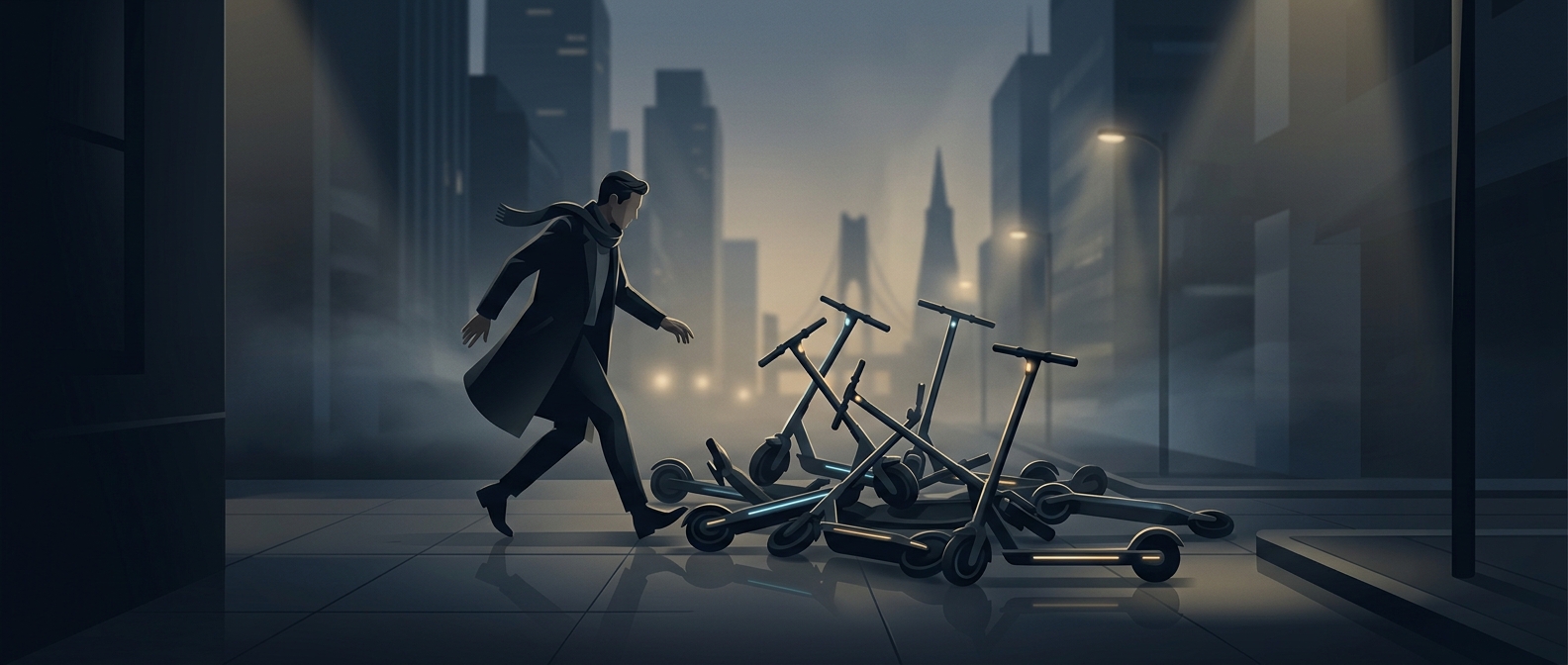
That leaves the final decision to the rider, within whatever parking rules the service and city set. A scooter beside a curb may be easy for the next rider to find but may obstruct someone using a wheelchair or pushing a stroller. A spot that seems open to one person can be part of another person’s route through the sidewalk.
Who Pays for the Convenience?
Operators have reason to keep scooters near likely riders, while cities and pedestrians need sidewalks to remain passable. Moving scooters back into useful positions can require staff or service vehicles, turning a seemingly simple app-based trip into a continuing task of fleet balancing and street management.
That is why the last few feet of a scooter ride matter. The parking spot determines whether the vehicle becomes a convenient next ride—or an obstacle that someone else has to navigate around.