How a Scooter’s Rear Guard Limits a Backward Pitch
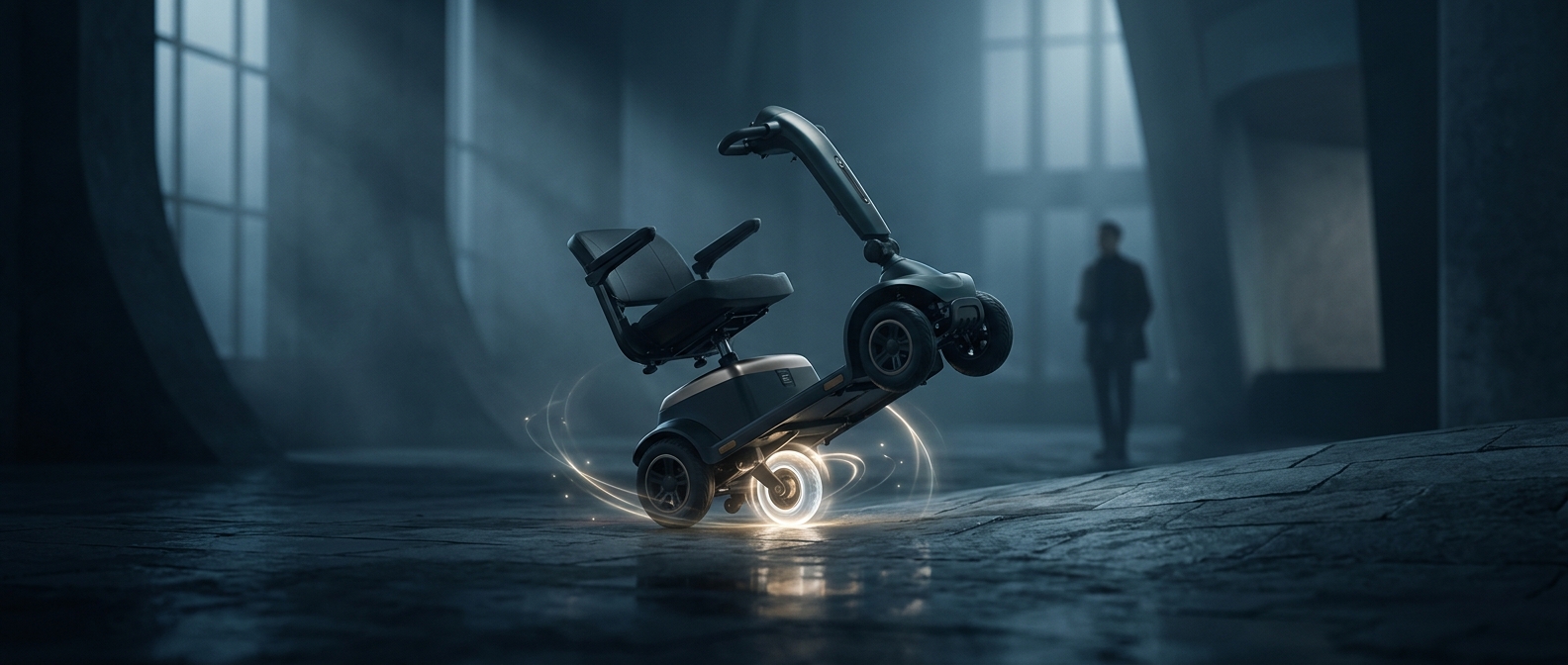
A mobility scooter can rotate backward when its drive wheels push against a steep incline, a curb, or another obstacle. The risk depends partly on the scooter’s geometry: if the combined weight of the rider and scooter shifts behind the rear axle, gravity and the push from the wheels can make the front end rise.
Anti-tip wheels provide a secondary point of contact behind the main wheels. As the scooter’s frame pitches upward, the small wheels meet the ground. That contact creates a force opposing further rotation, much like a short mechanical stop. The guard does not need to carry the scooter during ordinary travel; it is positioned to matter when the frame reaches an unusually steep angle.
A Backup, Not a License to Climb
The wheels work only if they can reach a surface in time and the scooter’s structure can handle the resulting load. Their placement and clearance therefore involve a tradeoff: they must stay out of the way over normal bumps and thresholds, yet sit close enough to the ground to limit a dangerous pitch. Designs differ, so a scooter’s manual and specified slope limits still matter. Anti-tip hardware cannot guarantee stability on every surface or prevent a tip in every direction.
The useful distinction is between preventing the scooter from reaching a full backward rollover and making a risky maneuver safe. The small wheels are a last-resort restraint; avoiding steep slopes and obstacles remains the first line of defense.