Why a Spinning Scooter Deck Can Catch Your Shin
In a freestyle scooter trick called a tailwhip, the rider keeps hold of the handlebars while kicking the deck around the steering column. The deck is attached to the front assembly at a pivot, so it can sweep around the rider rather than simply turning with the handlebars.
That makes the deck’s path hard to judge when the trick goes off course. If the rider’s kick sends it through an uneven or poorly timed rotation, the deck may return toward the legs before the rider is ready to catch it.
Mass Makes a Miss Hurt
The deck is a broad, rigid platform, often made of aluminum. Its weight is spread away from the pivot, giving it rotational inertia: resistance to changes in how fast it spins. A weak or mistimed kick may start the rotation, but the deck does not instantly stop when the rider realizes the path is wrong.
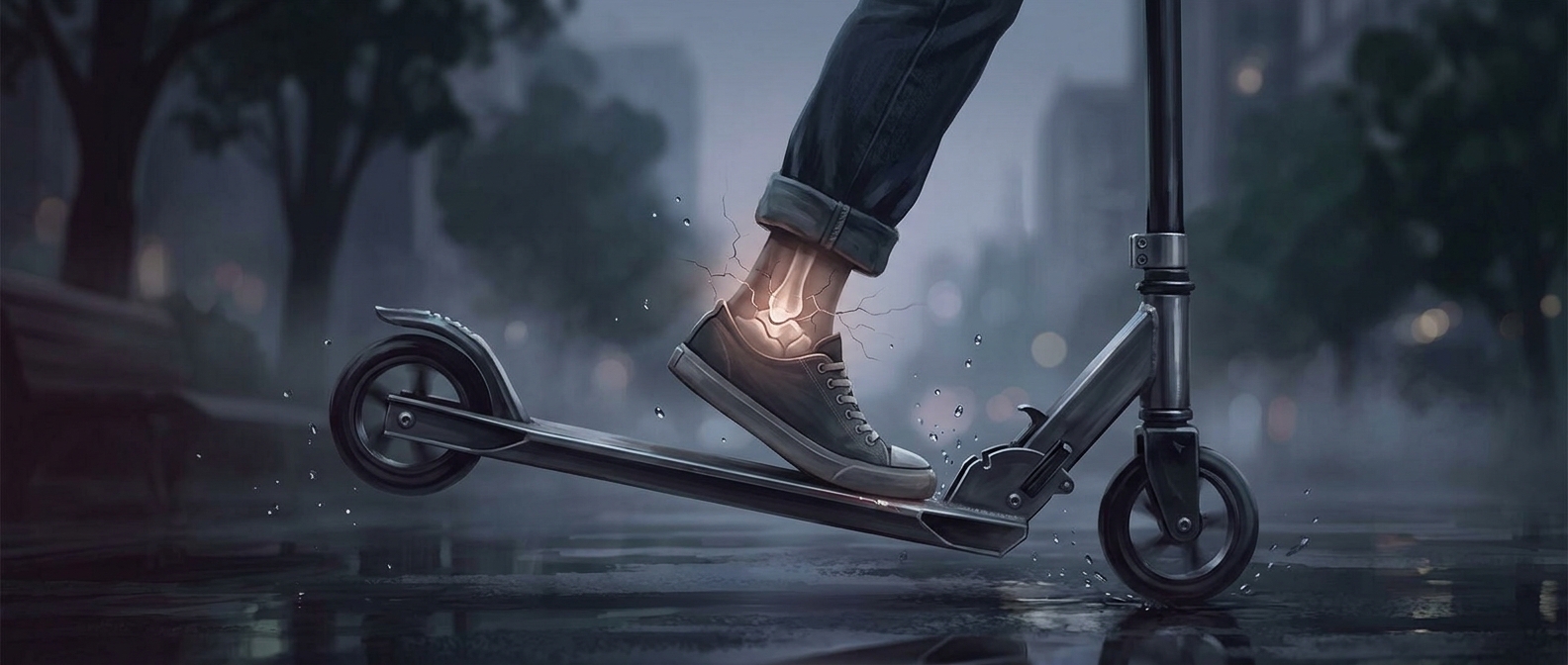
The same design that helps a deck withstand riding and landings also makes a moving edge unforgiving. A slim metal platform crossing the shin concentrates the impact into a small area, so even a glancing collision can sting.
The Catch Is Part of the Trick
A tailwhip is not complete when the deck has spun around; the rider must bring both feet back onto it. Skilled riders coordinate the kick, body position, and landing so the deck reaches their feet at the right moment. When that timing slips, the deck can pass beneath or beside the feet—and its next sweep may meet a shin instead.
That is why control matters as much as spin: the deck’s momentum keeps it moving while the rider is still trying to get back in its path.