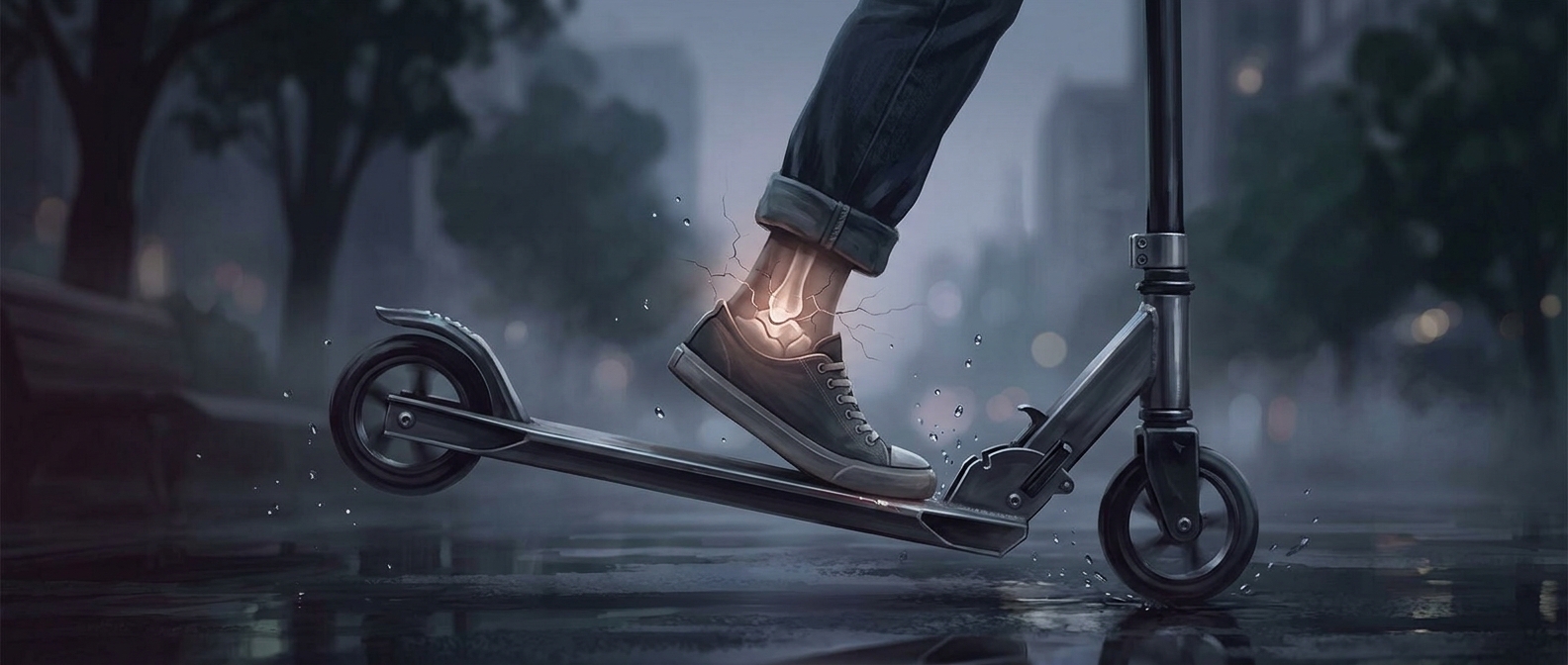
A new vehicle in an old rulebook
Street rules often sort vehicles by visible features. A bicycle has pedals; a scooter typically has handlebars; many legal definitions also assume two or more wheels. A Onewheel—a motorized board with one large wheel beneath its center—doesn’t match those familiar templates. That mismatch leaves officials with a practical question: which rules should govern it?
Balance is part of the engineering
The rider stands sideways on footpads at either end of the wheel. Sensors detect the board’s tilt and movement, and an electric motor turns the wheel to help keep the platform level. To move forward, the rider leans toward the nose; to slow or reverse, the rider shifts back. Unlike a bicycle or scooter, it has no handlebar for steering or braking. The rider controls direction by shifting weight and angling the board.
Those design choices shape how it behaves in traffic. Its compact footprint can make it easier to carry and store than larger vehicles, but balance and control depend on the rider’s stance, speed, surface, and attention. A pothole or abrupt change in pavement can matter differently on a single-wheel platform than on a bicycle with separate front and rear wheels.
Classification decides where it can go
When a city classifies a vehicle, it can affect whether it may use a street, bike lane, sidewalk, or shared path—and which safety requirements apply. Calling a Onewheel a bicycle may not fit its lack of pedals; treating it as a scooter may overlook its different steering and braking system. Creating a separate category can address those differences, but it also means officials must decide what limits make sense.
The result is not just a naming dispute. The category determines the rider’s place in the street network, while the vehicle’s unusual controls make that choice consequential for everyone sharing the curb and path.