The weight is concentrated at the rear—and to one side
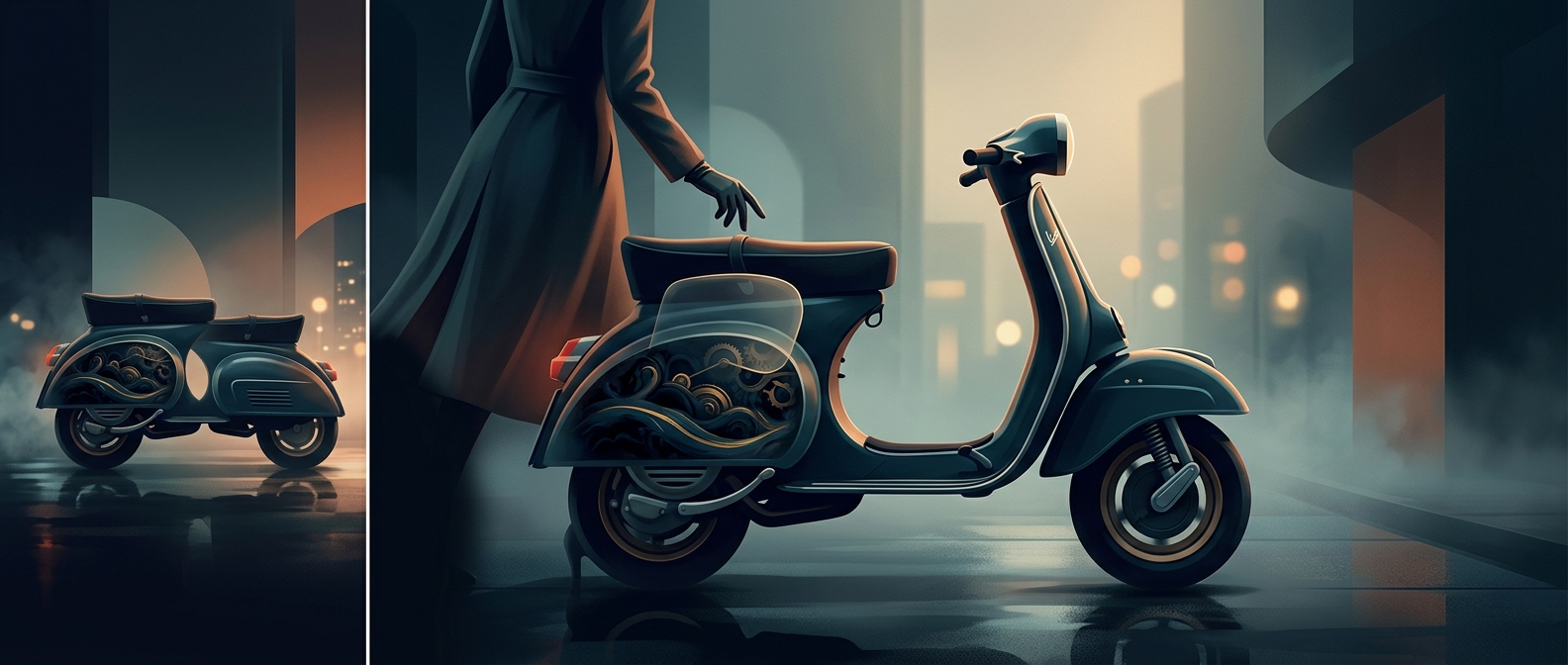
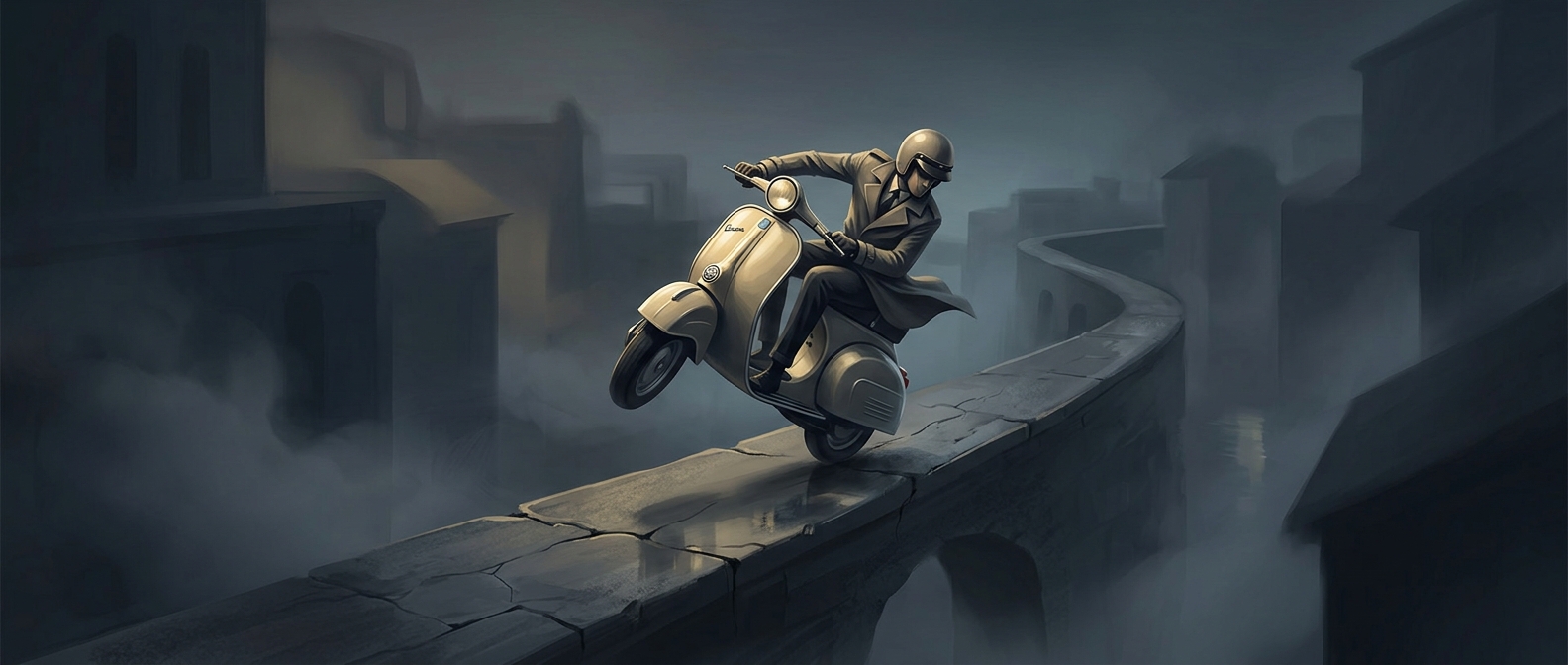
On a classic Vespa, the engine and transmission sit beside the rear wheel rather than along the scooter’s centerline. The engine and gearbox form a compact unit that drives the wheel directly, avoiding a separate chain running to it. That tidy layout saves space, but it leaves more mass on one side of the back of the scooter.
A scooter’s center of gravity is the point where its weight effectively balances. Put heavy components off to one side, and that point shifts in the same direction. The machine can still be designed to ride normally, but the uneven packaging is a real constraint for its designers—not just an oddity in its silhouette.
The spare wheel does double duty
Vespa places its spare on the opposite side. Its mass helps offset the engine’s side-to-side imbalance, bringing the overall weight distribution closer to the center. It is not a guarantee that every load is perfectly balanced: the rider, fuel, and any luggage also affect where the weight sits. But the spare is useful cargo as well as insurance against a flat.
That arrangement shows how a practical design can solve two problems at once. The engine stays packaged beside the rear wheel, and the opposite side carries a spare that can help counter its mass. Even a small scooter’s handling begins with a simple question: where, exactly, is all the weight?