Why a Bulldozer’s Ripper Can Break Ground a Blade Cannot
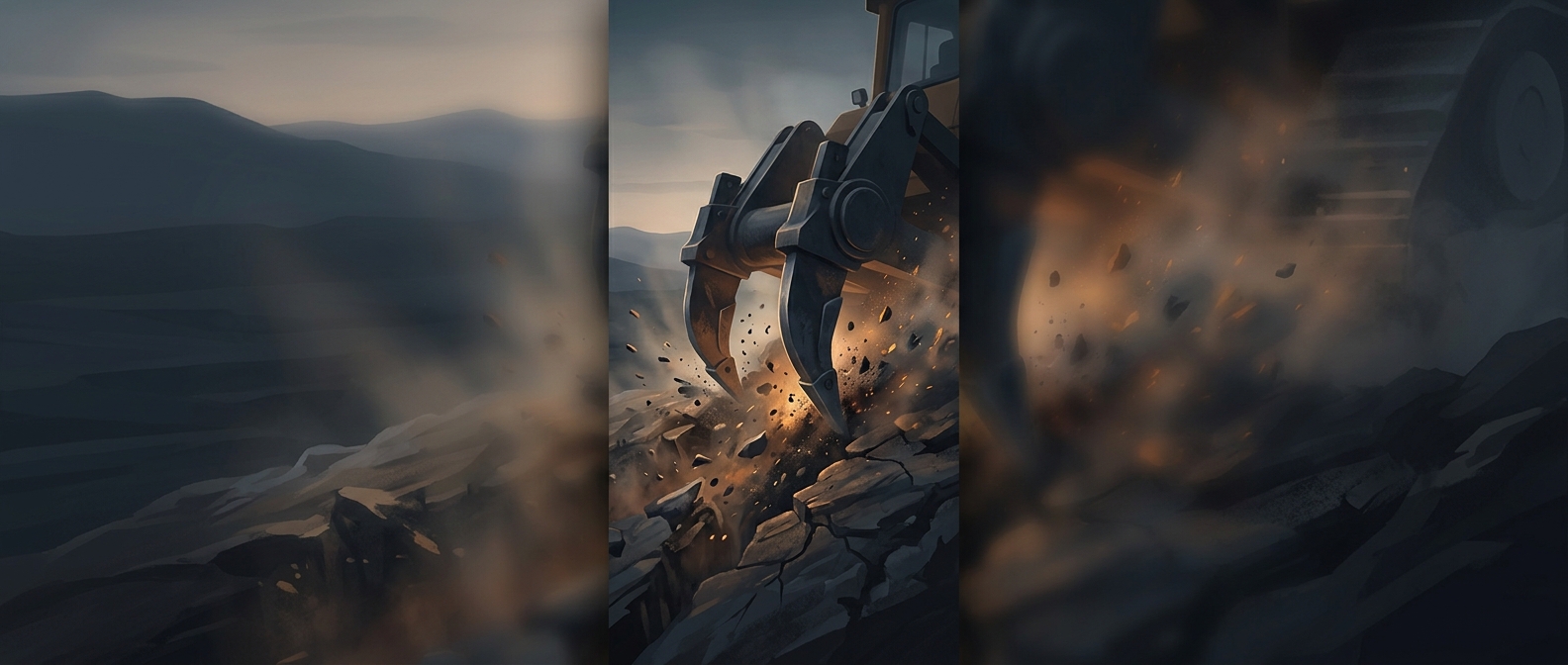
A bulldozer blade pushes against a broad patch of earth. That spreads the force across a relatively large area, making the blade effective at moving loose soil but less able to penetrate a hard, unbroken surface. A ripper works differently: its pointed steel shank presses into the ground at a narrow contact point. The machine’s weight and traction drive that point downward, creating intense local stress.
The Crack Does the Work
Once the tooth enters rock or compacted ground, it forces material apart. Tiny flaws already present in stone can extend under the concentrated load, and the surrounding material fractures as the tooth moves. The ripper does not need to pulverize an entire slab; it creates cracks and loosened sections that can then be lifted, dragged, or broken apart more easily.
That distinction matters because hard ground resists being pushed as a single mass. A blade may ride over it or make little progress, while a ripper attacks the material from within, opening a path through it. The loosened ground can then be cleared with the blade or handled by other equipment.
One Tooth, Many Tradeoffs
Rippers are built for tough material, but they are not automatically the fastest choice. The machine must have enough weight and traction to force the shank into the ground, and the operator has to match the tooth and working depth to the conditions. Too much resistance can slow the machine and strain its components; in softer soil, a broad blade may move more material with less effort.
The useful trick is the change in scale: a blade moves ground by pushing across it; a ripper breaks ground by concentrating force until cracks spread. That is why a narrow steel claw can make rock manageable before the bulldozer ever tries to push it away.