Why a silk canopy could catch a fall
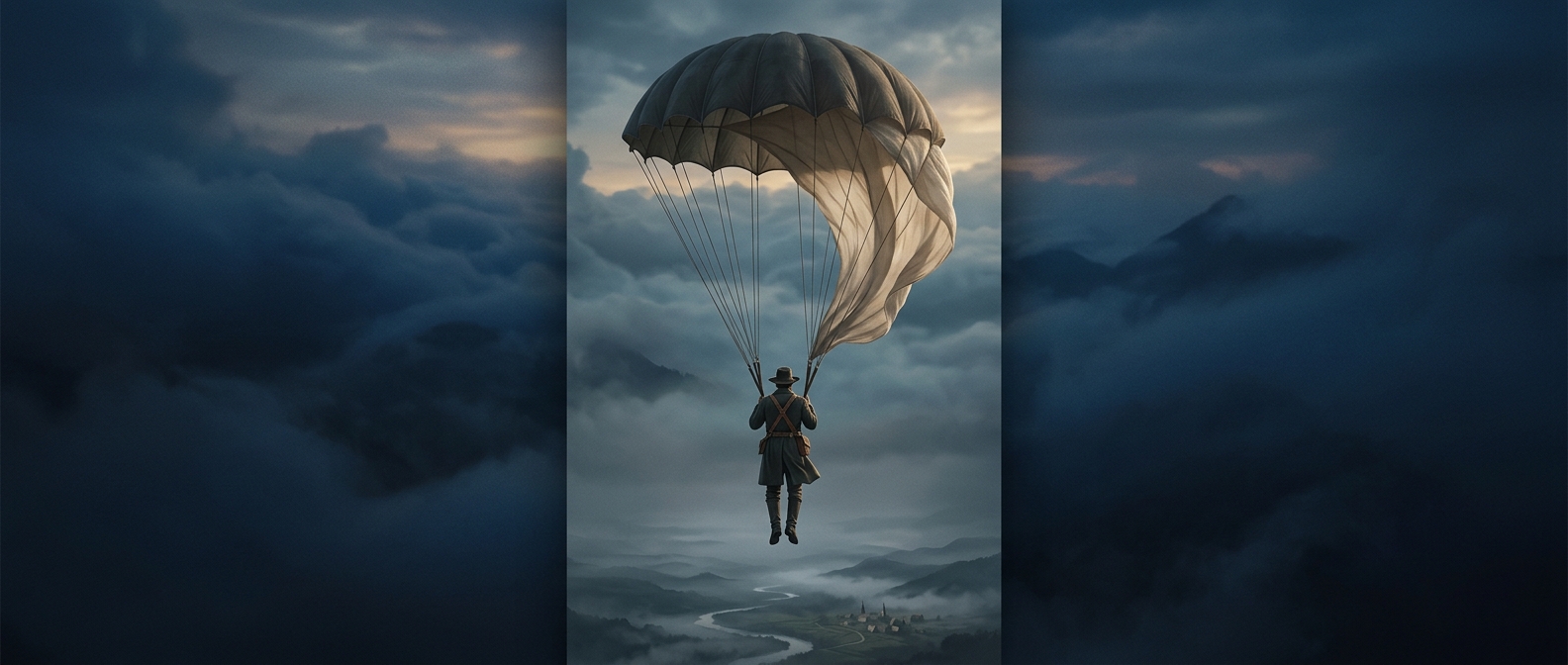
A parachute has to do two opposite things well: fit into a compact bundle, then spread into a broad surface that pushes against the air. Silk offered a useful balance. It was light enough to pack and carry, yet strong enough, when woven and sewn into a canopy, to withstand the forces of opening and descent.
Once the canopy fills, it meets far more air than a falling person alone. Air resistance—called drag—acts against the downward motion. The faster the parachute moves through the air, the harder the air pushes back, until the opposing force slows the descent to a survivable rate.
The opening is the hard part
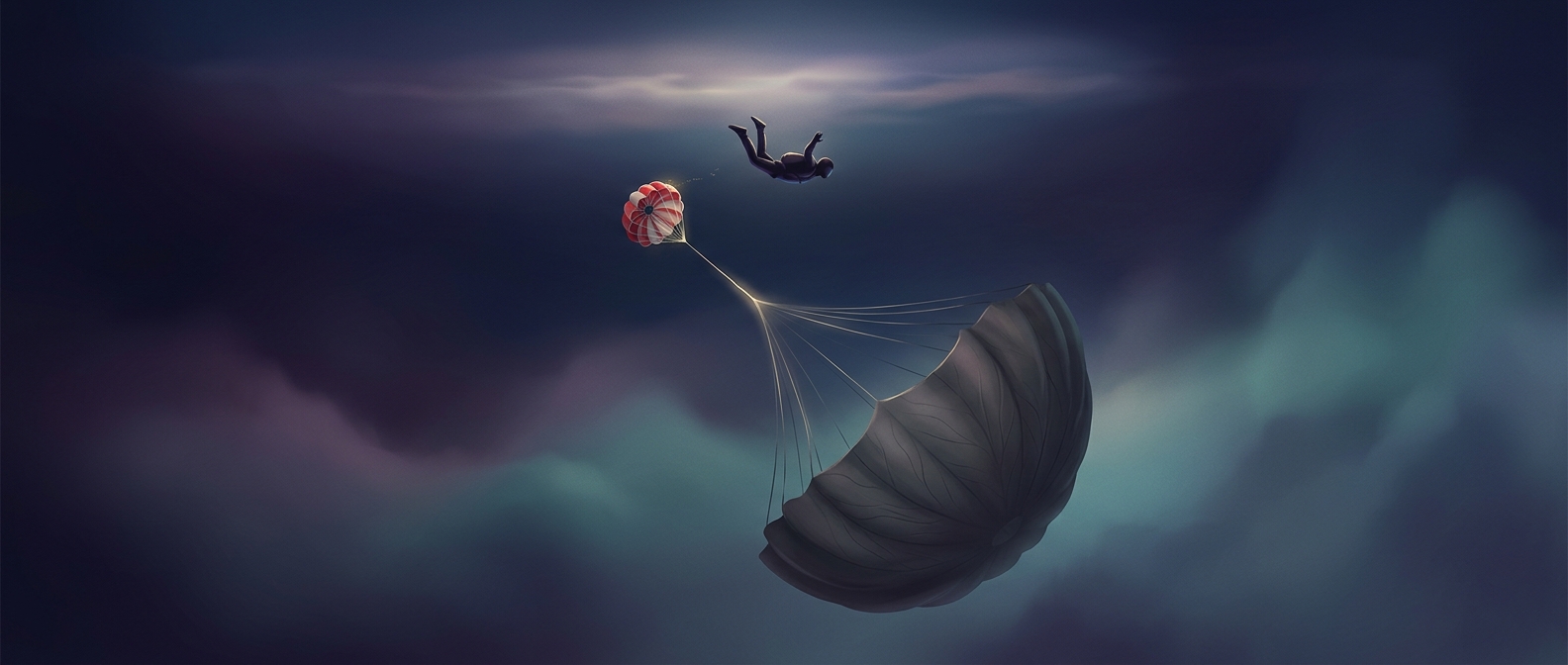
A parachute does not simply become a gentle umbrella the instant it leaves a pack. As the canopy unfolds and fills, it must take on the load of slowing the person beneath it. That force travels through the fabric and its seams into the suspension lines, which connect the canopy to the harness. A tear or weak connection could interrupt that chain, so the whole assembly—not just the silk—has to bear the strain.
Folding matters because the canopy must emerge in a controlled way rather than remain tangled or fail to spread. The packed fabric is only the beginning of the system: its shape, stitching, lines, and deployment all help turn moving air into a braking force. The remarkable transformation is that a thin bundle, once opened, can make enough air resistance to change a fall into a descent.