A landing is managed, not stopped
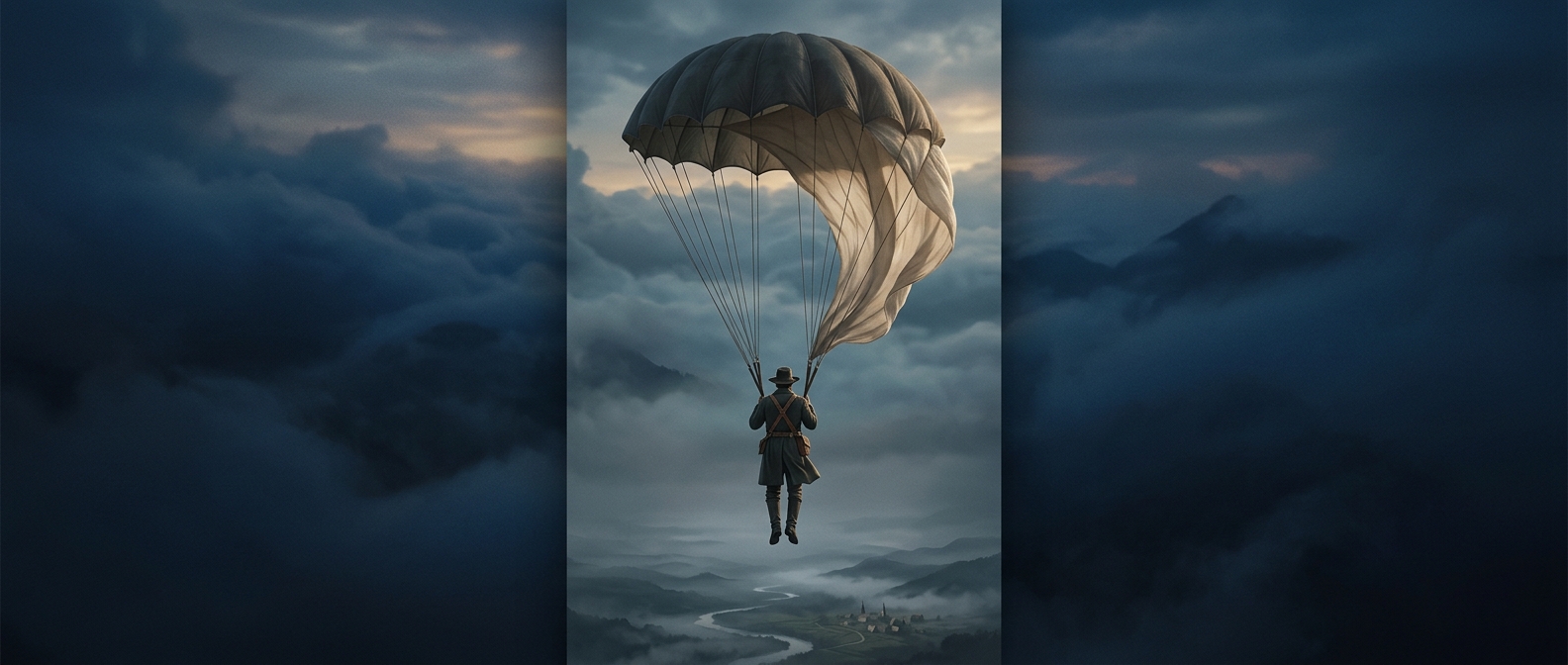
A parachute slows a jumper’s descent, but it does not bring the body to a halt before touchdown. The jumper may still be moving forward or sideways, and the ground can arrive unevenly. If a stiff leg catches that motion, the ankle, knee, or hip has to absorb much of the change in speed in a very short time.
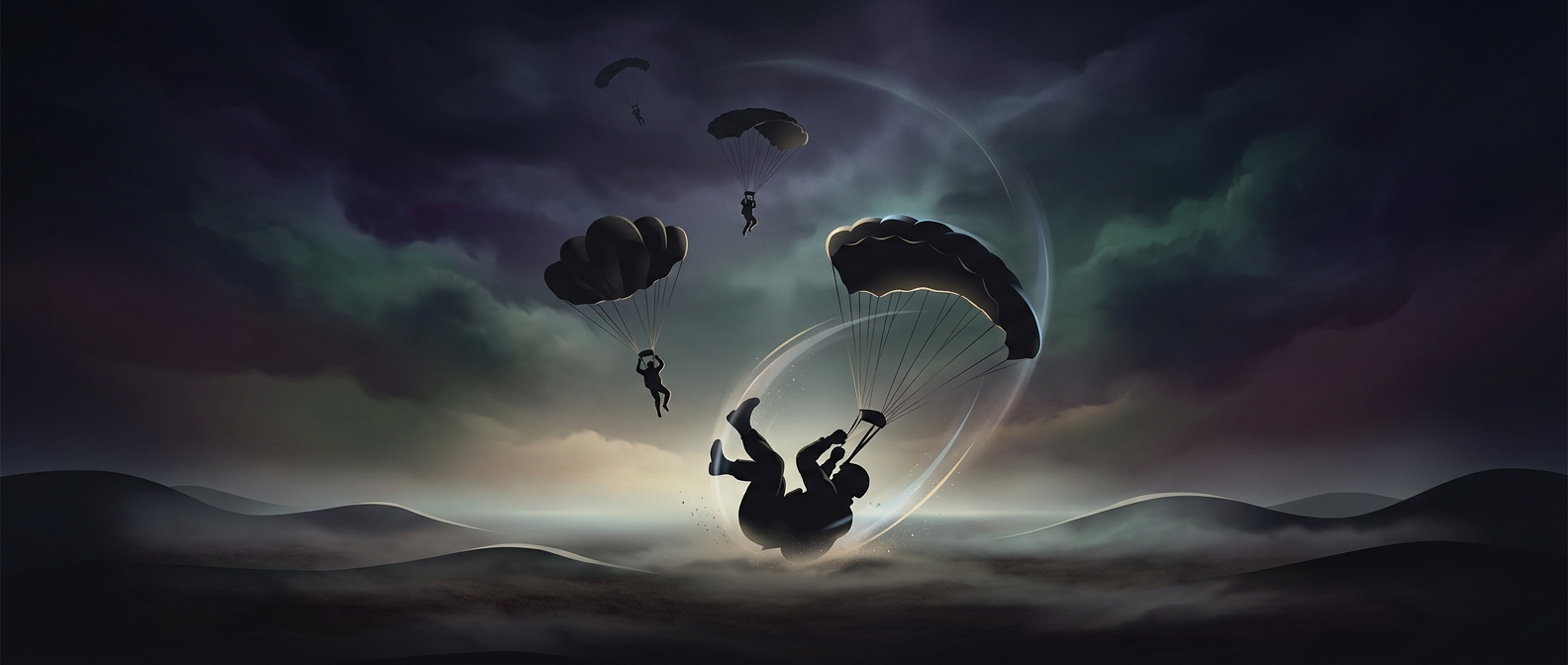
Paratroopers are taught a parachute landing fall, a controlled way to keep moving after the feet touch down. Rather than trying to stand upright against the landing, the jumper bends and lets the body turn through it.
How the roll spreads the load
In a trained landing, contact passes in sequence along the side of the body—typically from the feet and lower leg toward the thigh, hip, and upper back. The exact movement depends on the direction of the landing. This is not a free tumble: the jumper keeps the head protected and avoids taking the impact directly on a knee, elbow, or spine.
The advantage is mechanical. Bending and rolling extend the time and distance over which the body slows. That reduces the peak force on any one point, while several body regions share the work. The roll does not erase the landing’s energy; it gives the body a more controlled way to absorb it.
Why practice matters
A roll only helps if it is directed and coordinated. Jumpers practice the movement on the ground so they can react when wind, drift, or an awkward touchdown makes a neat two-foot landing impossible. The aim is not to land softly in the ordinary sense, but to avoid turning a moving arrival into a sudden, concentrated blow to one joint.