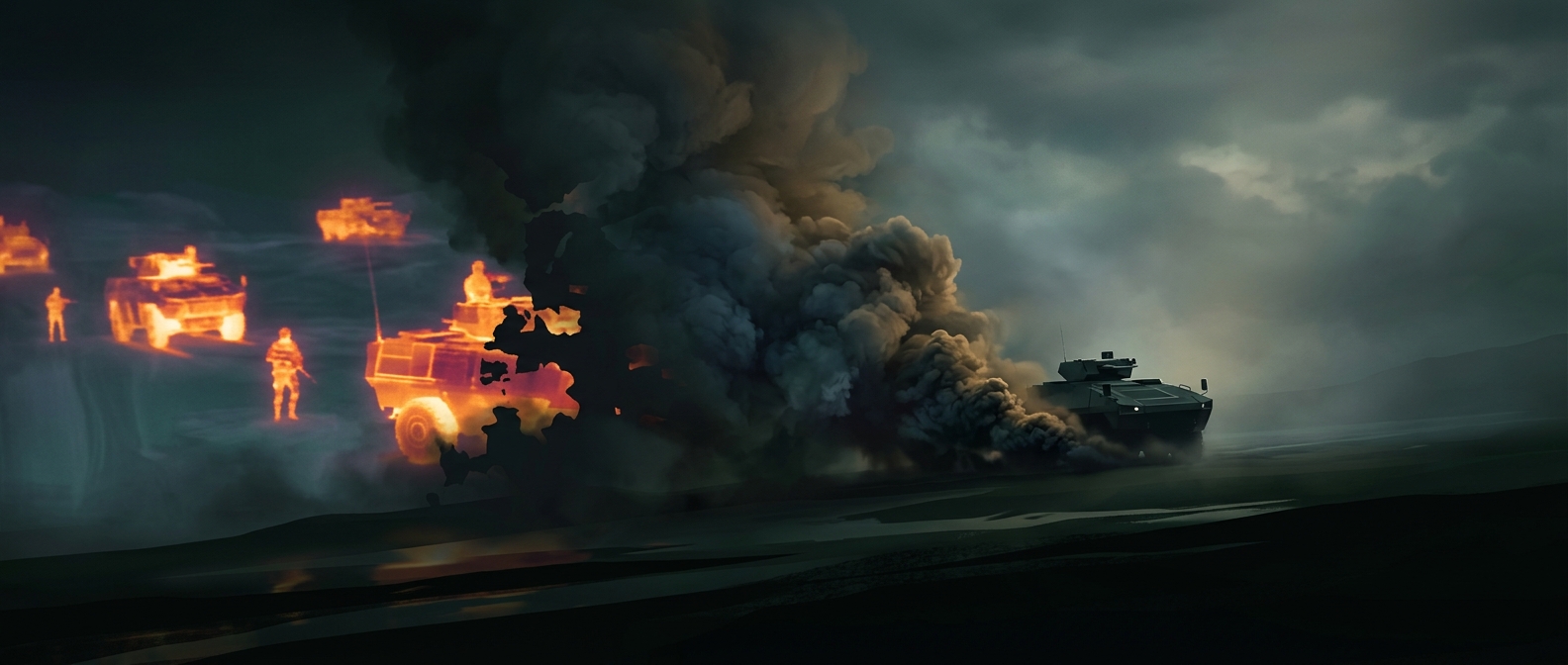
The hard part is managing heat, not hiding a tank’s shape
A thermal camera does not see through armor or identify vehicles by name. It detects infrared radiation—the heat energy objects give off—and turns differences in that radiation into an image. A tank can therefore stand out when its engine, exhaust, tracks, or recently heated armor look warmer than the ground behind it.
Insulation slows heat moving from a hot component to the tank’s outer surface. That can reduce the sharp contrast a camera detects, but it cannot make the heat disappear: energy that stays inside still has to be carried away or released eventually. Designers must balance concealment with the need to keep engines and other equipment within safe operating temperatures.
The background keeps changing
A tank’s thermal appearance depends on more than its machinery. Sunlight can warm its upper surfaces; a cold night can make the same vehicle conspicuous against the ground. Movement heats parts such as tracks, while exhaust produces a particularly intense, localized signal. The vehicle may blend into one setting and stand out in another.
For that reason, thermal camouflage is a matter of reducing or reshaping contrast, not applying a single cloak that works everywhere. Insulating layers can soften hot spots, while the surrounding conditions determine whether the remaining heat is noticeable. The practical payoff is limited but meaningful: a camera may have a harder time separating the tank from its background, buying time before it is recognized.