Why the Russian Rail Network Needs a Different Fit
A railway’s gauge is the distance between the inner sides of its two rails. Russia’s main network uses a broader gauge than the standard used across most of Western Europe. The difference is only a few inches, but a train’s wheels must line up precisely with the rails beneath them. A standard-gauge train cannot simply continue onto Russian track as it stands.
That mismatch matters because trains are built around their tracks. Wheel spacing, bogies—the frames carrying a train’s wheels—and other parts of the vehicle are designed for a particular gauge. The track is not like a road that vehicles can merge onto at will.
The Border Becomes a Transfer Point
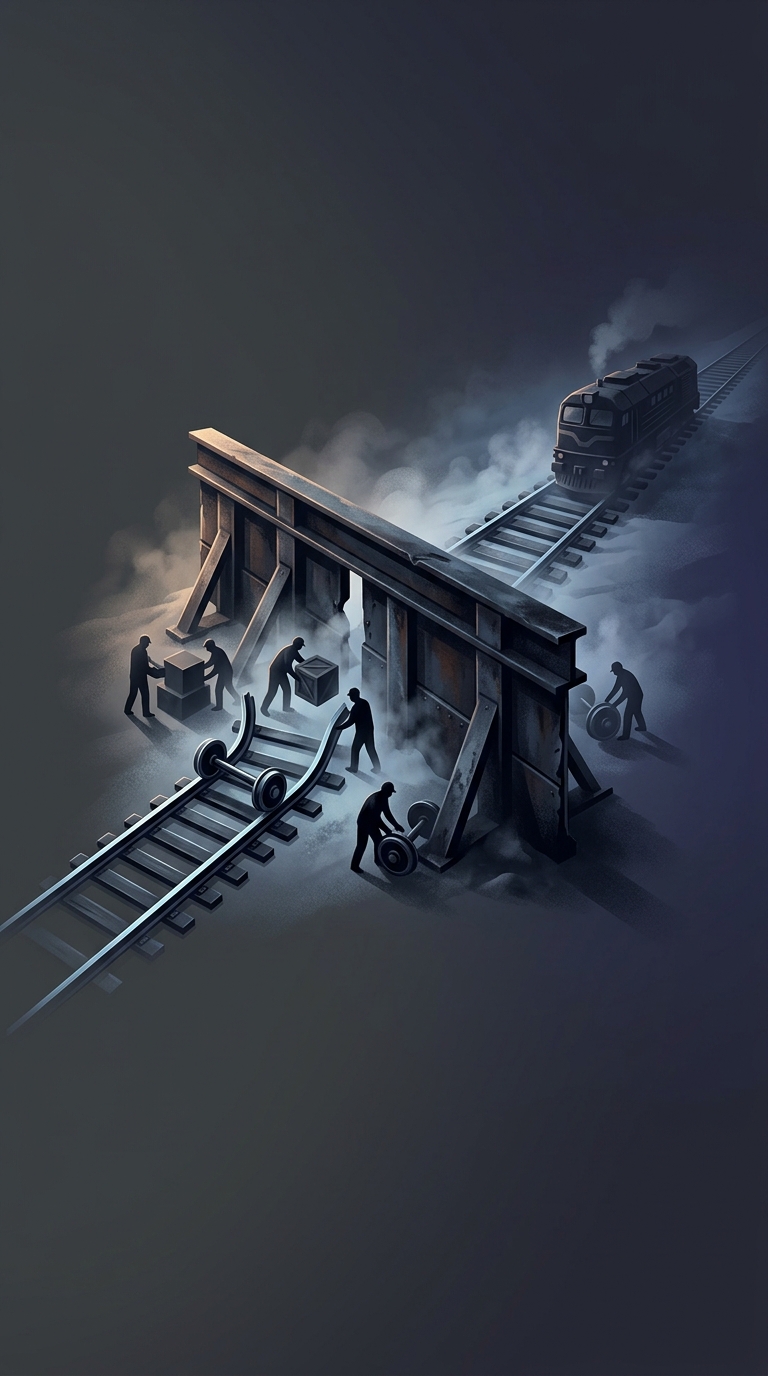
Where the networks meet, the break has to be handled in one of two basic ways: move people or goods between trains, or adapt the train to the new gauge. Freight can be unloaded from one set of wagons and loaded onto another. For passenger services, some cars can be raised so their wheel assemblies can be replaced or adjusted; specialized equipment can also shift wheels to a different spacing.
Either approach takes time and infrastructure. A transfer can interrupt a journey and add handling work, while changing wheelsets requires compatible trains and facilities. The gauge difference therefore shapes schedules and logistics, not just the appearance of the rails.
A Small Measurement With Network-Wide Effects
Gauge is a choice built into an entire railway system: tracks, vehicles, maintenance equipment, and border facilities all have to work together. Once a network has been constructed around one standard, changing it is far more involved than replacing a short stretch of rail. The result is a lasting boundary between systems—even when the border itself is crossed by a continuous line of track.
That is why a few inches can turn a direct rail journey into a transfer, a technical adjustment, or both.