A security test that borrowed human vision
A CAPTCHA turns an ordinary web action—such as creating an account—into a small test. The site presents a task that people can usually solve but automated programs may struggle with, then uses the answer to judge whether the visitor is human. The acronym spells out that purpose: a Completely Automated Public Turing test to tell Computers and Humans Apart. “Turing test” here means a test intended to distinguish a person from a machine, not a conversation with one.
Luis von Ahn and his colleagues developed the system in 2003. Early challenges often asked people to read distorted letters. The distortion made the text harder for software to recognize, while people could still make out the characters and type them in.
Turning a nuisance into useful work
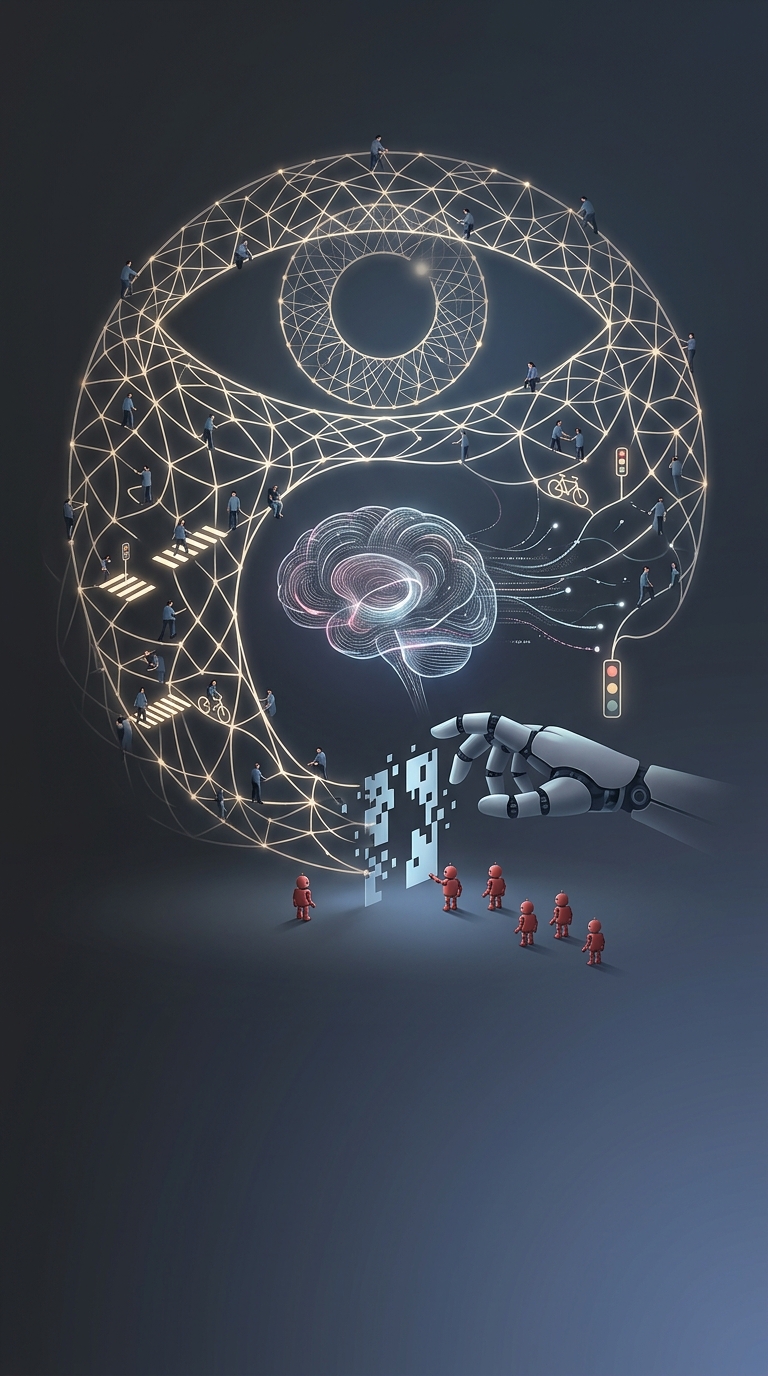
That design created an odd opportunity: people were already spending time solving tiny recognition problems online. Image-based challenges could ask them to identify objects or features in photographs—tasks that are easy to describe but difficult for computers to perform reliably. A user's selection could then serve as a label: evidence that a particular image contains a bus, a street sign, or another object.
Labels like these help train image-recognition systems. During training, software compares its guesses with labeled examples and adjusts to make better guesses next time. Some image-identification prompts have been used to supply this kind of information for Google's autonomous-driving AI. The security check therefore did more than block automated sign-ups: it converted many small human judgments into data that machines could learn from.
The tradeoff is built into the interaction. A person sees a quick puzzle; behind it, the answer may help teach a computer what to look for in the visual world.