A voice engineered to resist recognition
An audio CAPTCHA is a sound-based test intended to let a person prove they are not an automated program. Its challenge is to make spoken words recoverable to a listener while making them difficult for speech-recognition software to identify.
Speech-recognition systems do not hear words as people do. They analyze patterns in a sound wave—such as changes in pitch, timing, and frequency—and compare those patterns with likely speech. A CAPTCHA can disrupt those clues by degrading the recording or mixing in competing sound. The words may remain guessable from context, but the acoustic evidence becomes less reliable for a machine.
Why the result can sound uncanny
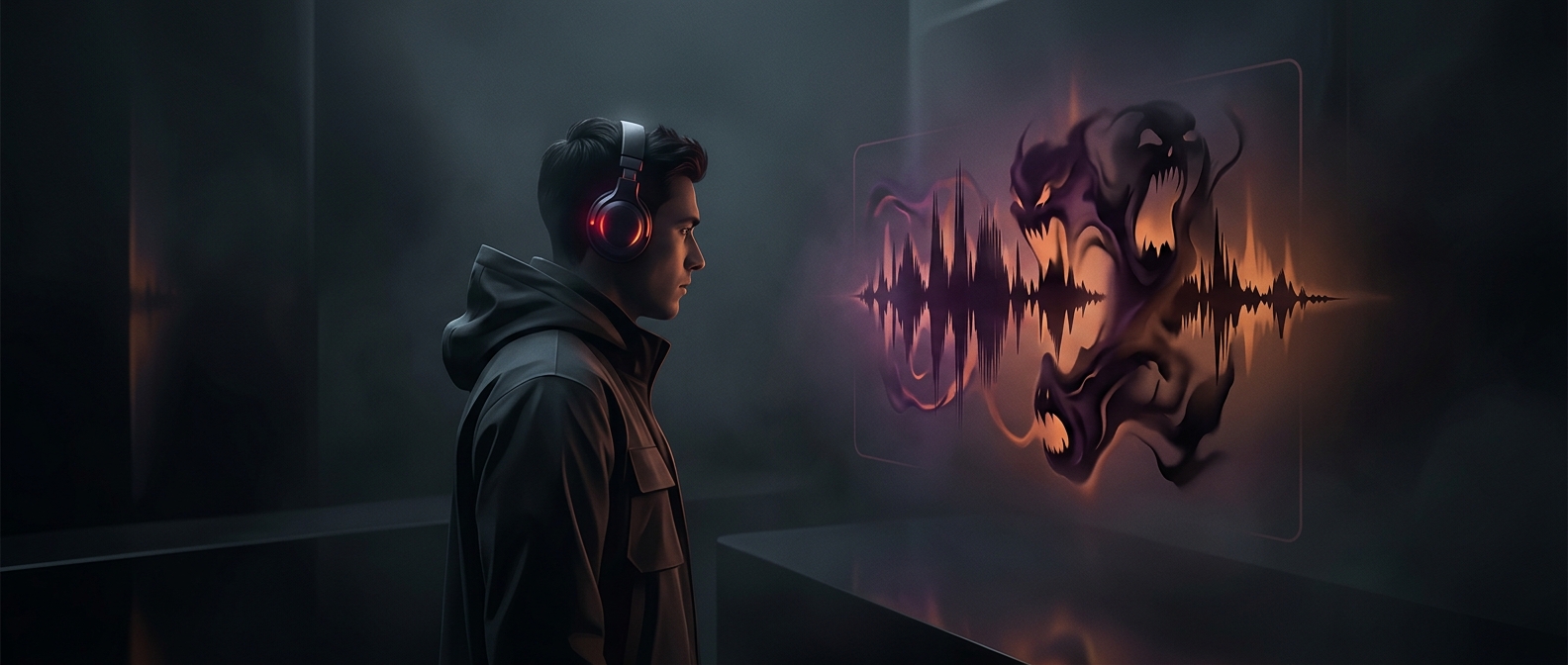
The distortion also strips away the cues that make ordinary speech feel natural. Noise can blur consonants; uneven timing can make syllables seem detached; and overlapping sounds can create odd, voice-like fragments. When the remaining speech has to be pieced together from incomplete clues, it can seem warped or unnervingly expressive—even though the effect comes from signal processing, not a deliberate attempt to imitate a supernatural voice.
People can often compensate by using context and expectation: if a phrase has a familiar rhythm, the brain can fill in a muffled sound. Automated systems also use context, but interference can make their best prediction less dependable. That difference is the basic design bet behind the test.
Security has a usability cost
Making the audio harder to transcribe can frustrate automated attacks, but it can also make the challenge harder for people—especially those with hearing loss or difficulty understanding distorted speech. The same interference that confuses a machine can erase useful clues for a human. The eerie sound is therefore a side effect of a practical tradeoff: obscure enough to challenge software, yet clear enough that a person can still work out the words.