Turning Rocketry Into a Place People Could Imagine
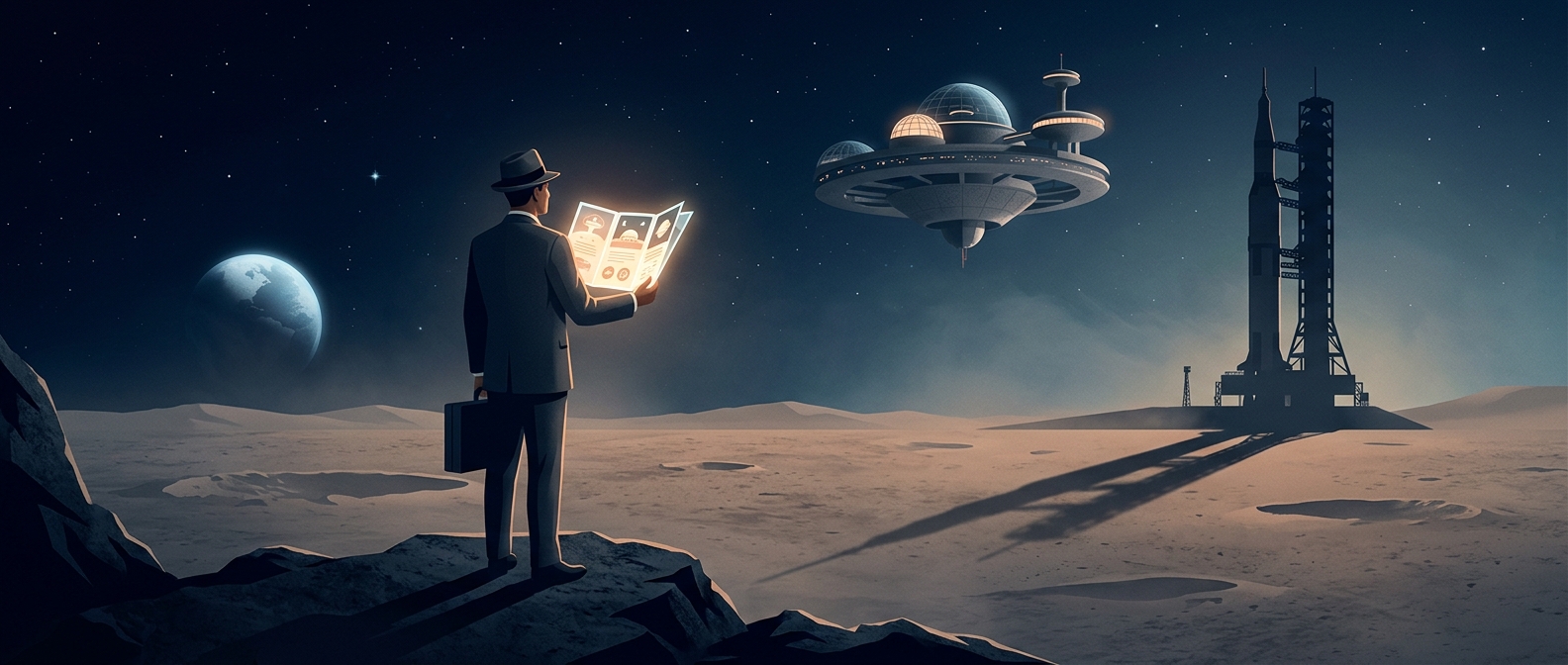
A rocket program is difficult to sell in the abstract: its benefits may be distant, its machinery unfamiliar, and its costs immediate. Mid-century space advocates used illustrations of destinations—rooms on the Moon, lounges where drinks floated—to give audiences a scene they could picture instead of a stack of engineering problems.
The images made spaceflight feel less like a one-way technical stunt and more like the beginning of travel. A hotel implied arrival, shelter, and a reason to stay; a zero-gravity lounge suggested that people might adapt ordinary social life to an extraordinary setting. The appeal was not that these amenities were ready to build, but that they made a future space program easier to visualize.
What the Pictures Did for the Pitch
Concept art turns an uncertain chain of development into a vivid endpoint. Viewers could imagine what rockets might make possible, while government funders could present exploration as a project with human meaning—not only a contest of machines. That framing helped connect costly research to a broader promise of discovery and eventual use.
There was a practical tension in the approach: the more inviting the destination looked, the easier it was to overlook how many engineering steps stood between a launch vehicle and a functioning lunar outpost. The cocktail lounge was therefore both a sales image and a measure of ambition. It asked audiences to picture not merely reaching the Moon, but making a place there.