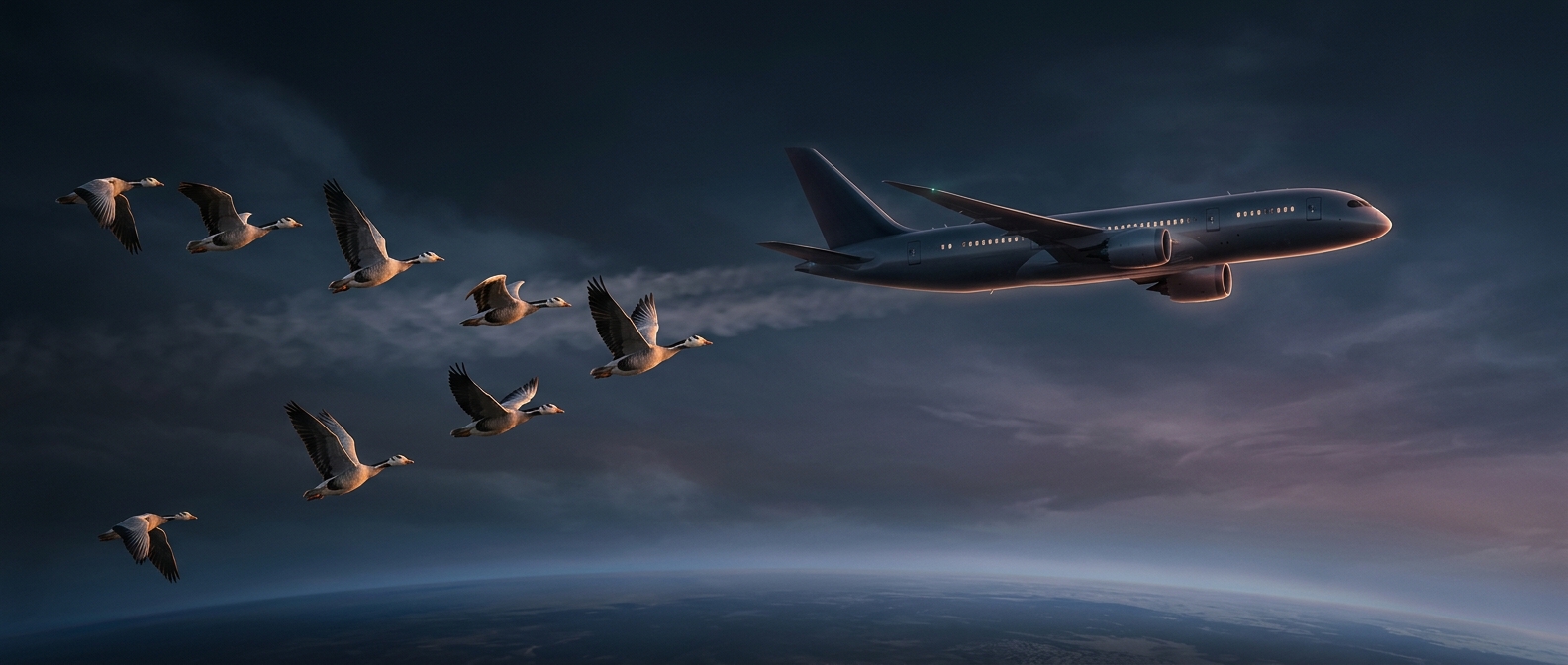
How bar-headed geese keep oxygen moving
At Himalayan heights, the challenge is not simply cold or thin air: each breath delivers less oxygen to the blood. Bar-headed geese have hemoglobin—the oxygen-carrying protein in red blood cells—that binds oxygen readily even when oxygen is scarce. That helps load oxygen into the blood in the lungs, where the air is thinnest.
The advantage continues beyond the lungs. Their bodies are adapted to move oxygen from the blood into working muscles, where it fuels flight. In effect, the birds can keep the supply chain running under conditions that would leave many other animals short of oxygen.
A crossing shaped by the mountains
The Himalayas are not a single wall with one uniform route over it. Valleys, ridges, and passes create changing winds and terrain, so a goose’s crossing depends on the conditions along its path as well as its physiology. The birds still expend energy; their adaptations make high-altitude flight possible, not effortless.
That distinction helps explain why the migration is remarkable. A bar-headed goose is not just climbing to an impressive height: it is sustaining powered flight while air pressure—and therefore the oxygen available with each breath—falls. Its hemoglobin helps turn a hostile altitude into a traversable route, linking the landscapes on either side of the world’s highest mountain range.