Why a Partner’s Hand Can Change the Brain’s Response to Threat
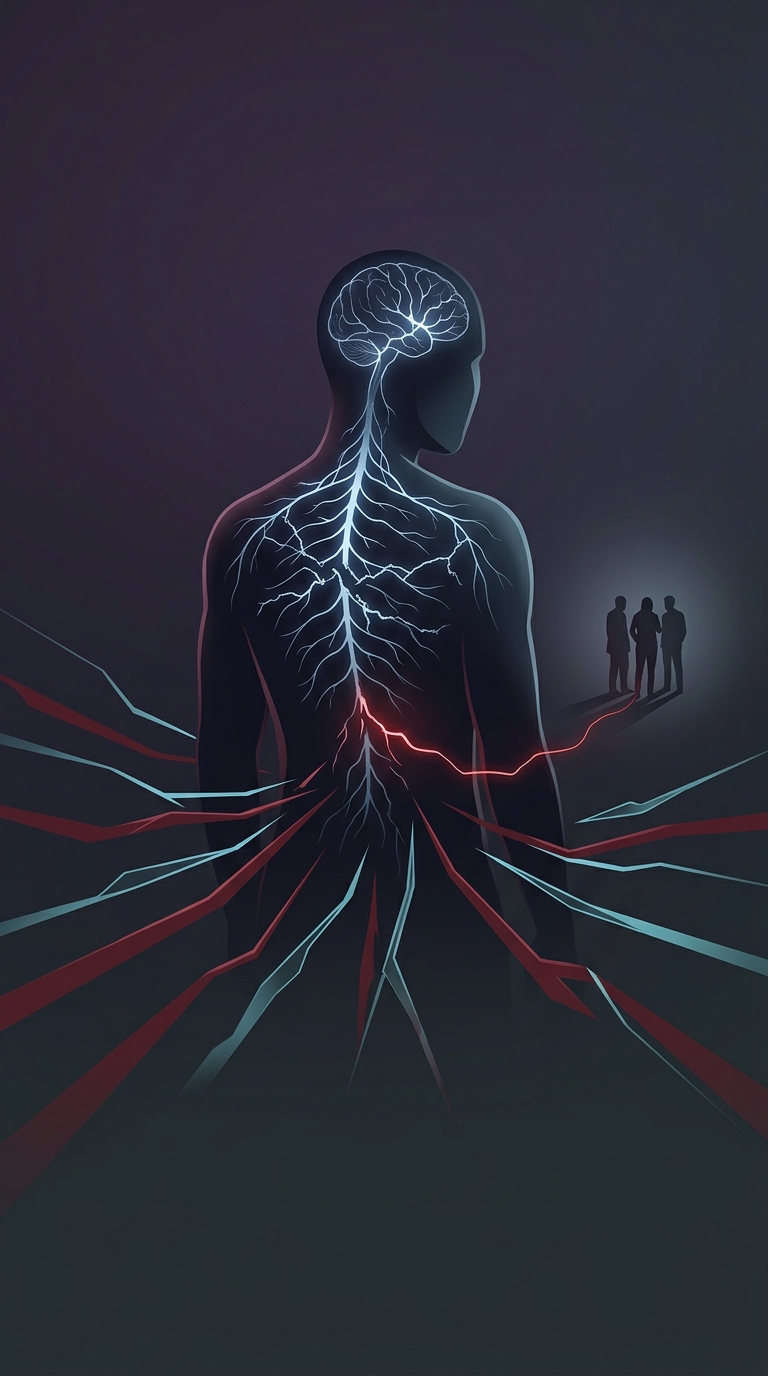
In a laboratory experiment led by neuroscientist James Coan, married women faced the anticipation of a mild electric shock while undergoing functional magnetic resonance imaging, or fMRI—a scan that tracks changes in blood flow associated with brain activity. Some held their husbands’ hands; others held a stranger’s hand or no one’s. The scans showed less activity in brain regions involved in threat response when a participant held her husband’s hand, with the size of the difference related to how she rated the quality of her marriage.
The key point is not that touch erased pain or switched off every alarm. The experiment measured the brain’s response while participants anticipated a shock. It offered evidence that support from a trusted person can make a threatening situation register as less demanding.
Social Support as a Resource
Coan’s social baseline theory proposes that the brain treats supportive relationships as part of its ordinary resources, much as it relies on the body’s own energy reserves. When help is available, the brain may need to devote less effort to monitoring danger and preparing to cope alone. A partner’s hand does not literally transfer anxiety into another person’s nervous system; rather, the touch can signal that someone dependable is present.
That signal may matter most when the relationship itself feels safe. A stranger’s hand did not produce the same pattern as a spouse’s, and the findings varied with participants’ reported marital quality. The meaning of the touch—not just contact with skin—appears central.
A Smaller Burden, Not a Cure
The results help explain why social support can alter how people experience stressful moments. If the brain expects that another person can help, it may treat a challenge as less threatening and require less of the body’s own regulatory effort. But the study does not show that handholding abolishes physical pain, completely lowers cardiovascular threat, or works identically for everyone.
Its striking implication is more modest and more human: in a frightening moment, a trusted person’s presence can change what the brain has to prepare for.