The brain registers rejection as a social threat
A sudden breakup or exclusion can set off a fast alarm response. The brain is built to monitor whether important people are available and whether we still belong; losing that connection can therefore feel urgent, not merely disappointing. Attention may lock onto the event—replaying a final conversation, scanning messages for clues, or wondering what the group is saying.
Brain-imaging research has linked social rejection with activity in regions such as the anterior insula and parts of the cingulate cortex. These areas help process distress and detect what needs attention. Some overlap with circuits involved in physical pain helps explain why rejection can feel physically painful, but it does not mean a breakup is neurologically identical to an injury.
The body may shift into high alert
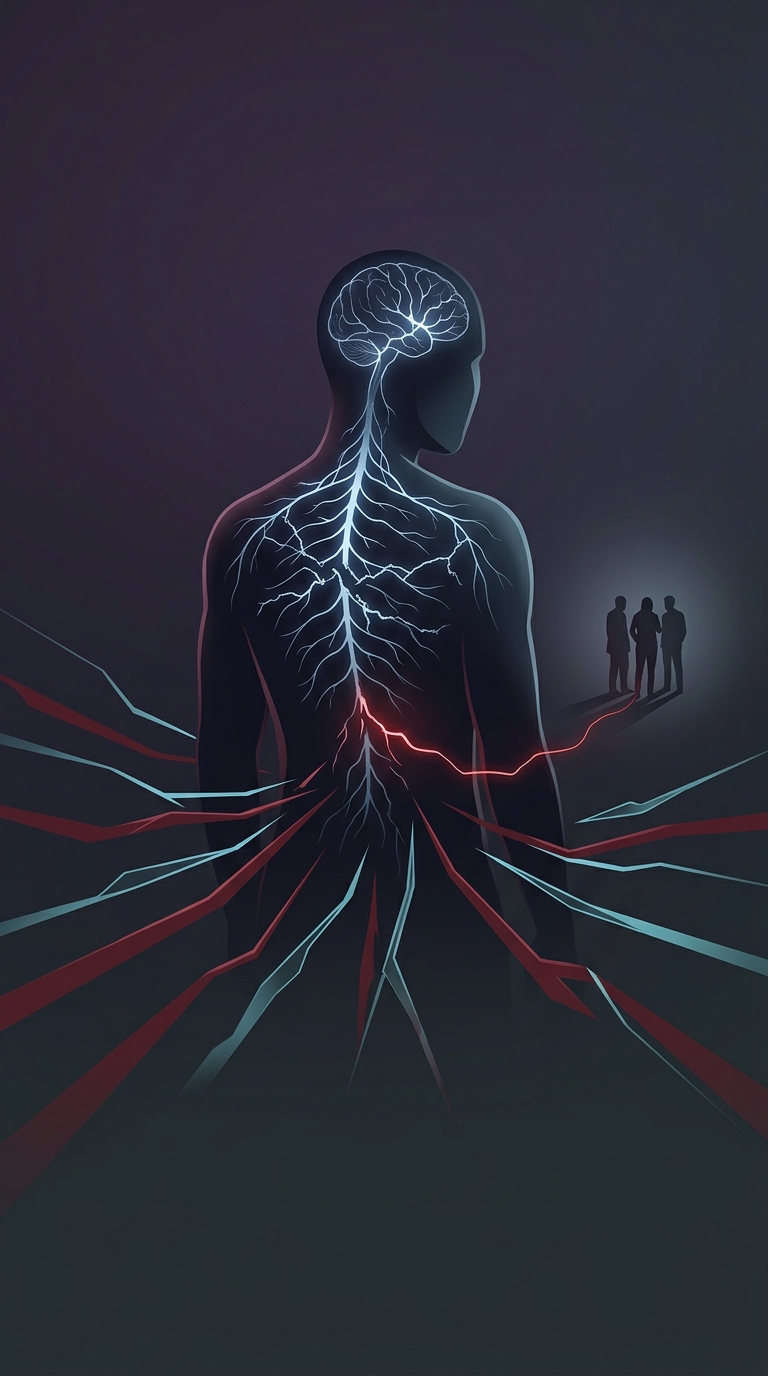
When the loss feels threatening, the autonomic nervous system—the network that adjusts functions such as heart rate and alertness—can move toward a stress response. A person may feel keyed up, nauseated, unable to sleep, or unable to eat normally. Stress hormones can also be involved, though the response varies: one person feels agitated, another numb or exhausted.
The mind’s search for an explanation can keep that alarm active. Uncertainty invites repeated checking and replaying, while reminders of the former partner or friend group can bring the distress back. This is not proof that something is wrong with the person; it is a system trying to make sense of a disrupted bond.
Why the pain changes over time
The nervous system is responsive to new information. Predictable routines, supportive relationships, and fewer repeated reminders can help the brain stop treating the loss as an immediate threat. That does not erase what happened, and recovery is rarely a straight line. It means the sharpest reactions can ease as the person’s daily life supplies evidence that safety and connection still exist elsewhere.