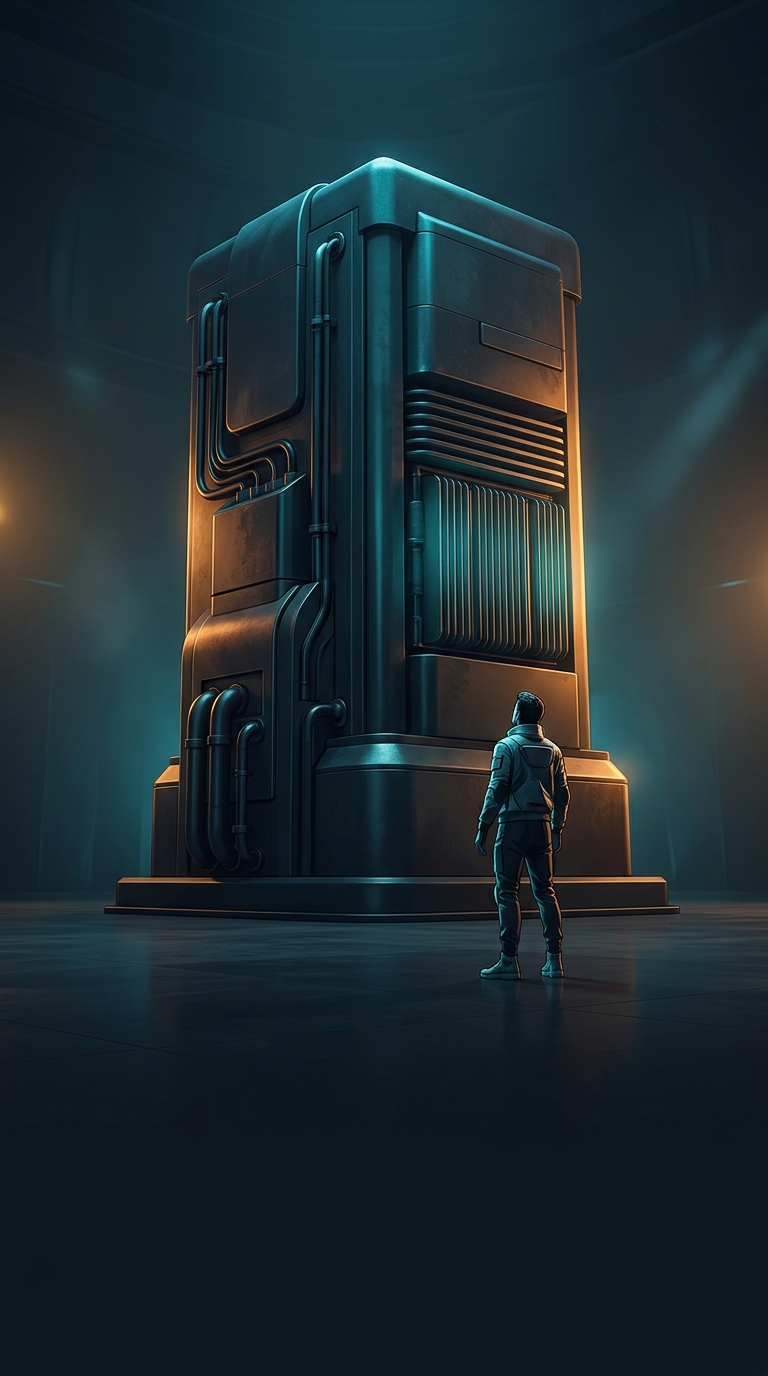
The First Gigabyte Came in a Cabinet
The first hard-drive system to cross the one-gigabyte mark was IBM’s 3380, introduced in 1980. It could store 2.52 gigabytes—more than one gigabyte, rather than exactly one—and weighed about 550 pounds. Instead of sitting beside a computer, it was a large cabinet-sized machine installed in a data center.
Why So Much Hardware?
A hard drive stores information by magnetizing tiny regions on spinning disks. A read/write head moves over each disk to retrieve or change those patterns. In 1980, the amount of data that could be packed onto each disk was far lower than it is today, so reaching gigabyte capacity meant using many large platters, along with the motors, moving parts, and supporting electronics needed to operate them reliably.
The 3380 was built for organizations that needed rapid access to enormous amounts of business or scientific data. Its capacity was divided among multiple storage units, allowing a system to be configured for different needs. The machine’s size was not simply the size of the data: it also reflected the mechanical equipment required to spin disks and position heads with precision.
From Data Center to Fingernail
Modern storage has shrunk because engineers can record data far more densely on compact disks—and, in solid-state drives, store it in electronic memory with no spinning parts at all. The contrast is striking: the 3380’s 550-pound cabinet held 2.52 gigabytes, while today a fingernail-sized memory card can hold vastly more.