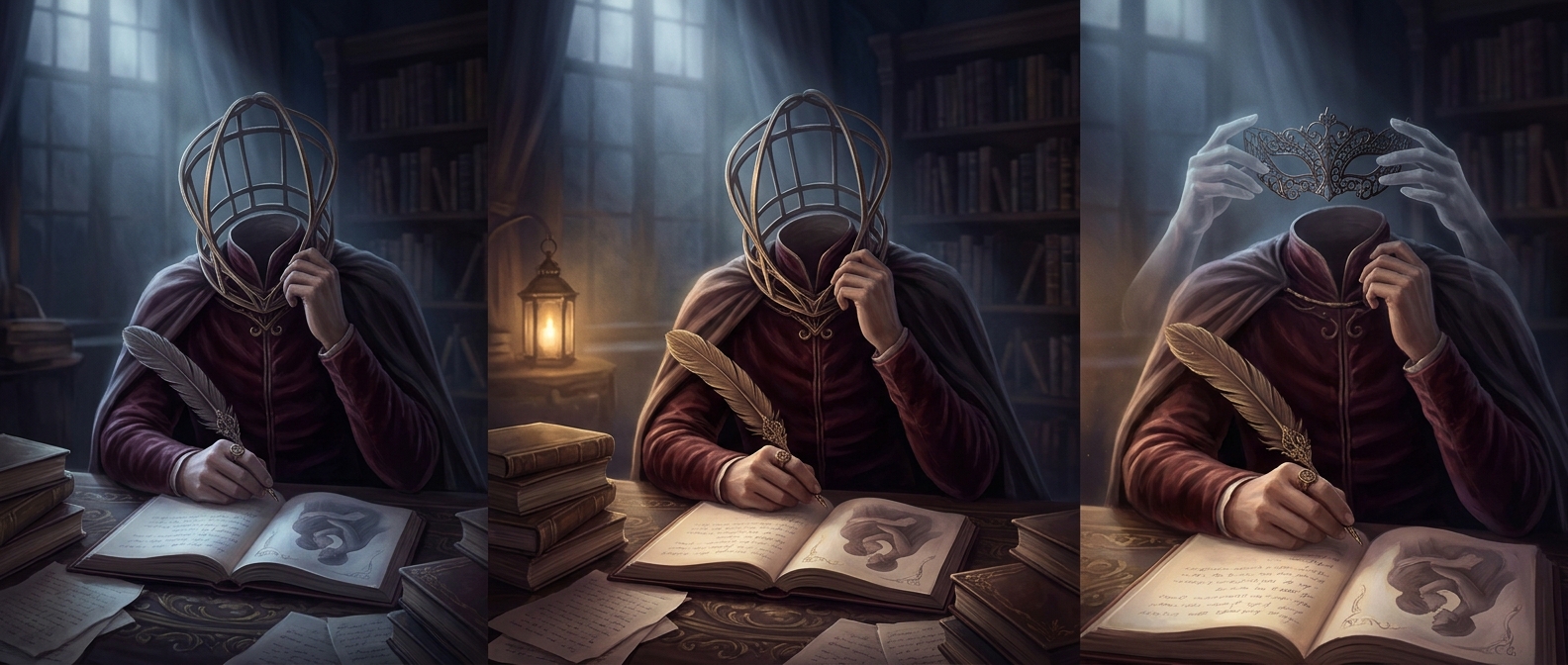
The cropped head was a publishing compromise
A romance cover had to do two jobs at once: signal desire to its intended readers and look acceptable in places where books sat beside family magazines and everyday groceries. A bare male chest supplied an unmistakable hint of sexual appeal. Cropping the model’s head softened that signal, making the image read more like a fragment of a body than a scene of sexual intimacy.
Why a torso felt safer than a face
A face gives a cover a particular person—and a direct gaze or expression can make an image feel intimate and confrontational. Without it, the body becomes less individual. The viewer is invited to notice the physical ideal, while the image withholds the personal encounter that might make it seem more explicit.
That anonymity also served the fantasy. A headless model was less a fully defined character than a romantic type, leaving room for readers to imagine the hero in their own way. The crop could therefore preserve the cover’s promise of passion while keeping its most provocative detail at a distance.
A small visual choice with a practical effect
The design did not remove the erotic appeal; it controlled how that appeal appeared in public. Publishers could use a strong visual cue without showing a more overtly sexual scene. The missing head was part of the message: desire was present, but framed as suggestion rather than display.