A headshot can outlive the book that introduced it
An author photo is usually treated as a reusable piece of a book’s promotional package, not as a portrait that must be updated on a schedule. Once a publisher has a usable image, it can travel from a book jacket to a catalog, a publicity page, or another edition. If the author keeps working with the same publisher—or supplies the same image again—the old picture can remain in circulation long after it was taken.
The image is chosen before readers see the book
Books are prepared for release well ahead of publication. The jacket and promotional materials need to be finalized on a production timetable, so editors and designers work with the photos available when those materials are being assembled. A new portrait may require arranging a shoot, selecting an image, and getting approval; if the existing one is acceptable, there may be little practical reason to replace it.
That makes the photo a small but persistent production decision. A book may be new, while its author image comes from an earlier publicity cycle.
Reuse can make the mismatch more noticeable
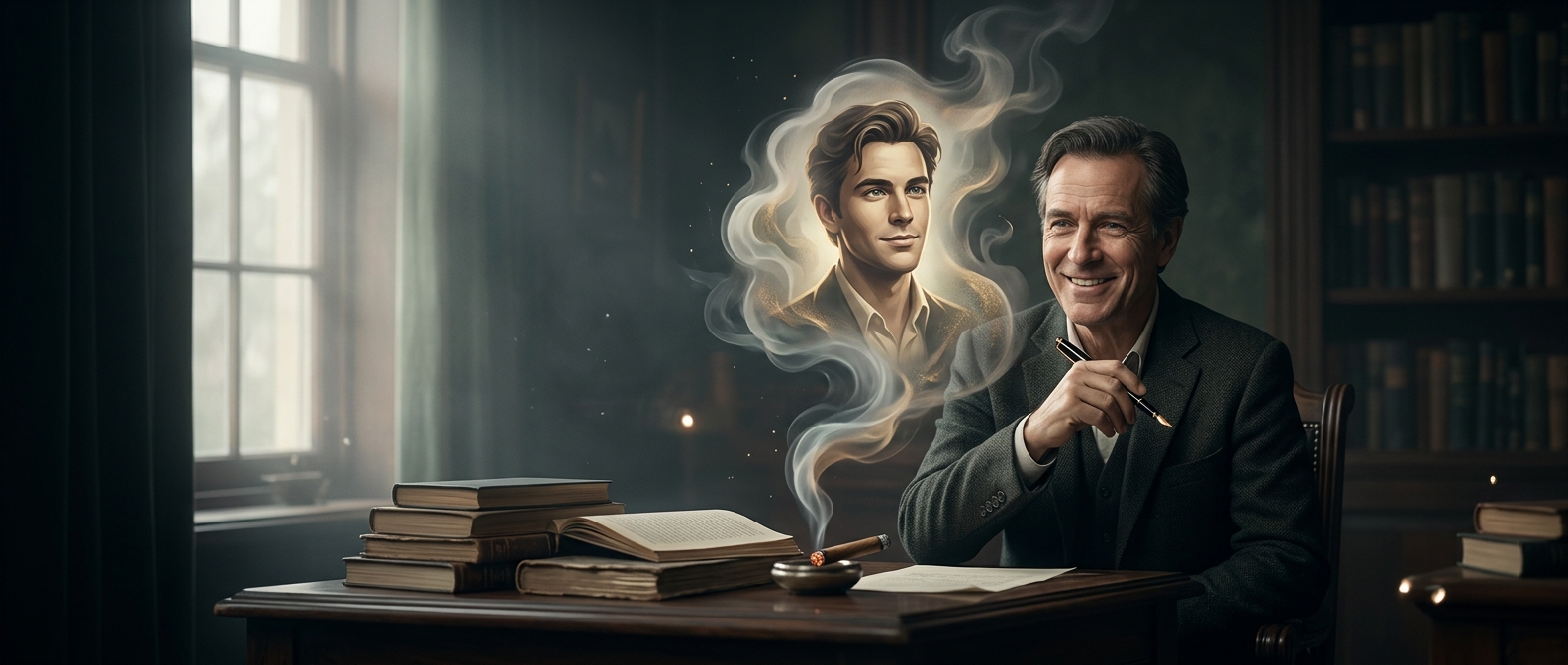
A headshot is often meant to identify the writer quickly, not document their current appearance. Reusing it keeps materials consistent and avoids extra work, but the tradeoff becomes obvious when a reader meets the author at an event or sees a recent interview. The jacket presents the version of the writer captured years earlier.
So an outdated photo is not necessarily a mistake: it can be the result of a promotional image that stayed useful—and in circulation—long after its first assignment.