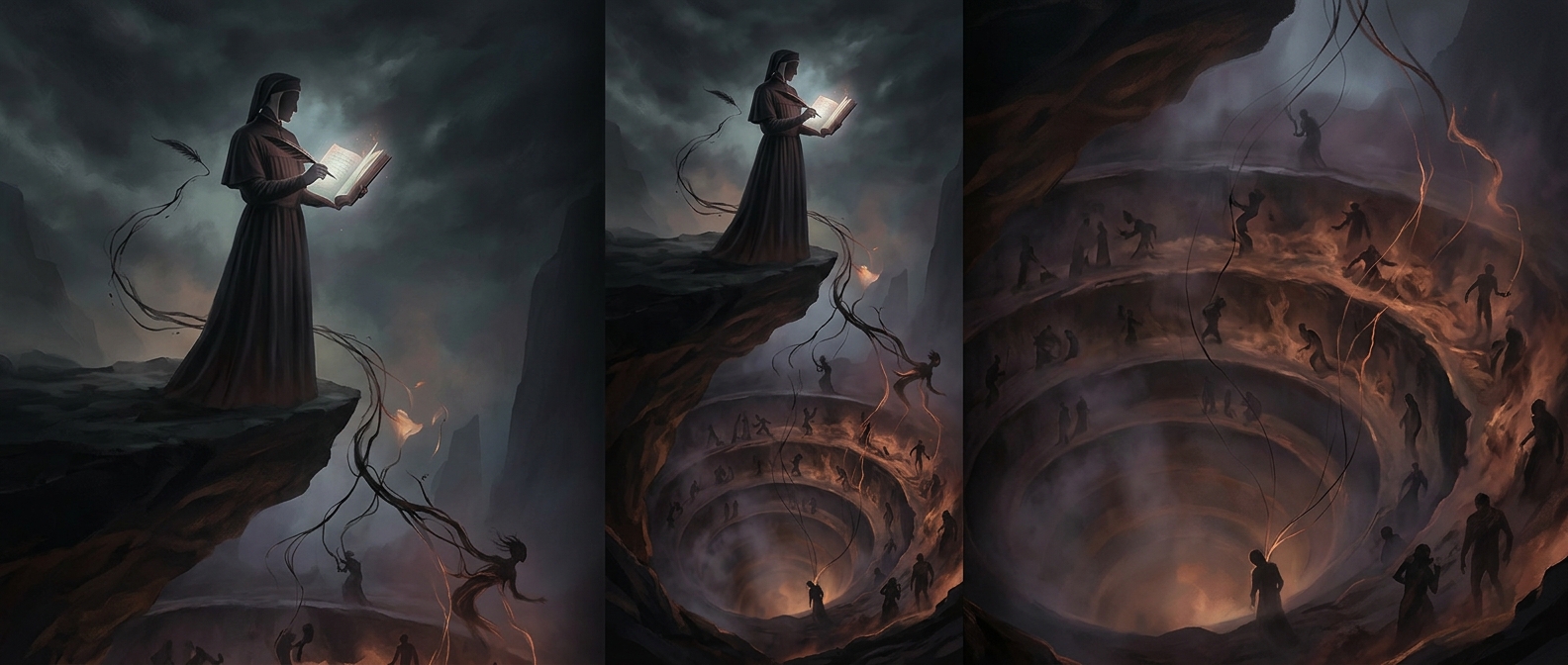
Why Dante’s Hell Had a Place for Florentine Politics
Dante’s Inferno is a journey through the afterlife, but it is also a pointed intervention in the conflicts of his own city. Florence’s rival factions fought for power through changing alliances, prosecutions and exile. When Dante was driven from Florence in 1302, he lost his political home—and gained a poem in which the city’s powerful could be judged on a far larger stage.
The poem’s punishments are not a simple list of people Dante disliked. In Dante’s moral design, each circle of Hell corresponds to a kind of sin, and each punishment makes that sin visible. Placing a recognizable public figure there therefore does two things at once: it condemns the person and explains the alleged wrongdoing through the structure of the afterlife.
A Political judgment disguised as a journey
Dante names or alludes to popes, politicians and other contemporaries, sometimes placing them among the damned before their deaths. That startling choice turns the poem into a claim about authority: office and reputation cannot shield anyone from divine justice. It also lets Dante present his own political verdict as part of a universal moral order, rather than merely as one exile’s grievance.
Readers in Florence could recognize the local stakes even when the poem did not read like a straightforward chronicle. Its Italian language, vivid scenes and carefully arranged punishments made political argument memorable as story. A rival’s fate in Hell was not just an insult; it was a public accusation about what that rival had done and what kind of person he was.
The cost of making enemies unforgettable
Dante’s placement of adversaries helped preserve the era’s political feuds in literary memory. The poem cannot be treated as a neutral record of Florence: its judgments reflect Dante’s convictions and perspective. But that partiality is part of its force. He transformed exile from a loss of civic influence into a means of addressing Florence—and its leaders—from a tribunal no city government could control.