A private place for work still in progress
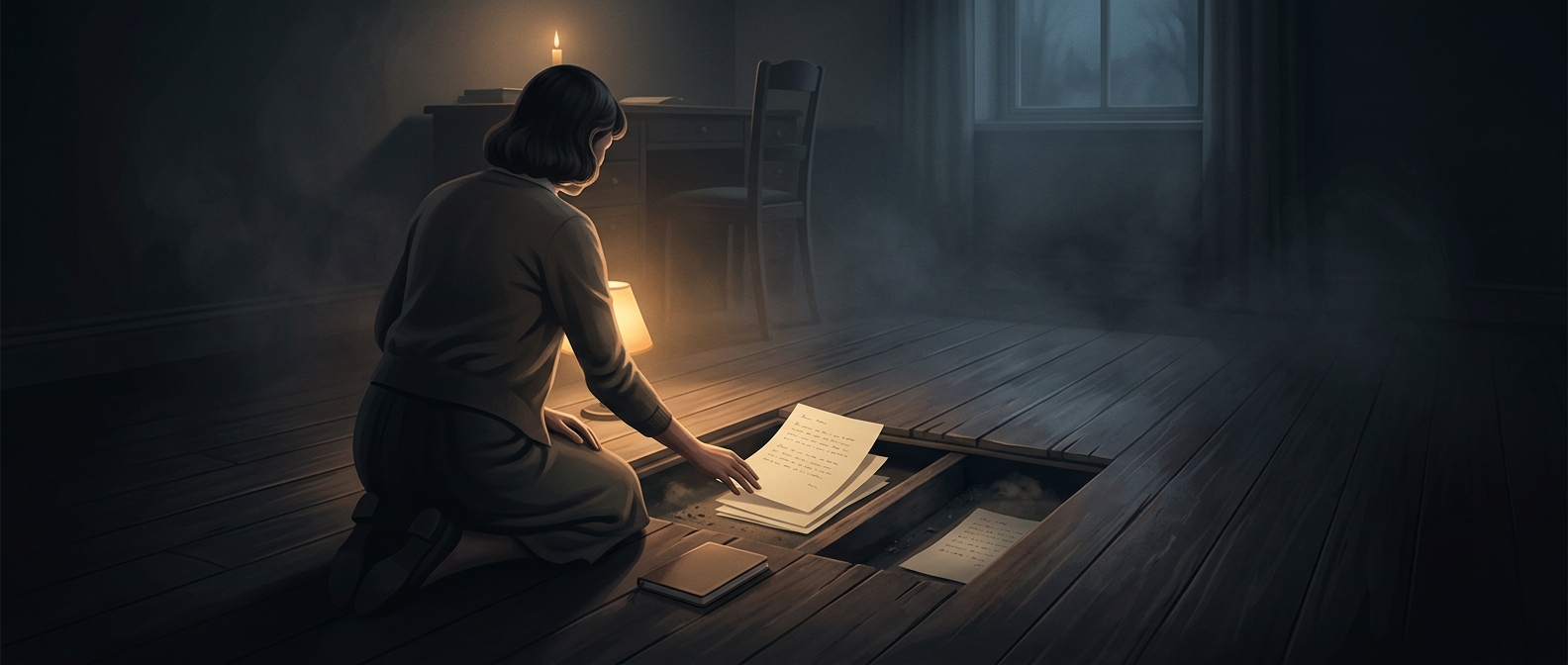
A poem’s first draft is not a finished statement. It may contain crossed-out lines, alternate words, and ideas the writer has not decided whether to keep. Hiding drafts under floorboards gave Plath a way to keep that unfinished work out of sight while she continued writing.
That mattered in a home where her marriage was deteriorating and her depression was worsening. Privacy could protect not only the pages but also the freedom to experiment without having to explain or defend every line. The floorboards made an ordinary room serve a second purpose: part living space, part concealed archive.
The difference between secrecy and publication
Keeping a poem hidden is not the same as deciding it should never be read. Drafts can change, be set aside, or become part of a larger body of work; concealment simply postpones who gets to see them. In Plath’s case, the image of poems tucked beneath the floor captures how writing could be both intensely productive and deliberately withheld—work in progress stored within the very home where her private life was under strain.