A small circle changes the whole throw
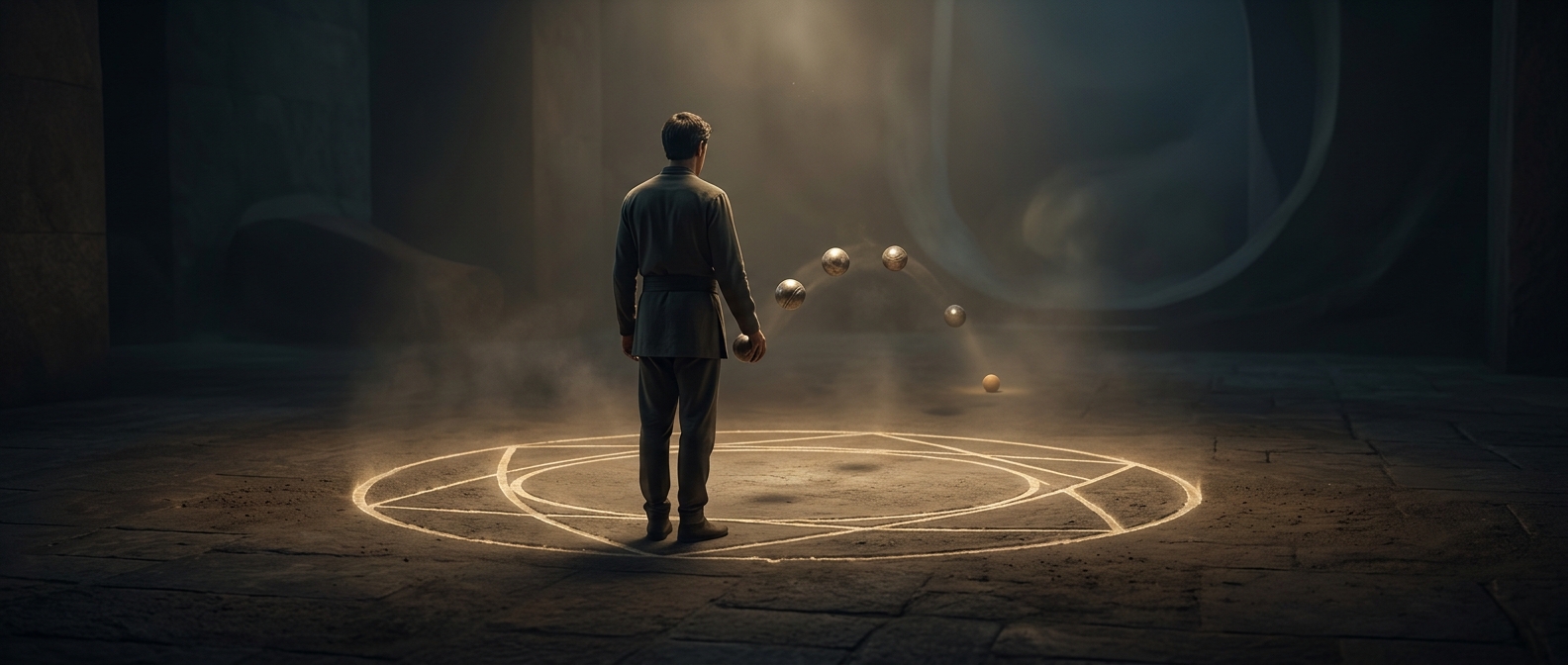
In pétanque, a player throws a heavy metal ball, called a boule, from a small circle drawn or placed on the ground. Both feet must stay inside it while the boule is released. Unlike sports that let a thrower step forward or build speed with a run-up, pétanque gives the player almost no room to use forward momentum.
That constraint makes the throw a controlled swing rather than a sprint. Players can still choose how to send the boule—rolling it low or lofting it through the air—but they must generate the motion from a planted stance. The circle turns footwork into part of the challenge: balance and a repeatable release matter as much as strength.
The rule keeps the contest about placement
A boule can be thrown to finish close to the small target ball, or to strike an opponent’s boule away. In either case, a running start would add speed and make the throw harder to compare and control. Requiring players to stay in the circle limits that advantage and makes distance, trajectory, and aim the central tactical choices.
The restriction also gives each turn a clear physical boundary. A player may lean and swing, but cannot step out to rescue a poor release with extra momentum. In pétanque, the throw begins—and must be made—from the same small patch of ground.