One Shape, Two Jobs
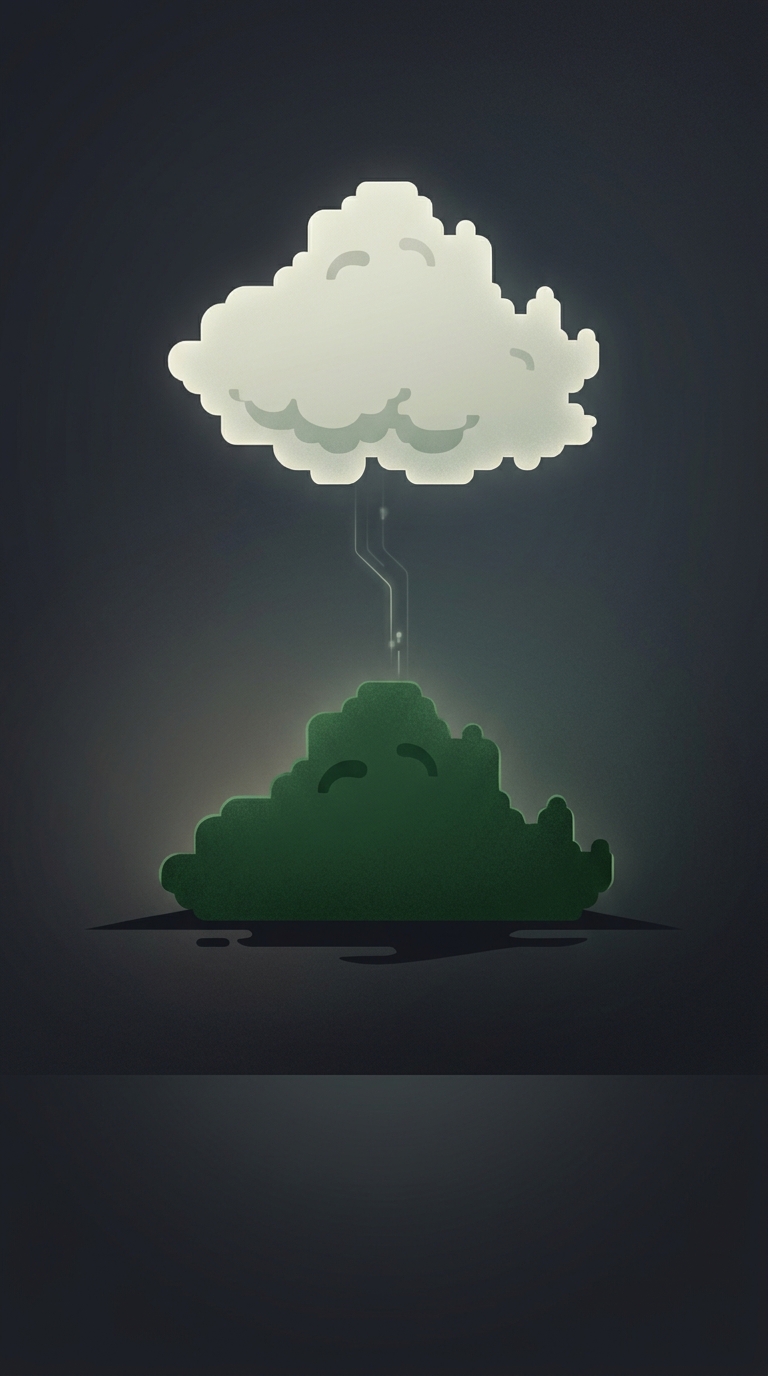
The clouds and bushes in Super Mario Bros. look like separate pieces of scenery, but their matching outlines reveal a practical trick: the game draws both from the same pattern of pixels. The greenery is essentially the cloud shape recolored, letting one small graphic do double duty.
Technically, these are background tiles, not “sprites”—the NES term for movable objects such as Mario and enemies. The distinction matters because the scenery is assembled from small tile patterns placed across the screen, while color is selected separately. Reusing a pattern and changing its palette could create a new visual impression without storing an entirely new design.
The Cost of Every New Detail
The original game had roughly 40 kilobytes available on its cartridge for its program and graphics. That is tiny by modern standards, so designers had to treat memory as a limited supply: a unique shape for every cloud, bush, hill, and brick would quickly consume it.
Tile reuse turned that constraint into a visual system. Repeated patterns made the world feel consistent, while palette changes helped the same basic artwork read as different objects. The trick is easy to miss because players see a landscape, not the underlying library of reusable pieces.
That economy also helped make the scenery legible. A familiar rounded outline could suggest a cloud against the sky and foliage along the ground simply by changing color and context. In a game built from a few thousand bytes of graphics, changing the color could be cheaper than inventing a new shape.