A warning can be a trap
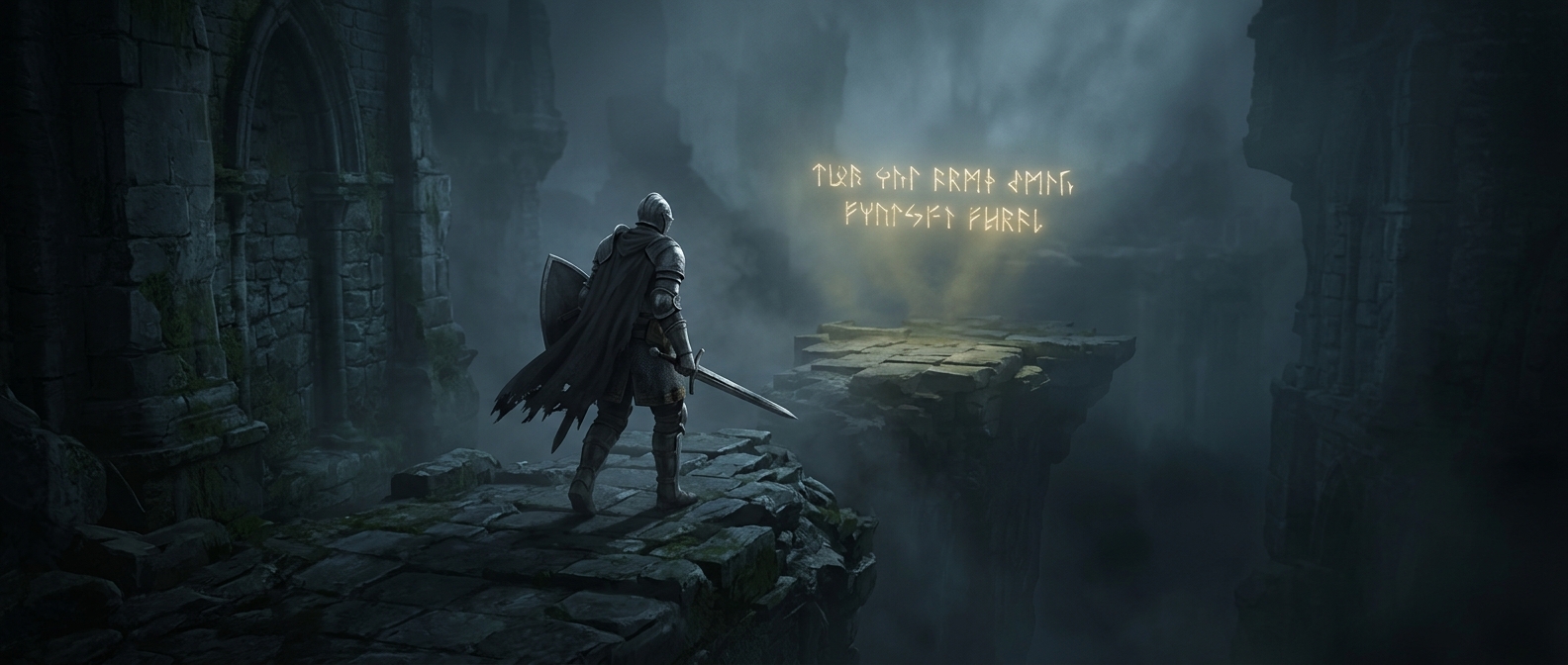
In Dark Souls, a glowing note on the ground is not part of the level’s scripted guidance. It was left by another player, whose world overlaps yours only indirectly. The game lets players assemble messages from a limited set of words and phrases, then places those notes where other players may encounter them.
That setup turns a basic navigation aid into a small act of social trust. A note saying “Treasure ahead” beside a dangerous drop suggests that a valuable item lies just beyond the edge. The game does not verify the claim; players have to decide whether the writer is helping or baiting them.
The level does the rest
The deception works because the message is placed in a real environment full of lethal falls, hidden routes, and hard-to-spot rewards. A player focused on the note may approach the cliff, mistake the implied route for a safe one, and fall before discovering the warning was a joke. The note itself does not push anyone—the terrain and the reader’s interpretation complete the trick.
Messages can also be rated by players who find them useful. That feedback gives honest advice a way to earn trust, but it cannot guarantee that the next note is truthful. The same system that lets strangers share hard-won guidance therefore lets them exploit the expectation that guidance is sincere.
The result is a peculiar kind of multiplayer mischief: even when no other character appears, another player can still shape your choices—and sometimes send you straight over an edge.