A Set Can Turn Disagreement Into a Face-Off
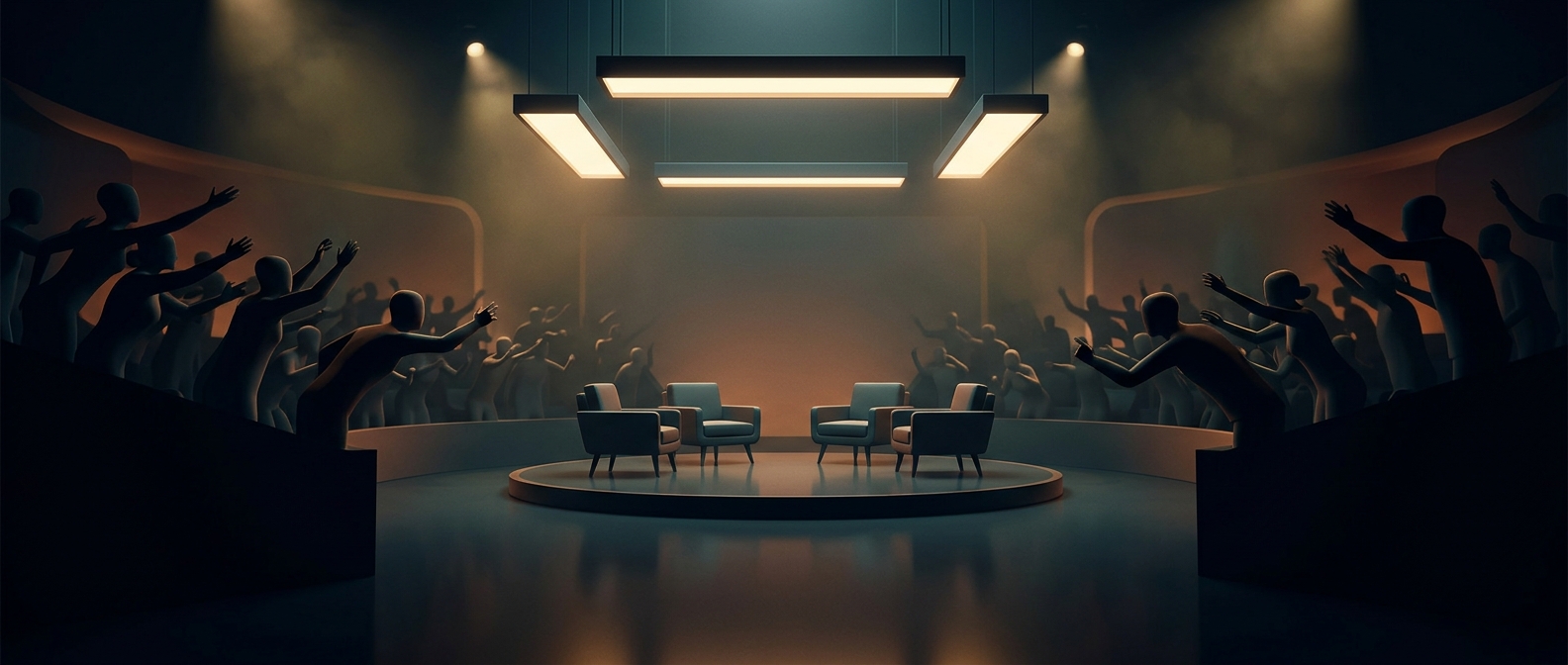
A talk-show argument is shaped not only by what guests say but by the space in which they say it. When two people sit close together, they have fewer ways to ignore one another: a glance, a lean, or a shift in posture becomes part of the exchange. The scene reads less like two separate interviews and more like a direct contest.
The chairs matter because they make the guests’ bodies prominent in the frame. With little space between them, even a small turn toward the other person can look deliberate. The arrangement encourages viewers to watch for reactions—who interrupts, who looks away, who holds their ground—alongside the words themselves.
The Audience Becomes Part of the Scene
An audience around the guests supplies a visible set of witnesses. Laughter, applause, or silence can make a moment feel like a public victory or setback, even when the underlying disagreement has not changed. The host is also positioned within this social geometry, able to redirect attention or invite one guest to answer another.
That is the practical power of the setup: it gives the cameras and audience a clear focal point. A confrontation becomes easy to follow because the people involved are physically oriented toward one another, and their reactions are on display. The set does not create the disagreement; it makes the disagreement feel immediate and performative.