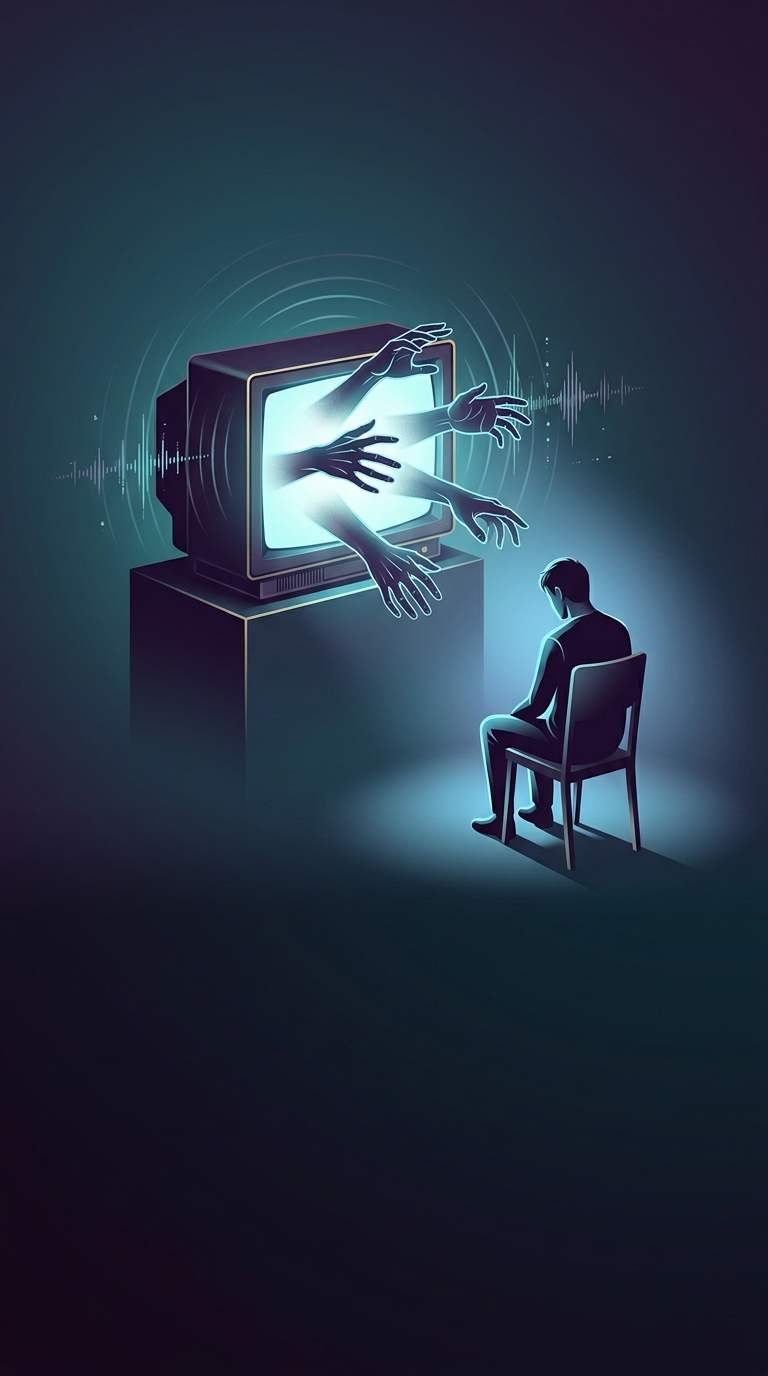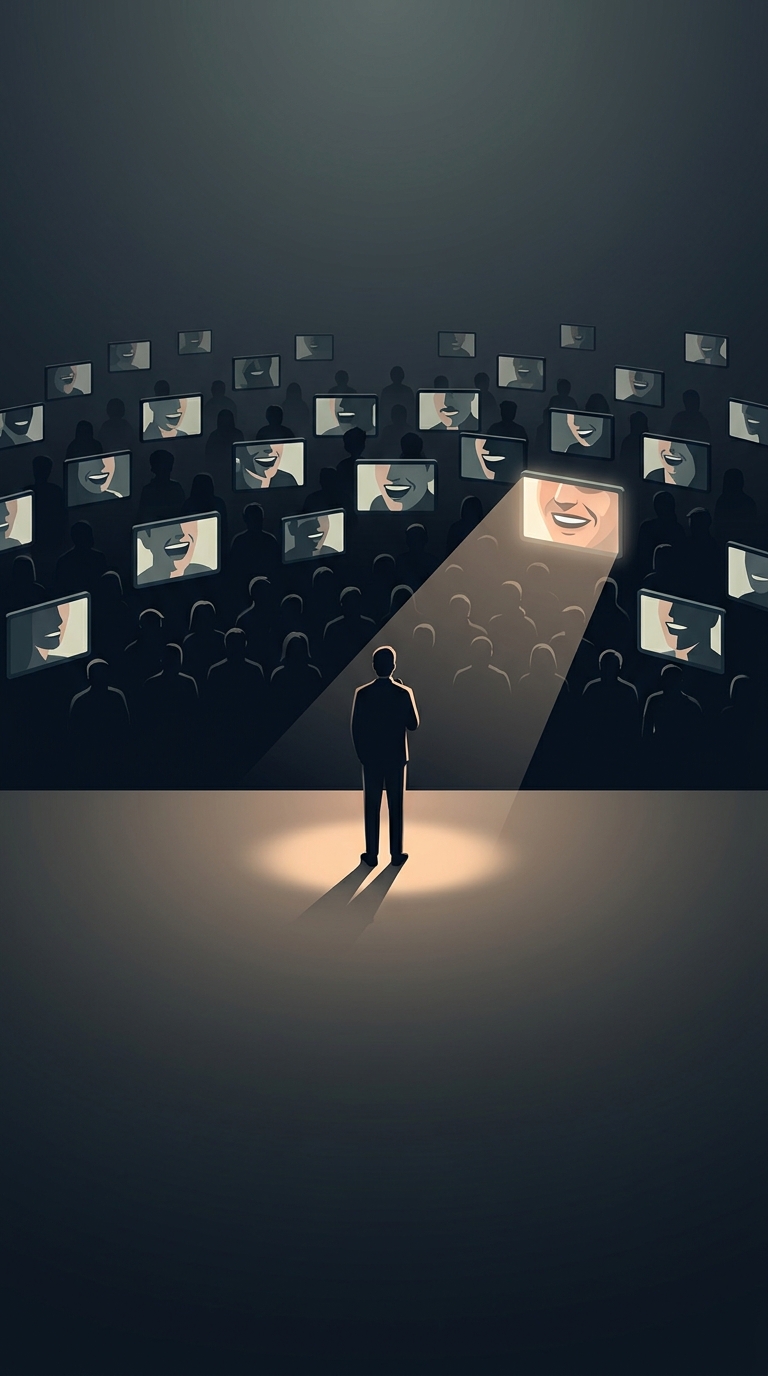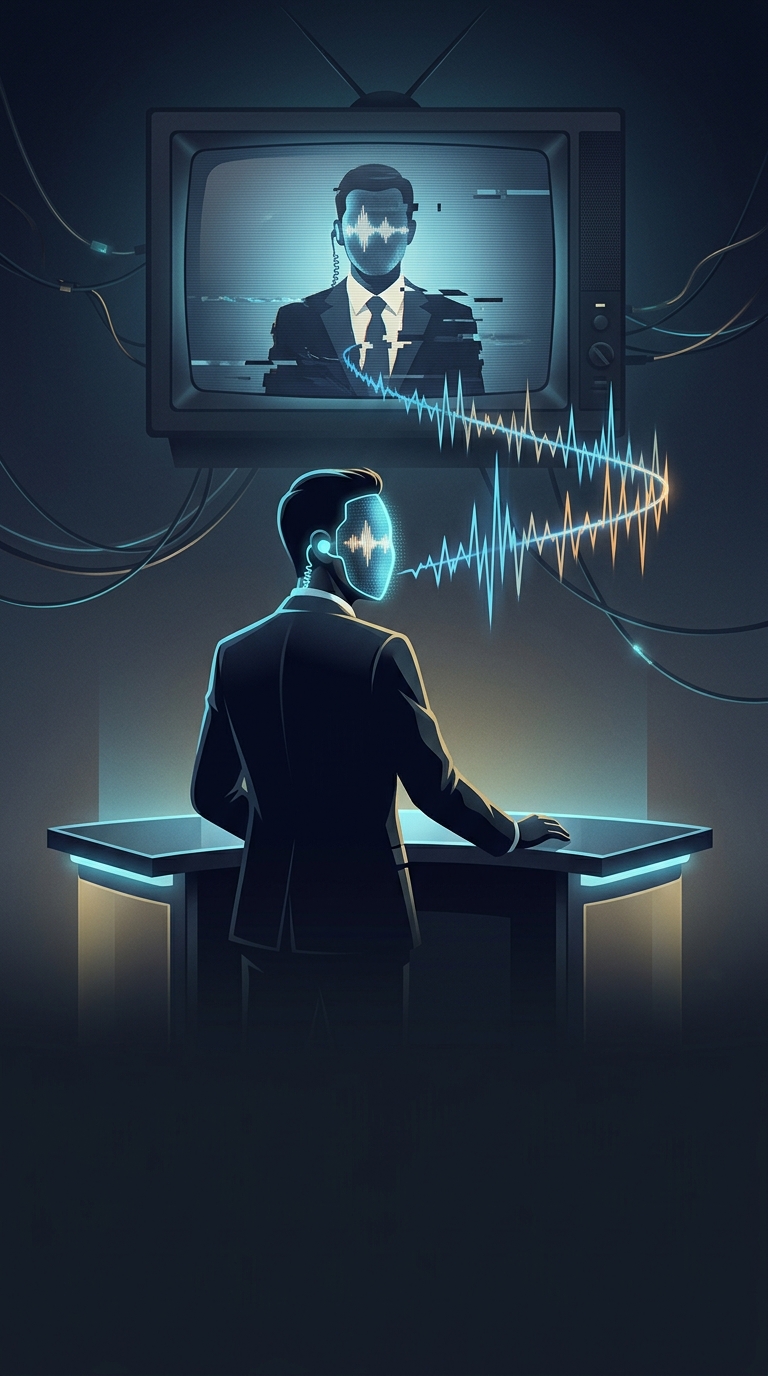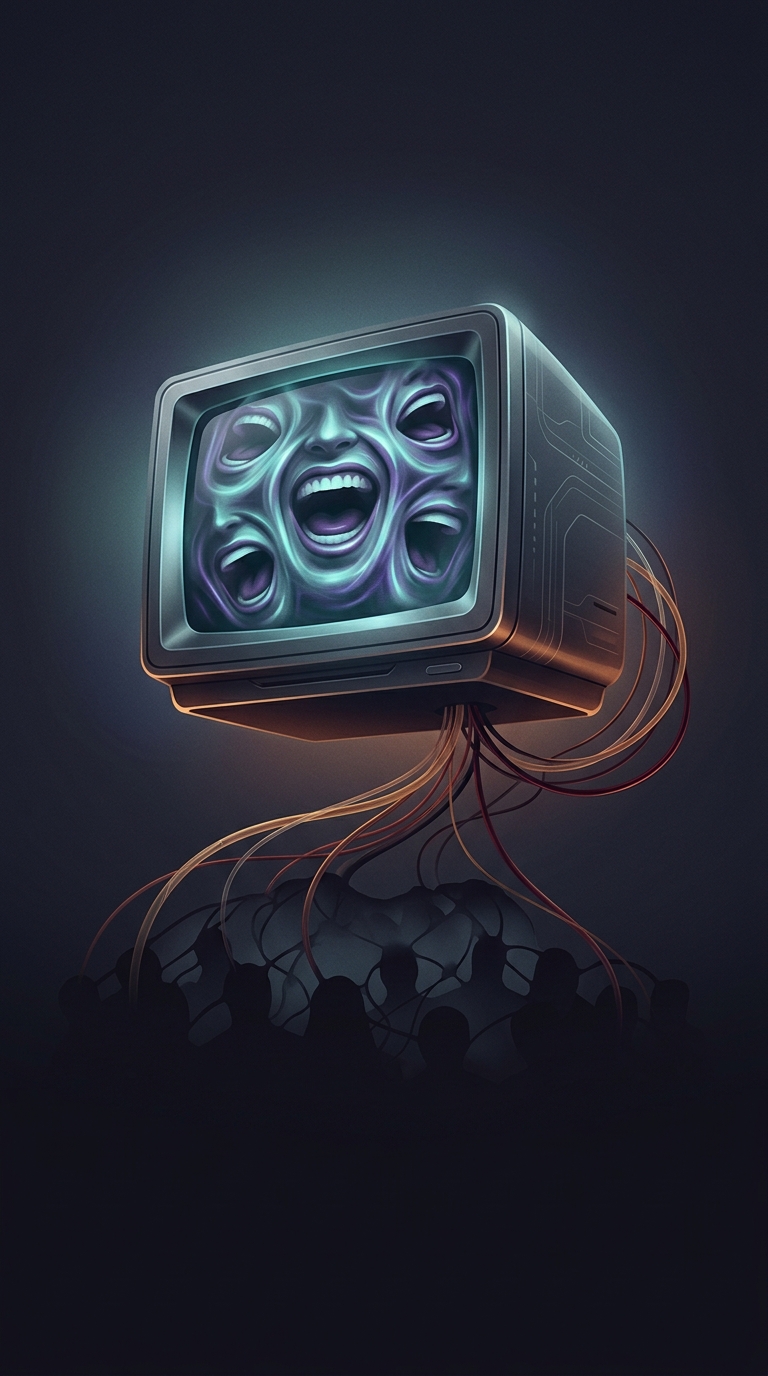
The laughter is usually recorded, then edited
A sitcom laugh track is not necessarily one continuous recording of an audience watching the finished episode. The laughter may come from people in a studio during filming, from a library of audience reactions recorded earlier, or from a mixture of both. Editors place those reactions around jokes and adjust their length and volume to fit the scene.
That editing matters because a laugh can cover a line, drag out a pause, or make a joke seem to land harder than it does on its own. The track is shaped to guide the viewer’s sense of timing, not simply to document what happened in the room.
Live audience, canned laughter, and the middle ground
A sitcom filmed before a studio audience can use the crowd’s actual reactions. The performance may still be edited afterward: a joke might be retimed, a reaction trimmed, or laughter added where the room was too quiet. This is often called sweetening.
A single-camera sitcom, filmed more like a movie without a gathered audience, may instead use prerecorded reactions—or no laughter at all. “Canned laughter” usually means those prerecorded responses, but people often use “laugh track” for any added or edited sitcom laughter. So there is no single source behind most sitcom laughs: it depends on the show and how it was made.
Why reuse recordings?
A library of reactions gives editors reliable control. They can choose a short chuckle or a bigger burst, keep the sound consistent between takes, and avoid letting an uneven audience response disrupt the rhythm. The tradeoff is that laughter can feel detached from the joke if the timing or intensity is wrong.
What sounds like a spontaneous crowd may therefore be a carefully assembled layer—sometimes captured in the room, sometimes borrowed from recordings, and often polished in the edit.