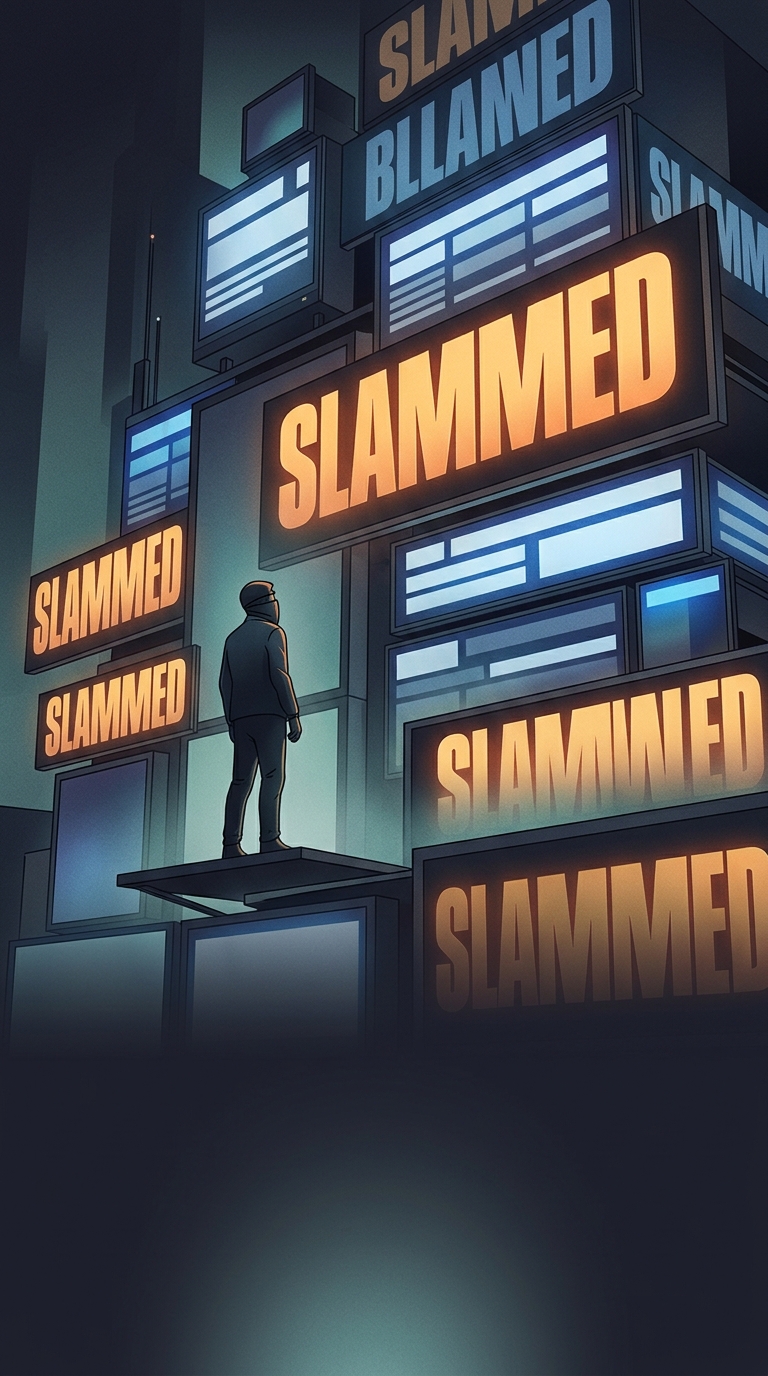
Why “slammed” keeps appearing in political headlines
“SLAMMED” turns a response into a confrontation. Instead of saying that one politician criticized another, a headline can use a single forceful verb to suggest a sharp public clash. The word is vivid, compact, and easy to scan—useful qualities when a headline has only a few words to earn a reader’s attention.
It also leaves room for the story to supply the details. “A senator slammed the proposal” could describe anything from a measured objection to a furious speech. The headline signals conflict before readers know how serious it was, making the verb more dramatic—and less precise—than alternatives such as “criticized” or “questioned.”
The incentives behind the verb
Digital publishers compete for attention in crowded news feeds, where readers often decide in an instant whether to open a story. A punchy verb can make an article stand out, and political news readily supplies opposing sides, public rebukes, and rebuttals. Editors may also choose familiar wording that fits a headline’s tight space and matches the tone readers expect from a developing dispute.
That doesn’t mean every use is fabricated or that one editor is deliberately exaggerating every story. The word can accurately describe a harsh attack. But when it becomes a default, it blurs meaningful differences: a formal objection, a pointed criticism, and a personal denunciation can all be presented as the same kind of blow.
What the wording changes
“SLAMMED” tells readers how to feel about the exchange before they encounter the underlying remarks. Repeated across headlines, it can make routine political disagreement seem like a continuous series of dramatic confrontations. Checking what was actually said—and whether the headline names a specific action—helps distinguish a real verbal broadside from a familiar attention-grabbing frame.