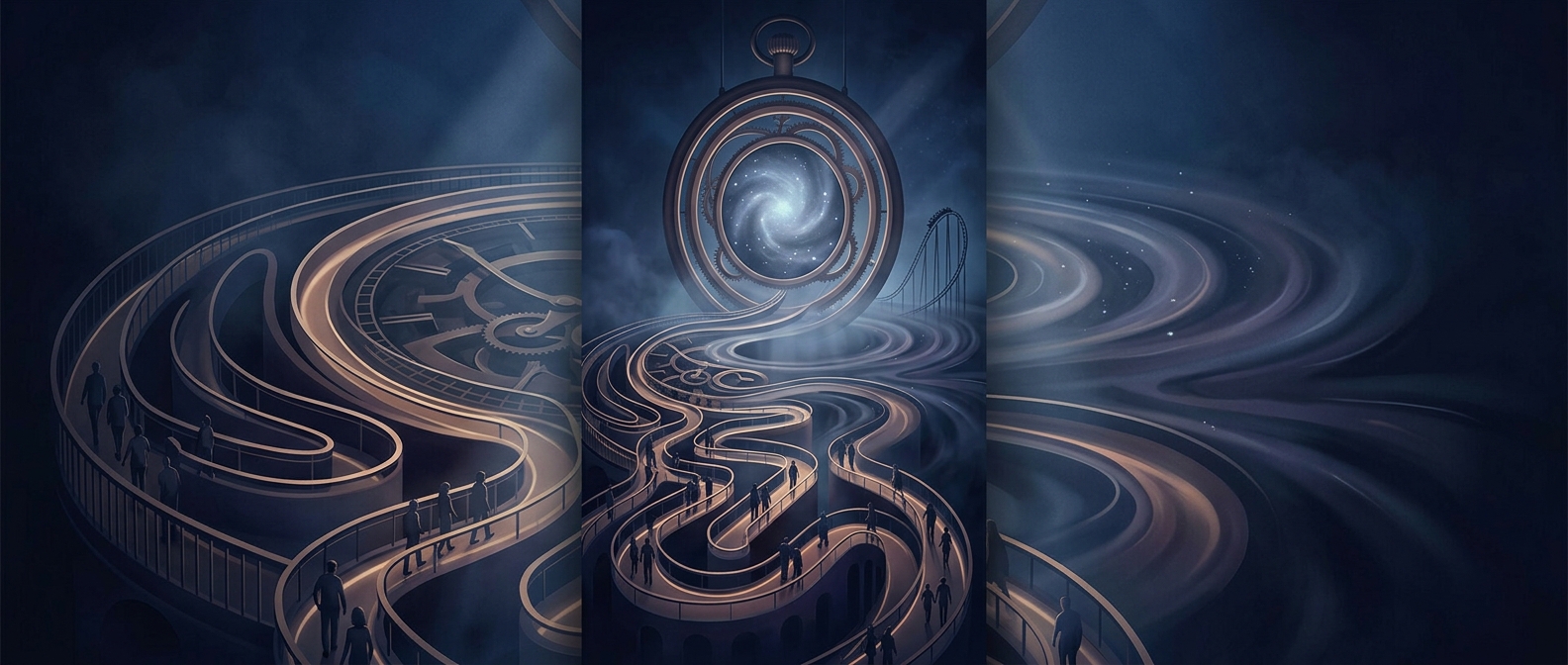
A queue is a piece of park infrastructure
A ride’s line has to fit between buildings, paths, landscaping, and other attractions. A straight queue would need a long, unobstructed strip of land. A switchback—rows of barriers that send the line back and forth—uses a compact footprint while still holding a large crowd. Its shape is a practical response to limited space, not just a way to make waiting feel shorter.
The turns help manage the crowd
Barriers give the queue a defined route, reducing the chance that people will spread across a walkway or cut through the line. They also let attendants see and regulate where visitors are moving. When a ride pauses, a contained queue is easier to hold in place; when it resumes, people can advance in an orderly flow.
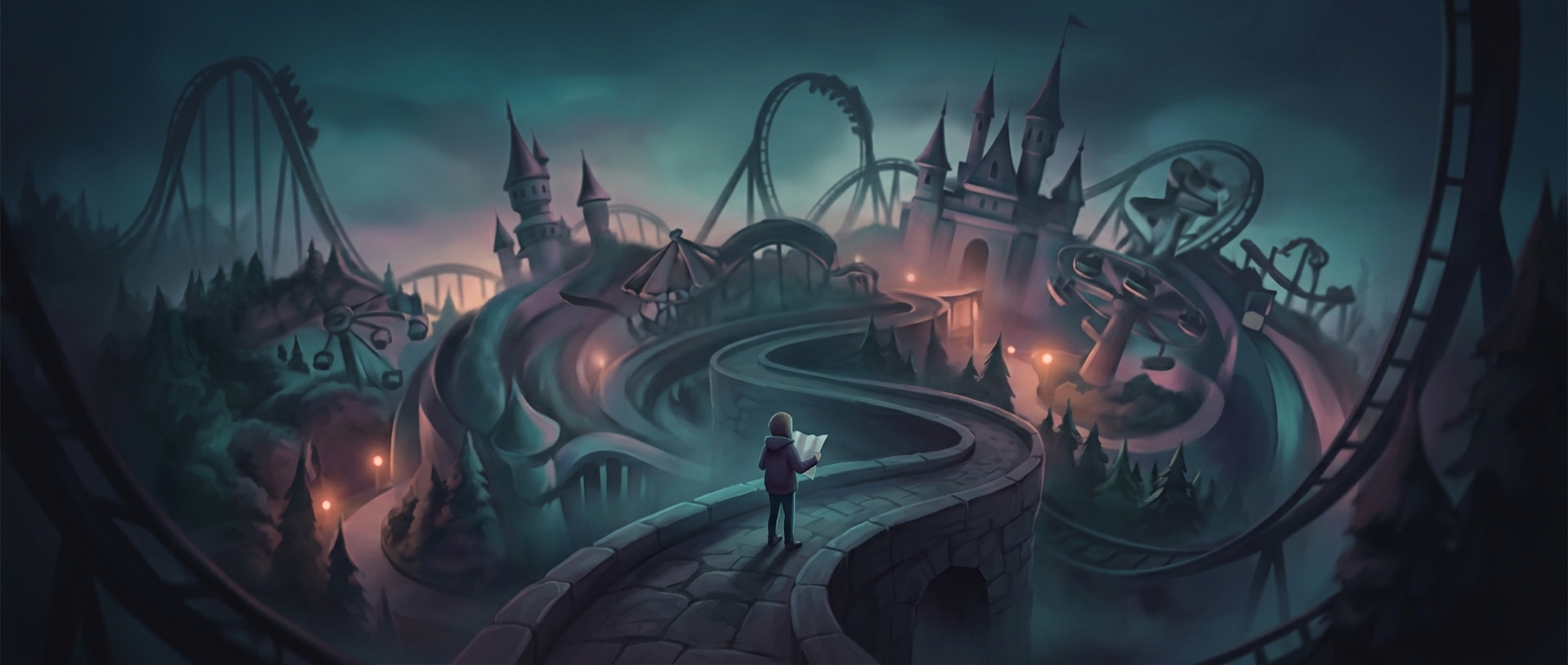
The layout also limits what each person can see. A straight line may reveal a long procession stretching toward the entrance. Turns break that view into smaller sections, so the full length is harder to judge at a glance. The line may still be just as long, but its scale is less immediately visible.
The shape has tradeoffs
Switchbacks can feel crowded, especially when the barriers are close together, and they do not make the wait itself disappear. Parks often use them alongside shade, themed scenery, or views of the ride to make the space more tolerable. The design has to balance capacity with room to move and a clear route for visitors who need an accessible alternative.
So the zigzag does two jobs at once: it stores a crowd in a smaller area and organizes how that crowd moves. The next turn may hide most of the line, but it also keeps the queue from spilling into the path outside.