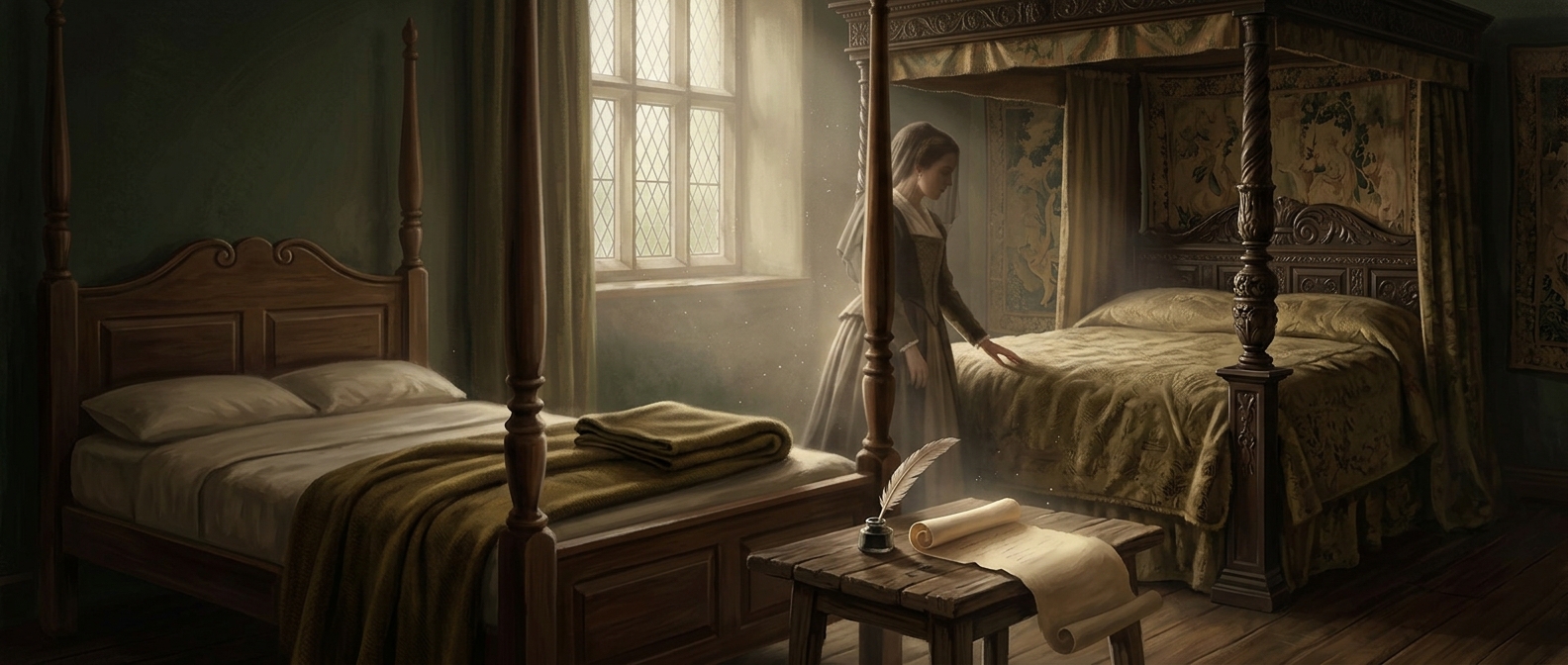
What “second-best” meant in Shakespeare’s household
Shakespeare’s will left Anne Hathaway “the second-best bed with the furniture”—meaning the bed and its accompanying furnishings. The phrase sounds like a deliberate slight when read with modern assumptions, but beds had a different place in a prosperous household. A household’s finest bed could be kept for important visitors, while another bed served the family’s everyday needs. The second-best bed may therefore have been the bed Shakespeare and Hathaway used, though the will does not say so.
A famous line, not a complete account
The bequest is striking partly because Shakespeare’s will names substantial gifts to his daughters and gives Hathaway this particular object. But a will records how someone chose to distribute property covered by that document; it does not necessarily describe every arrangement or the emotional meaning of each gift. A widow could also have rights or support not spelled out in a particular bequest, and the surviving wording alone cannot establish what Shakespeare intended by “second-best.”
That uncertainty is why the bed has attracted so much attention: it is an intimate, tangible detail in a legal document otherwise concerned largely with property and money. It may have been a meaningful household possession rather than a token of contempt—but the will leaves the final interpretation open.