A familiar game, packaged as Othello
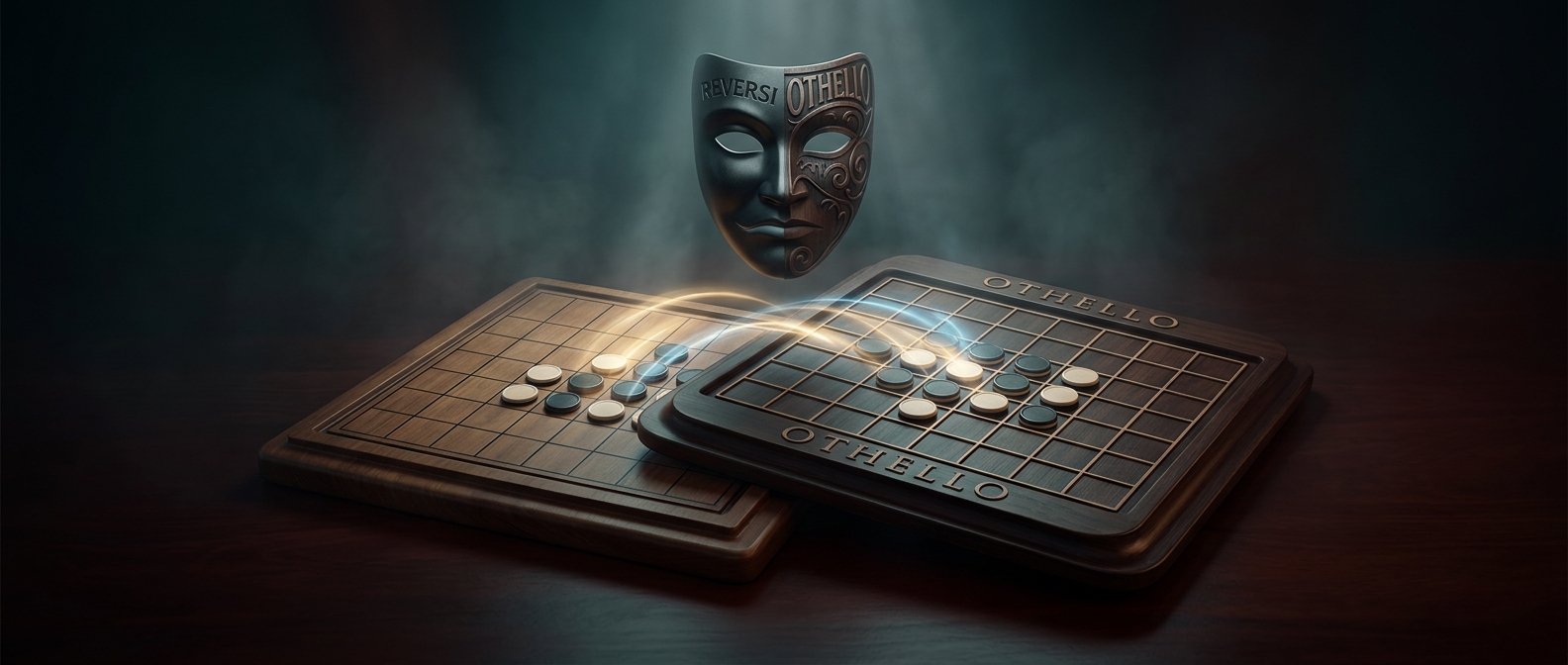
Othello was not a new game invented in Japan. Its close predecessor, Reversi, had been played in England in the 19th century. In the 1970s, Japanese salesman Goro Hasegawa brought the game back into commercial view under the name Othello, turning an old pastime into a product that could be sold widely.
The change was more than a new label. A recognizable name and a standardized board made the game easier to present and distribute. Othello went on to sell millions of boards, giving many players their first encounter with a game whose basic idea was already decades old.
The board makes every move a reversal
Othello is played on an 8-by-8 grid with double-sided discs, black on one side and white on the other. Players take turns placing discs; a move captures opposing discs when it traps them in a straight line between the new disc and one already on the board. The captured discs are flipped to the mover’s color.
That flipping is the game’s engine. A player can appear to be gaining ground, only to lose several discs in a single turn. The board’s balance can change quickly, so a move that wins space now may expose pieces that an opponent can later capture.
A Shakespearean name, not a Shakespearean story
The name connects the game to Shakespeare’s tragedy, but the board contains no plot or characters. Its black-and-white pieces offer a vivid image of opposing sides, while the title gives a simple abstract game a memorable identity. The result was a revival with a new commercial life: Reversi’s familiar contest of capture and reversal, presented to a new generation as Othello.