How Pioneer Grimness Made Pawnee Feel Old
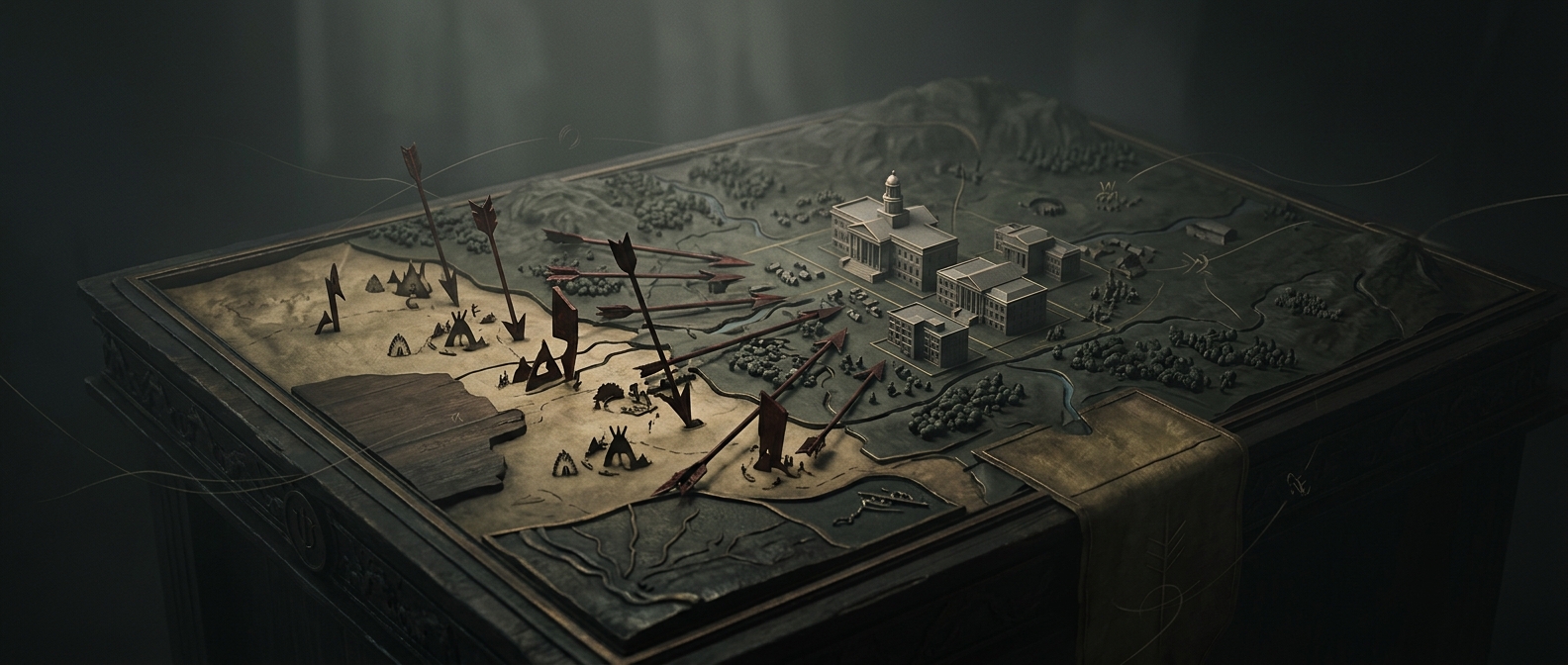
A town hall mural can do more than decorate a wall: it can present a community’s past as something residents have inherited. For Parks and Recreation, invented pioneer lore gave fictional Pawnee, Indiana, a history that seemed to stretch far beyond the characters’ everyday concerns. The murals offered a visual shorthand for that accumulated past, even when viewers never learned every detail behind it.
The choice of grim history also fits the show’s comic world. Pawnee’s civic life is often sunny, earnest, and self-congratulatory; a darker pioneer legacy creates a counterpoint. The gap between the town’s cheerful public image and the unsettling past implied by its murals makes the setting feel both absurd and lived-in.
Background That Works Like a Joke
This is a form of worldbuilding: writers create details about a fictional place so it feels larger than the scenes shown on screen. Instead of pausing for a history lesson, the series could let a mural suggest that Pawnee’s civic pride rests on a complicated past. The audience gets the sense of a whole local mythology in the background, while the show keeps moving.
That contrast is useful comedy, but it also makes the town more believable. Real communities often preserve history in public spaces, where official images can turn messy events into a neat civic story. In Pawnee, the invented lore lets the show play with that habit: the wall claims the authority of public memory, while the grimness makes the town’s self-image harder to take at face value.