The Camera Was a Point of View, Not a Character
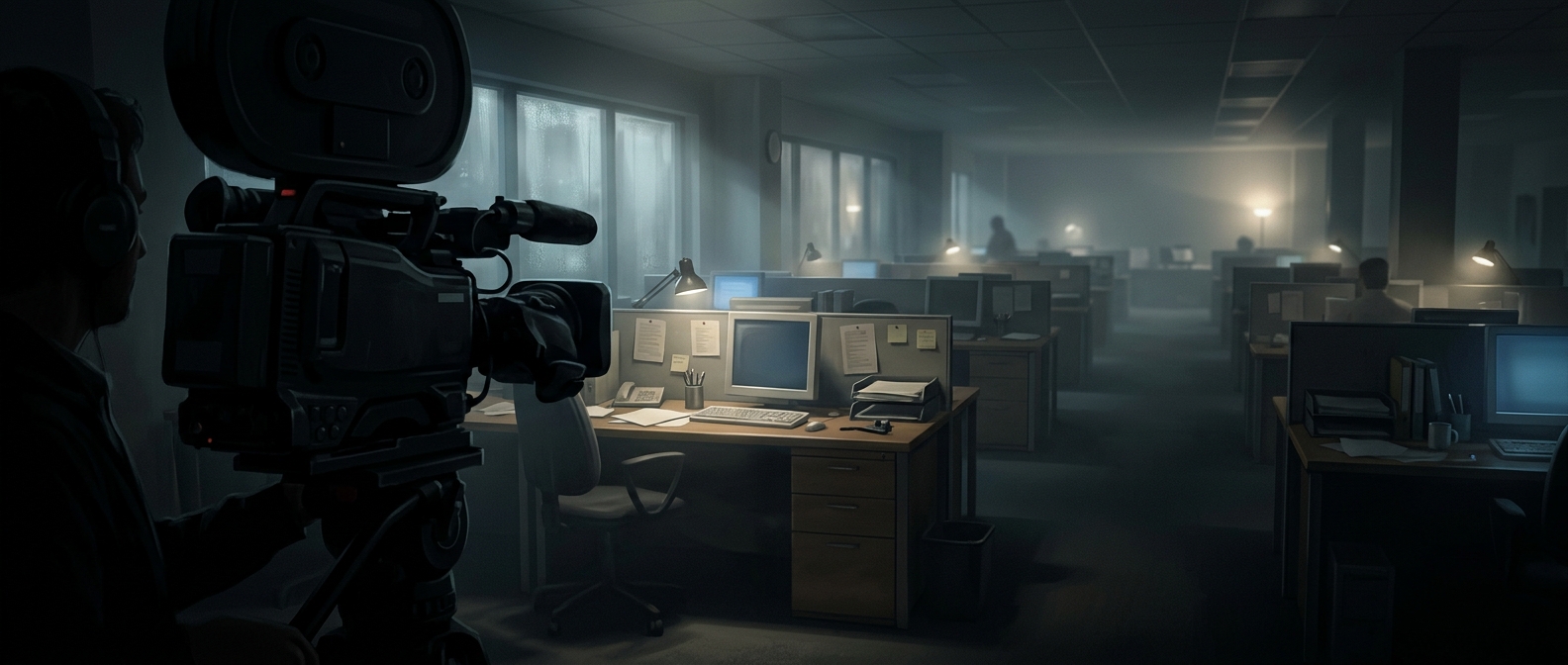
For most of The Office, the camera crew works like an invisible observer. It lingers on a grimace after a manager’s joke, catches a glance exchanged across the room, or follows someone into the hallway. Those reactions let the audience share information the characters do not say aloud—a key advantage of the mockumentary style.
Explaining the crew too soon would have changed that arrangement. If the show had made the camera operators ordinary people inside the office, it would have needed to account for their presence in conversations and workplace routines. If it had treated them as fictional filmmakers from the start, viewers might have expected the characters to acknowledge them. Leaving the crew unexplained let the camera serve the comedy without adding another relationship for the show to manage.
The Reveal Turns the Format Into Plot
In the finale, the crew’s footage is no longer just the device through which viewers have watched the office. The documentary has aired on PBS, and the employees must reckon with being seen by an audience beyond the one watching the sitcom. Their lives have been edited into a public story: familiar moments now have viewers, and the characters can respond to that exposure.
That late shift makes the documentary premise matter without requiring the series to carry it as a constant subplot. The camera can remain unobtrusive through the ordinary seasons, then become consequential when the story is ready for the characters to confront it.
The result is a neat change in scale: what had felt like a camera pointed at one Pennsylvania workplace becomes a film that its former employees—and their community—can watch together.