When a villain’s gesture goes off-script
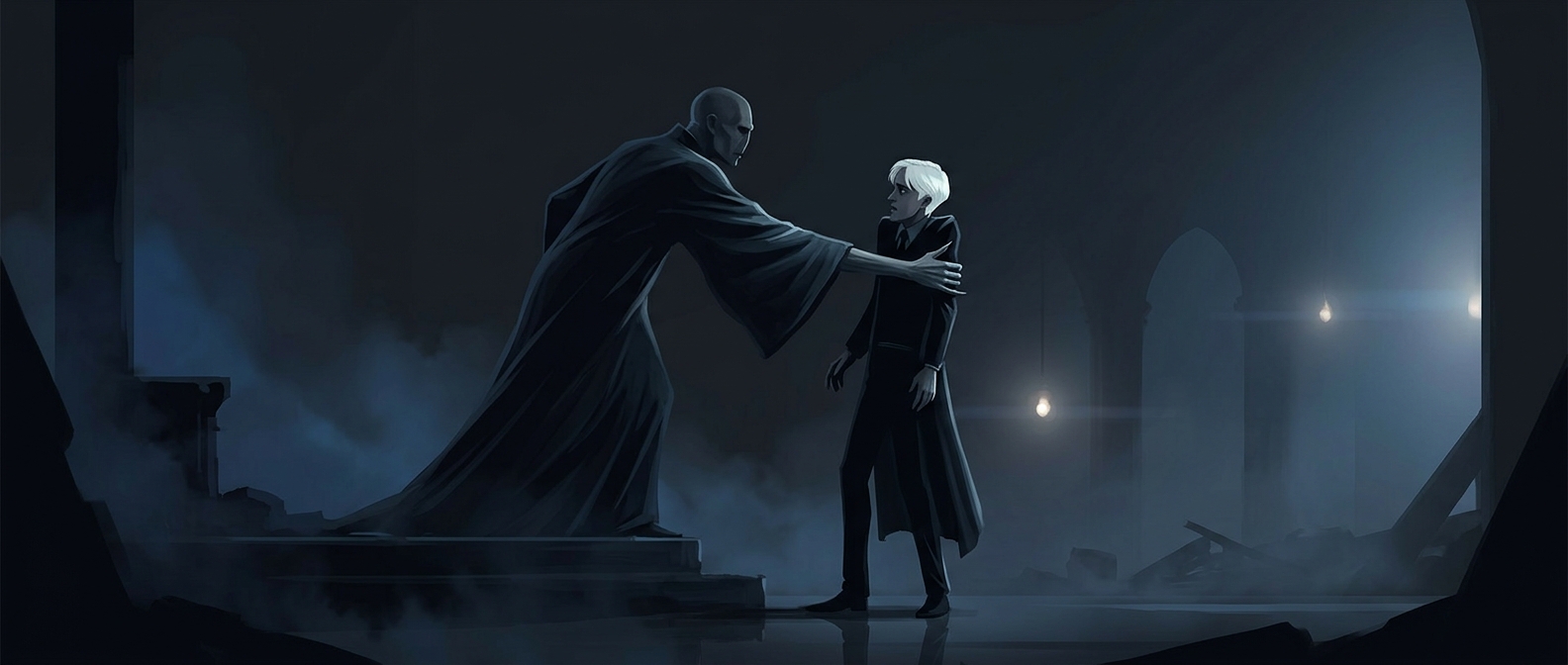
The embrace works because it clashes with the danger surrounding it. Voldemort is a figure who normally controls the people around him through fear; a hug suggests comfort and mutual affection. Put those signals together, and the gesture feels wrong before anyone needs to explain why.
Tom Felton’s startled response gives the moment its sharpest edge. Draco is not simply receiving a warm greeting: he is caught in an intimacy he did not seem prepared for. The brief hesitation makes the power imbalance visible. Voldemort can choose the terms of the encounter, while Draco has to react in real time.
Why the awkwardness stayed
A polished, rehearsed embrace might have looked more natural, but naturalness was not the scene’s most useful quality. The uneven timing lets the audience notice the gap between Voldemort’s gesture and Draco’s discomfort. That gap can make the moment unsettling and faintly comic at once, without changing the larger threat of the scene.
Keeping the unexpected reaction also gives the exchange a texture that careful choreography can struggle to reproduce: one performer initiates an action, and the other’s body answers before the response can be smoothed into a planned pose. The result is a small, memorable reminder that even a display of affection from Voldemort feels like something imposed, not shared.