A town built around one industry
Matsuo’s apartment blocks were not ordinary housing dropped into the mountains: they belonged to a settlement organized around a sulfur mine. Mining brought workers and families to a remote place, where apartment buildings could house many people close to the work and to the services a large community needed.
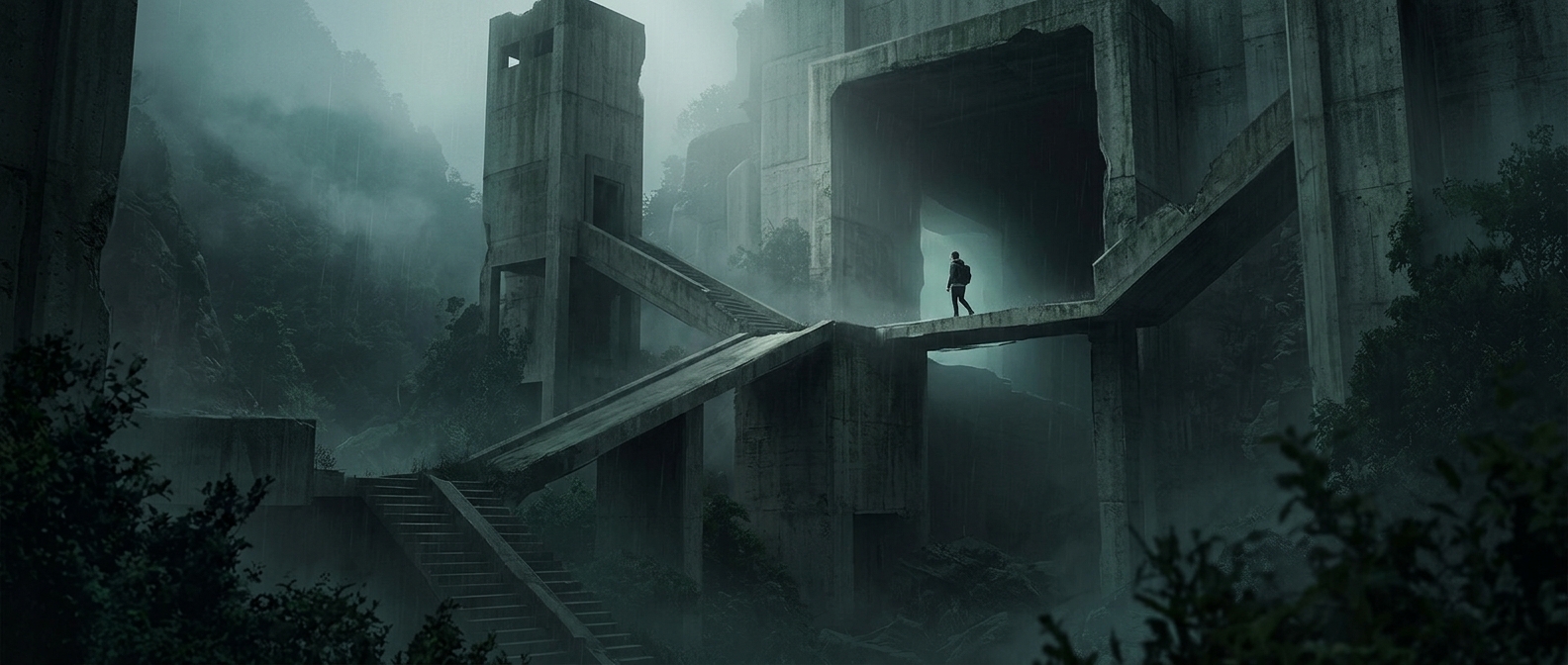
That arrangement also made the town dependent on a single economic engine. Once the mine shut down in the 1970s, the jobs that sustained the settlement disappeared. Residents left, and buildings designed for a busy community were left without a new purpose. The result is the striking mismatch visitors see today: large, durable structures stranded in a landscape that has gradually reclaimed their surroundings.
Why the ruins draw visitors
In Japan, haikyo is the exploration and photography of abandoned places. Matsuo appeals to ruin-hunters because its eleven apartment blocks preserve the scale of a vanished mining community, while weather, plants, and fog make the site feel increasingly remote. The attraction is not simply decay; it is the visible outline of a whole town whose reason for existing has gone.
The remains are also a reminder that an abandoned building is not automatically a visitor attraction with safe, maintained access. Overgrown mountain terrain and deteriorating structures can make exploration hazardous. What looks like a dramatic open-air museum is, in reality, a former place to live and work slowly being absorbed by its setting.