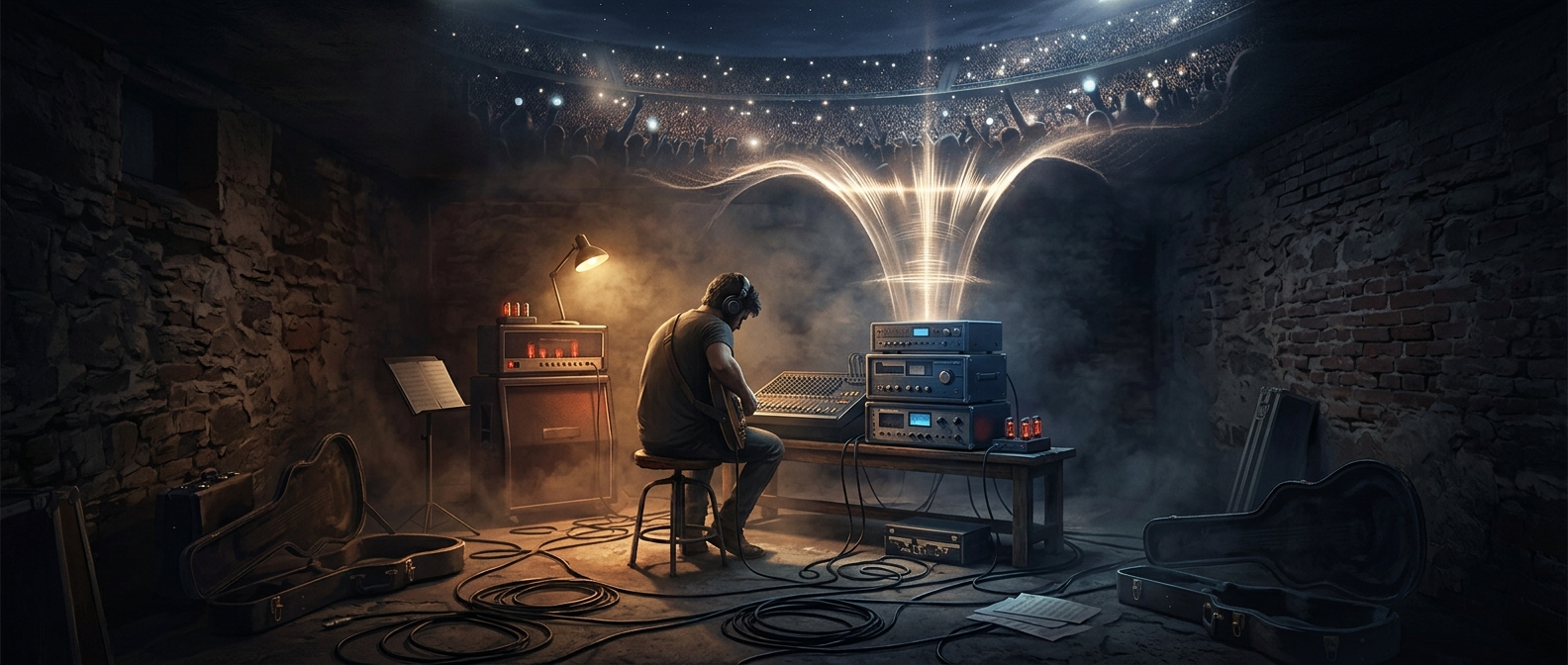
How a Basement Became Boston’s Studio
A basement recording room has a practical limit: there is not space for a full band to play loudly without the sound bleeding between microphones. Tom Scholz’s solution was to make the room less like a conventional live studio. He built and assembled recording equipment, then worked through the songs in layers, recording parts separately and combining them on tape.
That method gave him unusual control over the guitars. Instead of capturing one performance and accepting its balance, he could build the arrangement piece by piece, adding and shaping guitar tracks until they formed the dense, polished sound he wanted. The basement was not merely where the album happened to be made; it was a workspace designed around his way of making records.
The Constraint Became Part of the Sound
Layering tracks takes time and demands careful decisions. Each new guitar part must add something without burying the others, and the recorded parts have to fit together even though the musicians did not play them all at once. Scholz’s engineering approach helped turn those limits into an advantage: he could refine the parts individually rather than relying on a single take of the whole band.
The result was a debut that sounded expansive despite being assembled in a home basement. Its scale came not from a huge room full of musicians, but from patient overdubbing and close control of the recording process. That is the memorable twist: Boston’s big, carefully built guitar sound began in a space where the band could not simply turn everything up and play.