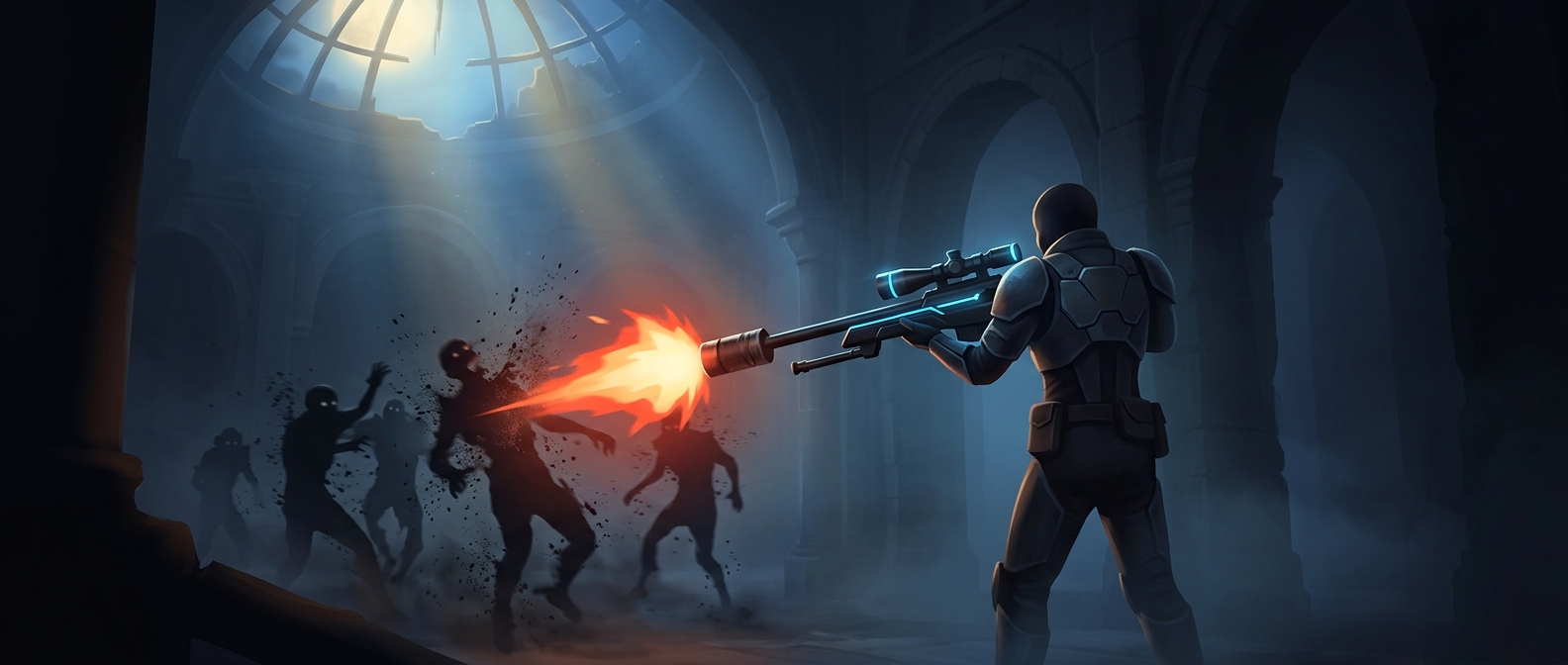
Why a sniper rifle feels absurd at two feet
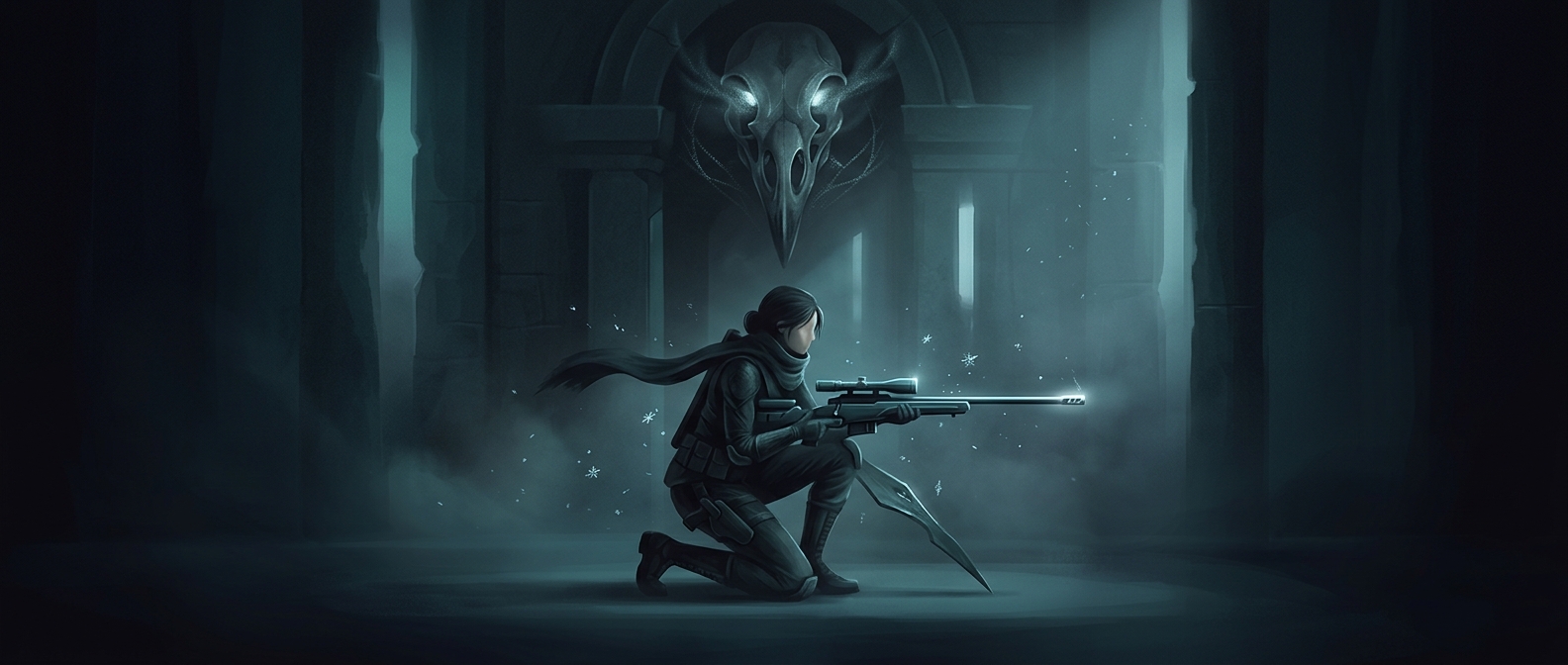
A sniper rifle is built around a particular bargain: give the player a narrow, magnified view and a powerful shot in exchange for slower handling and less awareness of nearby threats. At long range, that trade can feel purposeful. At arm’s length, the scope becomes an awkward way to look at a target who is already filling the screen.
That mismatch is the joke behind calling it a shotgun. The rifle has not changed weapons; the situation has made its usual strengths and weaknesses look ridiculous. A tool associated with patient aiming is being used where there is almost no distance to judge.
The game turns a mismatch into a choice
In many shooters, players can fire without looking through the scope, often called hip-firing. That can make a sniper rifle usable up close, but it is generally less controlled than aiming carefully. Some games also let players raise the scope and fire quickly—a technique often called quick-scoping—so the weapon’s precision role collides with close-range speed.
The result is a design tension: the rifle may deliver a powerful hit, but getting that hit at point-blank range can depend on timing, movement, and the game’s accuracy rules. A nearby opponent has little time to react, while the sniper has little room to use the weapon as intended. The scene feels less like realistic marksmanship than a player exploiting a weapon’s damage in the least appropriate setting.
At two feet, the long-range scope is almost beside the point. The “shotgun” is the situation, not the rifle.