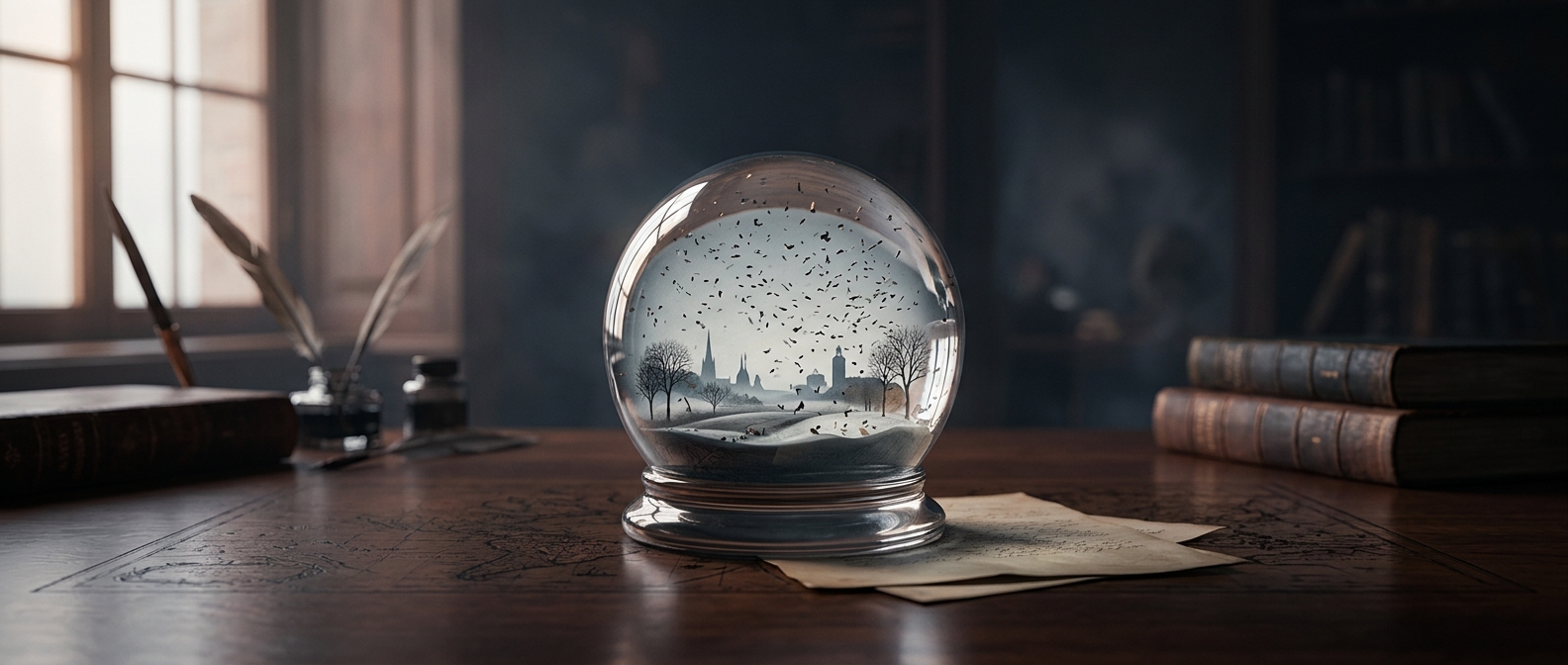
A magnifier meant to make dim light more useful
The snow globe’s early purpose was practical: a glass sphere filled with water could act as a magnifier, concentrating or redirecting light from a weak source. In an era before electric lighting was widespread, even a modest improvement in illumination could matter. The globe was not yet a keepsake with a winter scene inside; it was an attempt to make light work harder.
That useful idea also supplied the shape that made the later object possible. A sealed glass sphere could hold water and small floating particles, while its curved surface made whatever sat inside look like a little world.
From equipment to desk ornament
As the object moved away from lighting, its appeal shifted from function to display. Early versions could be weighty, substantial desk accessories: glass and liquid made them feel more like fixtures than the light, portable souvenirs sold today. Their contents gave them visual interest, but the globe itself still read as an object to keep on a desk.
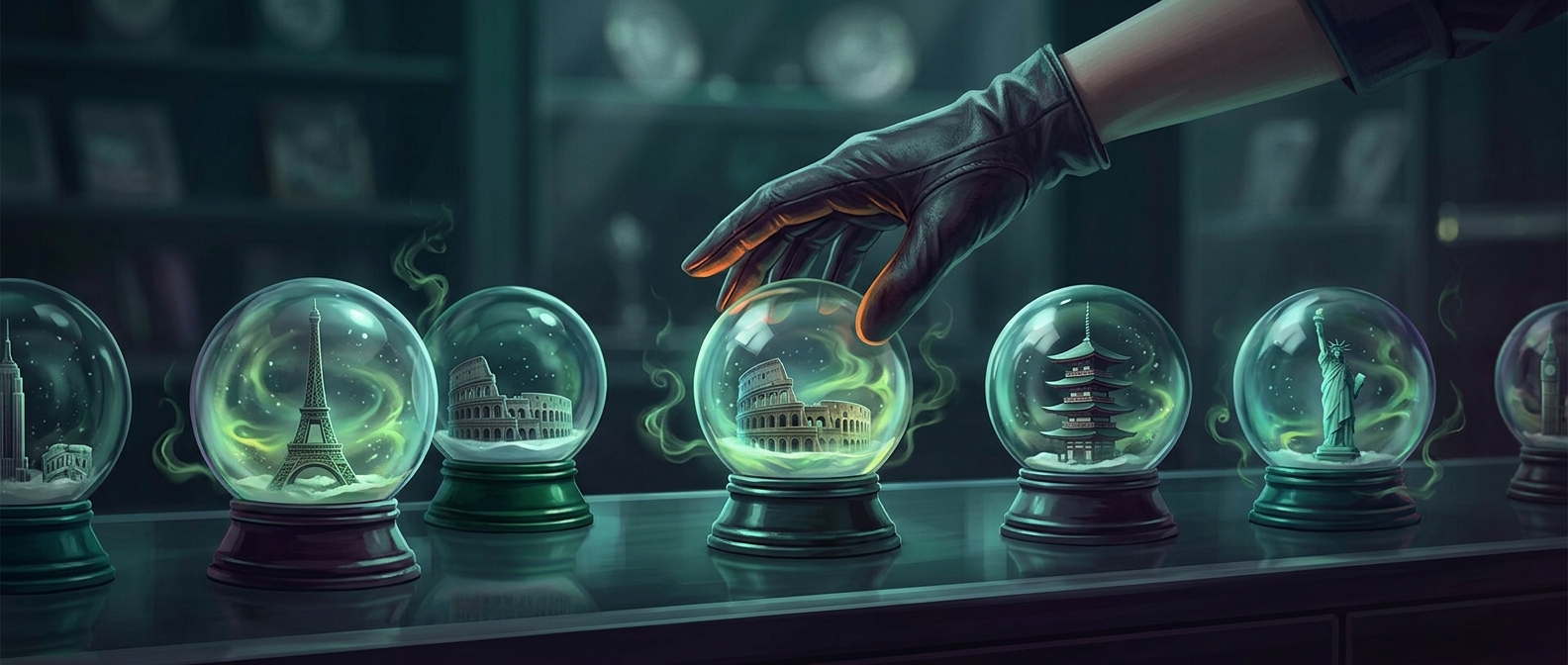
The transformation depended on a simple visual trick. When the globe is shaken, particles spread through the water and drift down around the miniature scene. The motion briefly turns a static ornament into a tiny weather event—an effect that works especially well with a familiar landmark or place inside.
That change in purpose explains the snow globe’s lasting travel appeal: it makes a destination portable, then lets the owner replay a snowfall with a shake of the hand.