Why a virtual scene can matter
A sound, sight, or setting associated with combat can make a person with post-traumatic stress disorder (PTSD) react as if danger is present again. The memory is in the past, but its cues can still trigger intense fear in the body. Avoiding those reminders may bring short-term relief while leaving the alarm response largely untested.
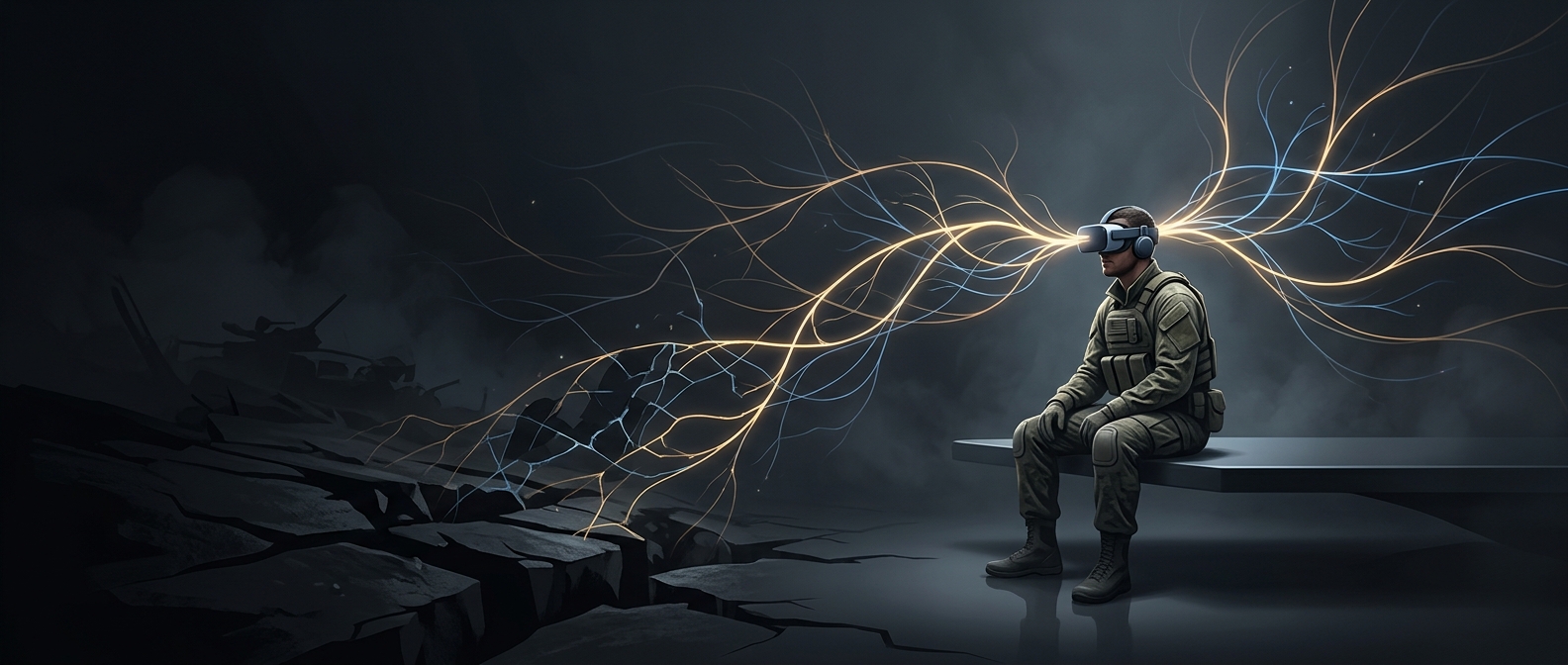
Bravemind gives therapy a way to bring some of those cues into the room without putting the veteran in real danger. Instead of asking someone to describe or imagine every detail, a clinician can use a virtual combat scenario to make the experience more vivid and specific.
Relearning the meaning of a trigger
The treatment uses exposure: facing a feared reminder in a safe, supported setting, then staying with it long enough to learn from what happens. The clinician can adjust the scene so a veteran encounters a trigger in manageable steps rather than being overwhelmed all at once.
That control matters. A scenario can be made more or less intense as the session unfolds, allowing the clinician to work at a pace the person can tolerate. With repeated encounters, the brain can begin to distinguish a reminder of combat from combat itself. The goal is not to erase the memory, but to weaken the automatic connection between its cues and immediate danger.
Safety comes from the setting and the pacing
Virtual reality does not do the therapy on its own. The clinician guides the session, monitors the veteran’s response, and decides how to adjust the scene. That makes the technology a tool for carefully paced treatment, not a replay that a person must endure without support.
The practical shift is that a difficult memory can be approached in a controlled room, one cue at a time. A sound or setting that once seemed to demand an alarm response can gradually become something the veteran recognizes as a reminder—not a threat happening now.