Three counters turn a familiar game into a moving contest
Terni Lapilli is often compared with tic-tac-toe, but its small supply of pieces changes the game’s rhythm. Each player has three markers. Players first place them on the board; once all six are down, a turn means moving one of your own markers to an open position. The aim remains to line up three.
That second phase is the key. In ordinary tic-tac-toe, a square, once claimed, stays claimed. Here, a line can be broken: a player may move a marker away to block a rival’s threatened row, but doing so can open another route to victory. Winning depends on anticipating what the board will look like after pieces move, not just grabbing the next empty spot.
A compact board made for repeated play
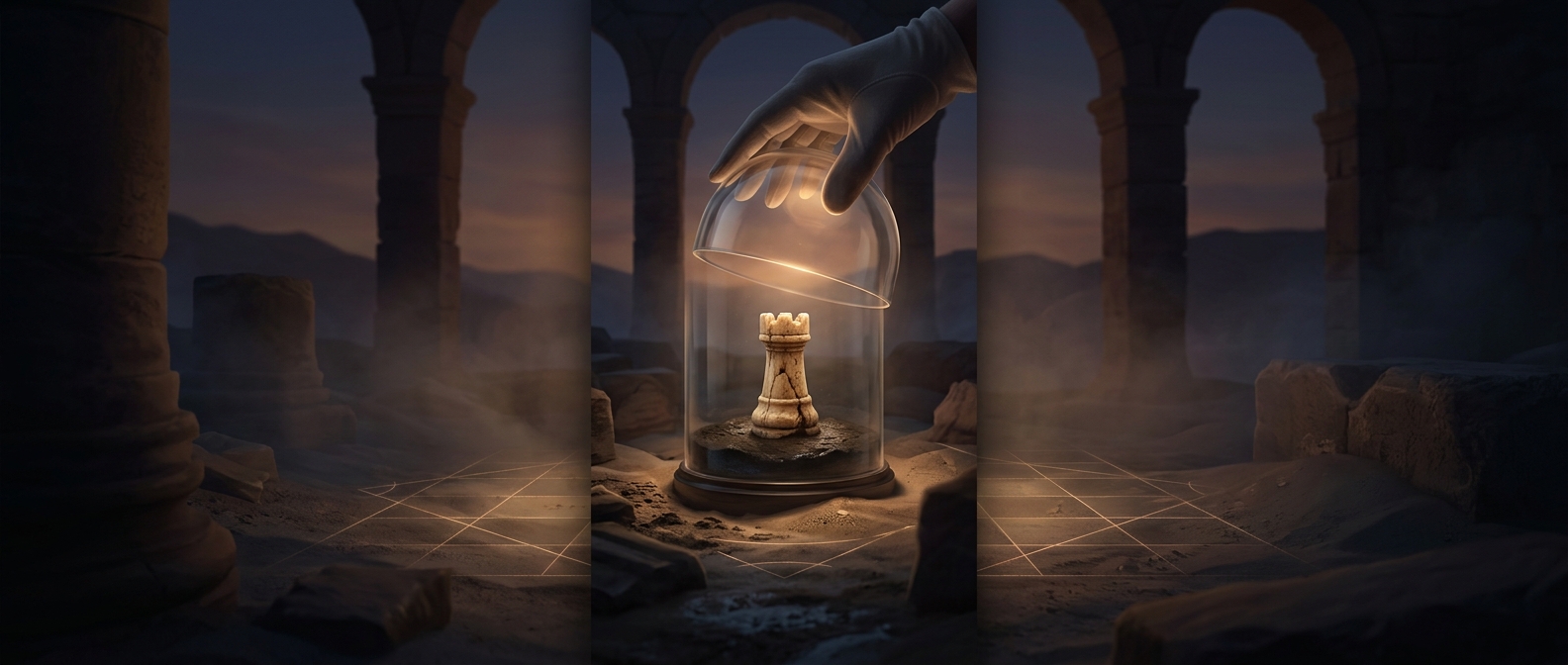
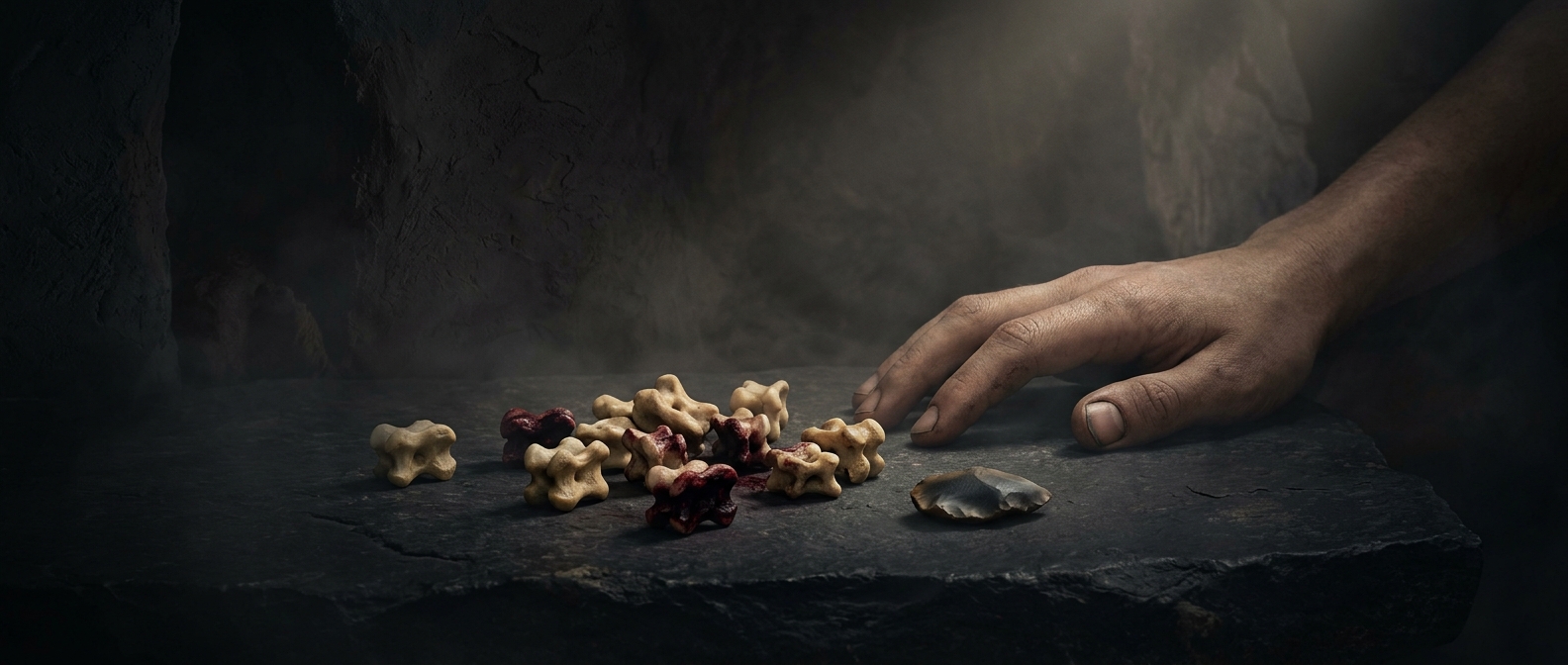
Because the game needs only a drawn grid and a few counters, it can be played with objects close at hand. A pebble serves as a piece; a board can be scratched into a surface. That simplicity helps explain why versions of the game appear as incised boards on ancient Roman stonework. The marks preserve more than a pastime: they show how a simple design could turn an ordinary patch of stone into a reusable playing space.
The result is less a one-time race to fill three squares than a miniature contest over control. Every move changes the position—and may force an opponent to give up a line they had just built.