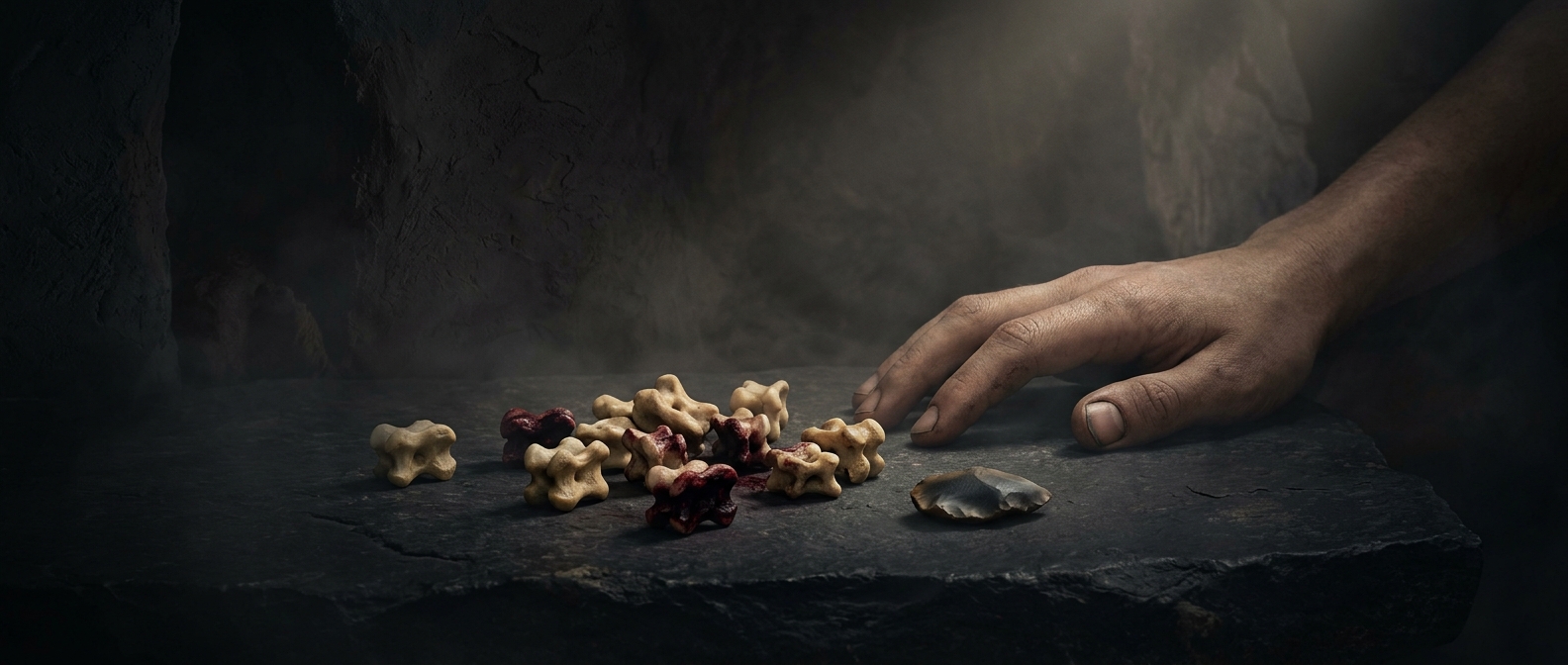
A bone with its own set of “sides”
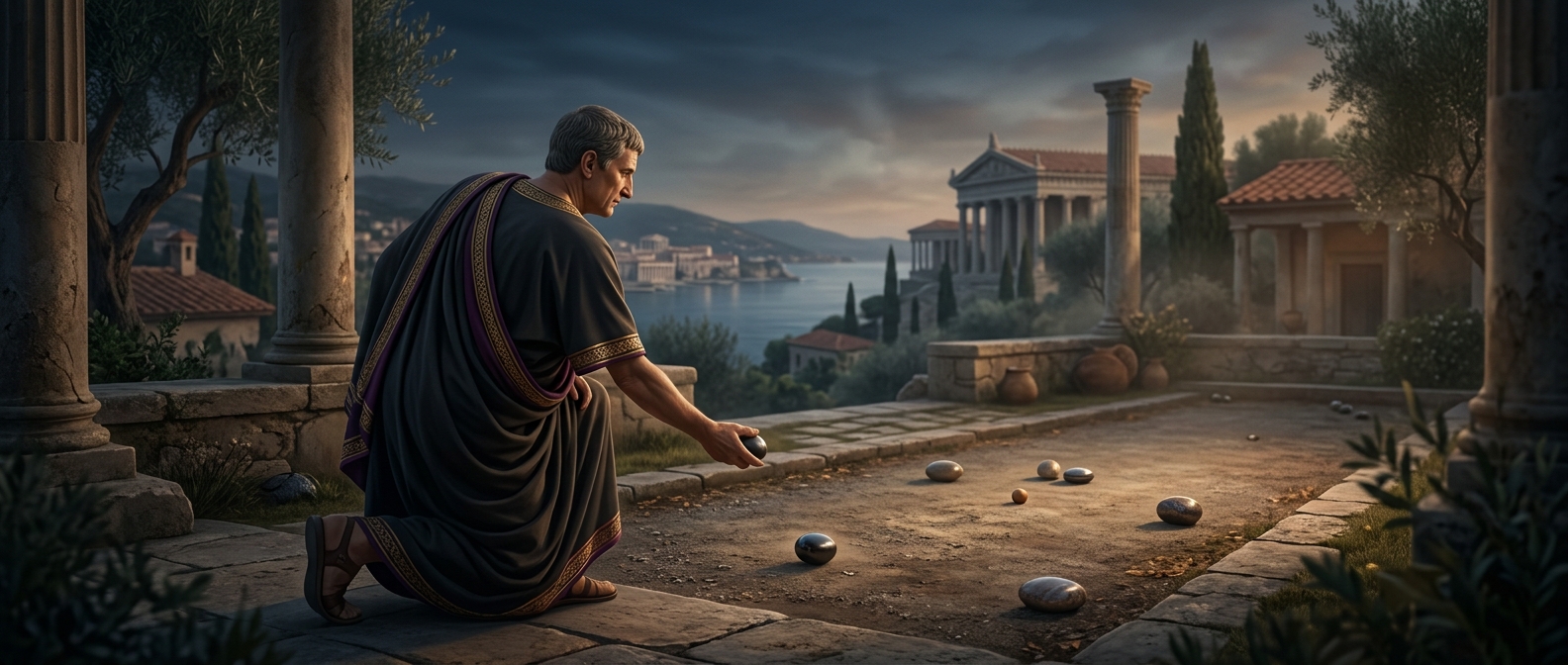
The pieces were sheep knucklebones: small ankle bones whose uneven, four-sided shape made them land in a few distinct positions rather than settle like ordinary cubes. Their form gave the game its challenge. A player had to watch the bones rise and fall, then catch or collect them with the timing the particular version required.
That makes the comparison with modern jacks useful, but not exact. Jacks uses purpose-made metal pieces and a standardized set of rules; ancient knucklebone games varied, and surviving evidence does not establish one universal way Greek children played. The bones themselves supplied the changing positions and awkward bounces that made each toss unpredictable.
From animal joint to plaything
Knucklebones were practical objects to obtain: they came from an animal already used for food, and their compact, durable shape suited repeated handling. The same natural irregularity that made them interesting to toss also made them useful as gaming pieces in other settings, including games of chance.
So the surprising part is not simply that children played with bones. It is that the animal’s anatomy did much of the design work: each piece came ready-made with a limited set of possible resting positions, turning a small toss into a test of coordination and luck.