From weaponized wheelchair to deep-sea guardian
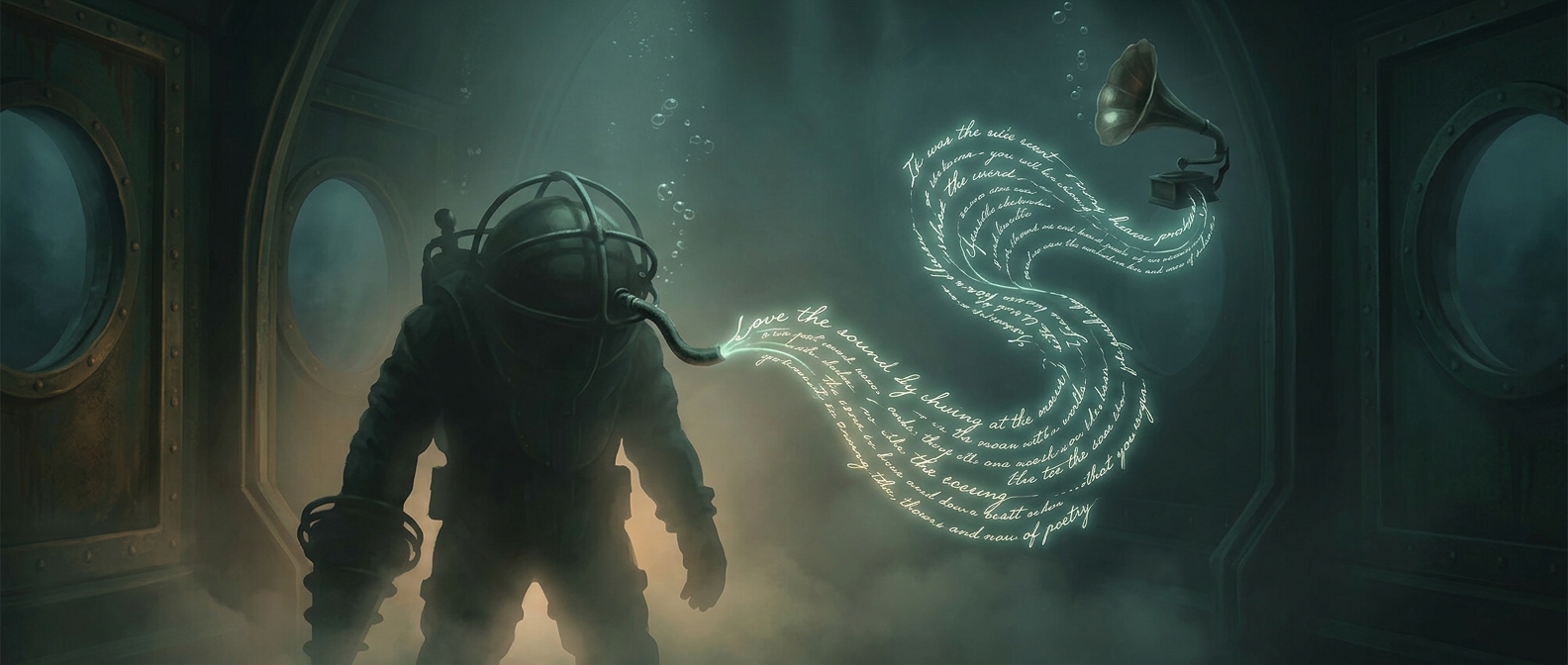
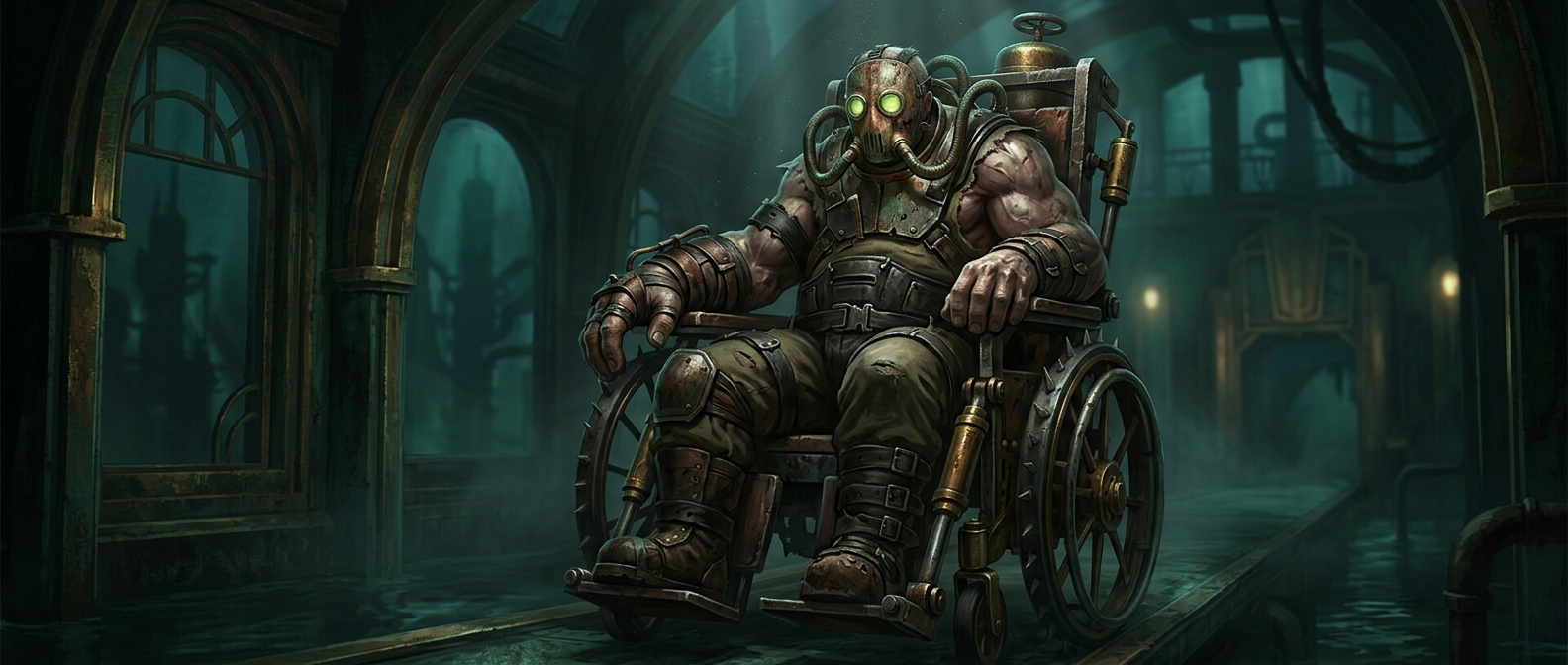
An early Big Daddy concept imagined a hulking man fused into an armed wheelchair. The final design took a different route: a figure enclosed in a massive atmospheric diving suit, the kind of rigid suit built to protect a diver from the pressure of deep water.
That change did more than give the character a striking silhouette. A wheelchair fused with weapons would have made the machinery feel personal and bodily. The diving suit instead made the Big Daddy seem like a product of the world around him: a worker-shaped machine built for life beneath the sea.
The suit makes the setting part of the character
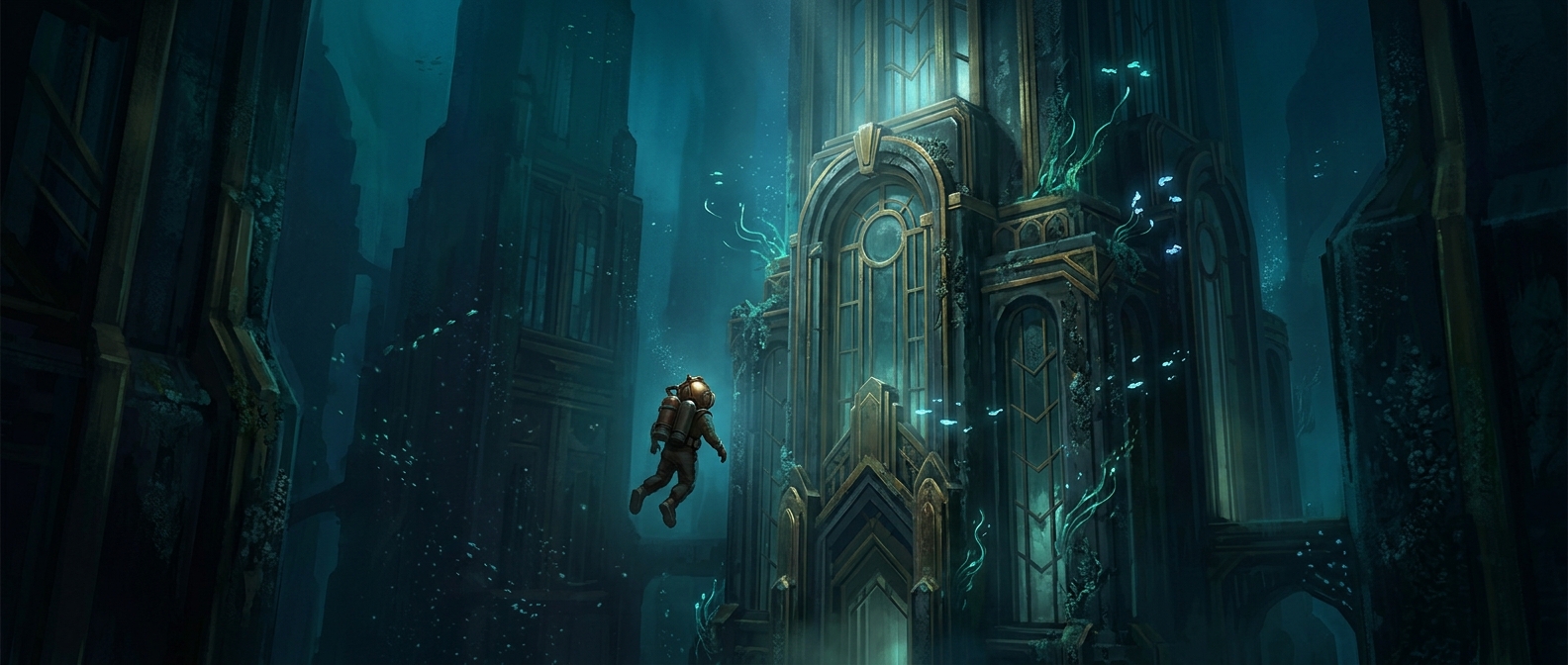
BioShock’s underwater city of Rapture is full of pressure, machinery, and danger. A sealed metal suit gives the Big Daddy an immediate connection to those conditions. Its bulk suggests protection, but also weight and limited movement; the figure looks less like an ordinary person in armor than a piece of industrial equipment that has come to life.
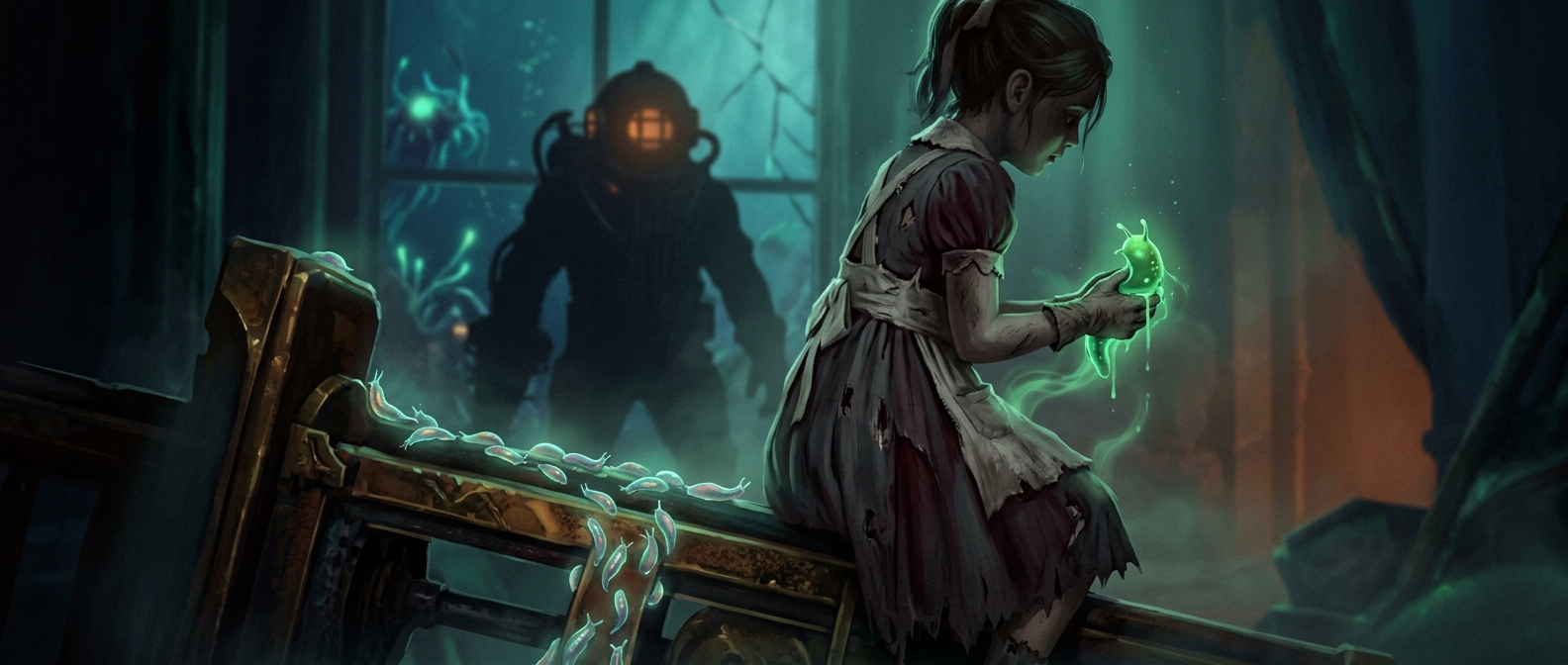
That visual logic supports the character’s role as a guardian. Big Daddies protect Little Sisters, and their imposing, encased appearance makes that relationship legible before the player knows its details. The design turns a practical-looking diving suit into a character cue: this is something built to endure a hostile environment—and to keep others safe within it.
The discarded wheelchair idea might have emphasized the body’s attachment to a weapon. The final suit made the underwater world itself feel attached to the Big Daddy.