Why a Pro Camera Still Makes Automatic Choices
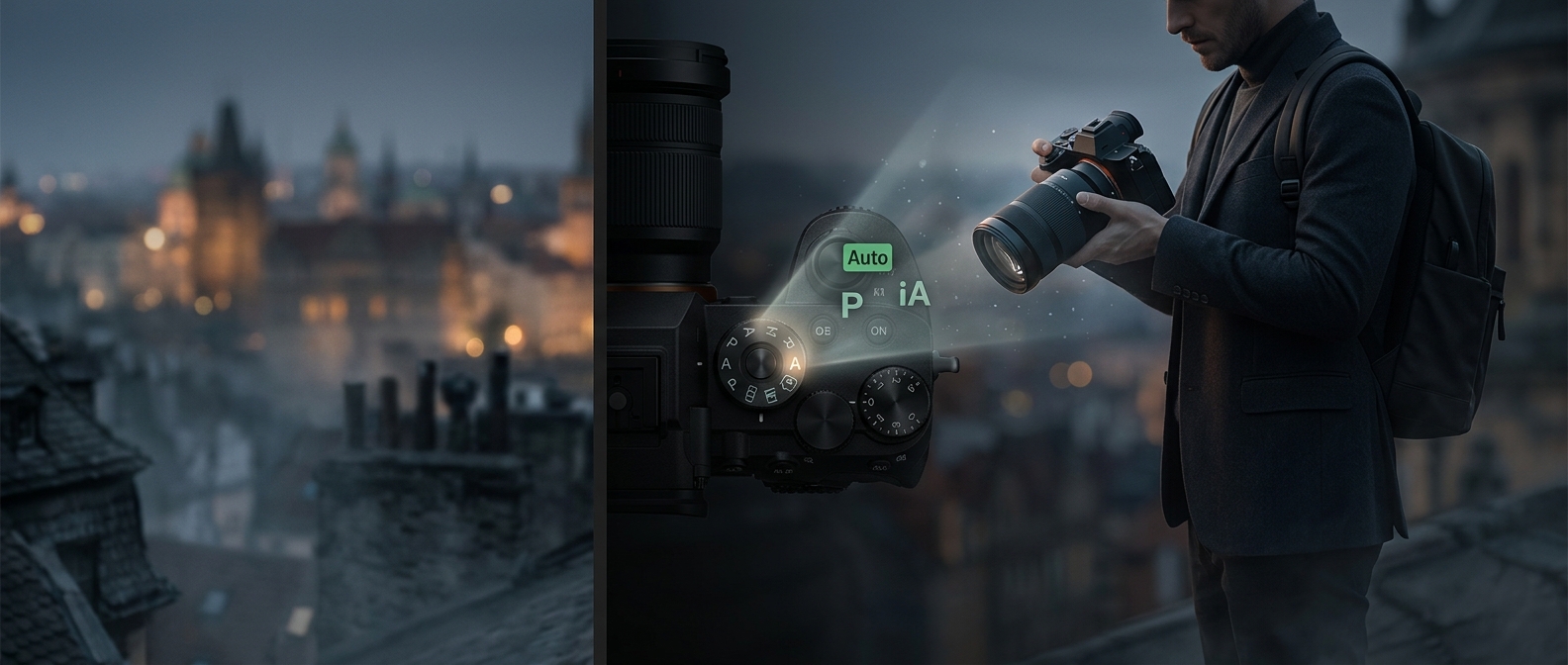
A camera’s automatic mode is not simply guessing. It measures the light reaching the sensor, estimates how bright the scene should look, and selects exposure settings—often shutter speed, aperture, and ISO—to get there. Autofocus systems can also track a moving subject and adjust focus as it changes distance.
That matters on the road, where a scene can change faster than a photographer can turn a dial: a person steps from bright pavement into shade, a bird takes off, or clouds sweep across a landmark. Automation can react in a fraction of a second, helping preserve a fleeting moment.
Automation Frees Attention for the Picture
Professional cameras are valuable not because they require constant manual control, but because they offer capable tools for both automatic and deliberate shooting. A photographer may let autofocus follow a subject or let the camera adjust exposure while concentrating on framing, timing, and the changing scene. Many also use partial automation—such as choosing the aperture while the camera sets shutter speed and ISO—rather than handing over every decision.
The tradeoff is control. A camera can misread a backlit subject or choose a shutter speed too slow to freeze motion. Manual settings let the photographer override those choices when the result matters, such as keeping a waterfall blurred or a moving cyclist sharp.
The expensive camera’s advantage is not that its owner avoids the controls. It is that the photographer can decide which decisions are worth making by hand—and leave the rest to the camera while the moment is still there.