Built to be found after impact
An airplane’s “black boxes” are usually two flight recorders: one logs aircraft data, such as speed and altitude, while the other preserves cockpit sounds. Investigators use them to reconstruct what happened, especially when the aircraft’s condition or the sequence of events is unclear.
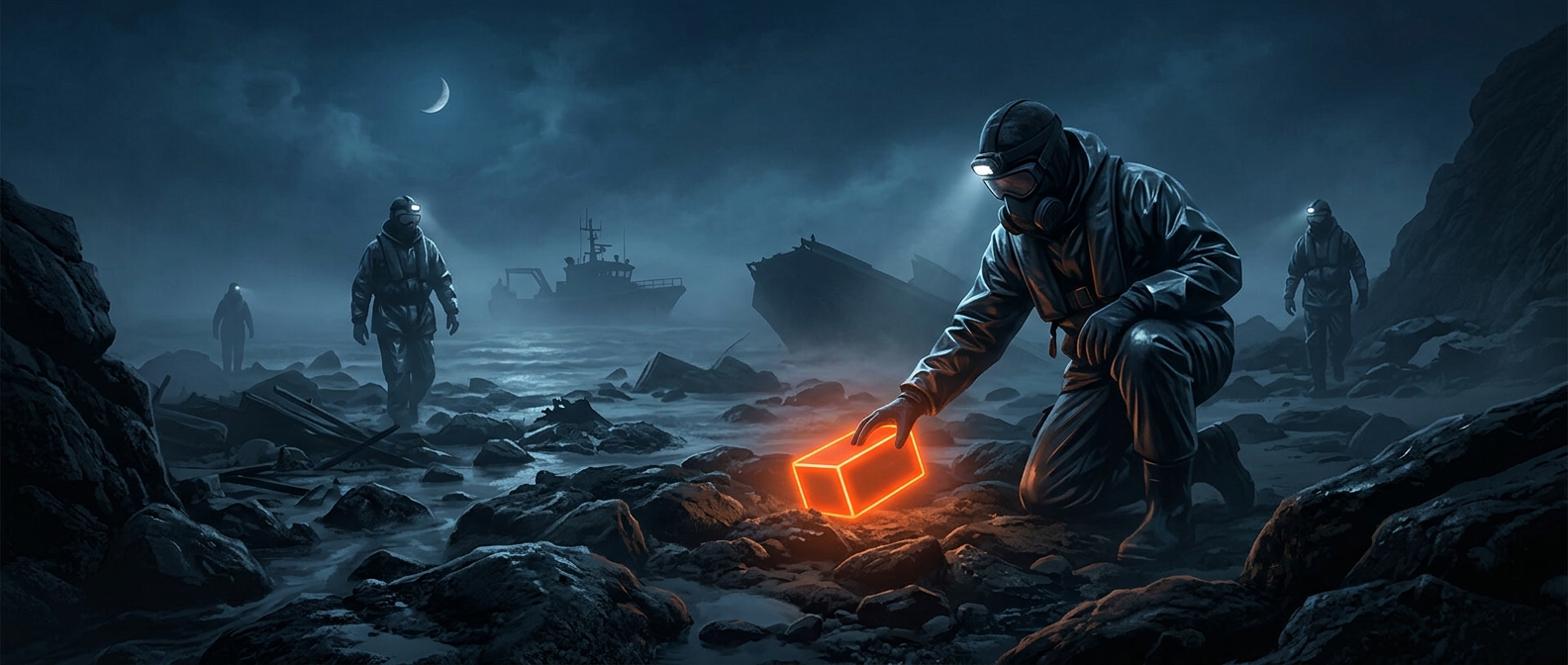
Their outer shells are designed to protect the recordings through severe damage. That creates a practical tradeoff: the casing must be tough enough to survive, but it also needs to stand out once searchers reach the wreckage. A vivid orange finish and reflective markings make the recorder easier to pick out among dark, broken aircraft parts or on the seabed.
Finding the recorder underwater
Visibility cannot help when a recorder is submerged, so it also carries an underwater locator beacon. When immersed, the beacon emits acoustic pulses—sound signals that search equipment can detect—to guide crews toward it. The signal narrows the search; the bright exterior helps identify the device once it is in view.
That combination matters because recovering the recorder is only the first step: investigators need its protected data to understand the accident. The name “black box” stuck, but the conspicuous color serves a very different purpose: making a small, vital object easier to find in a large field of wreckage.