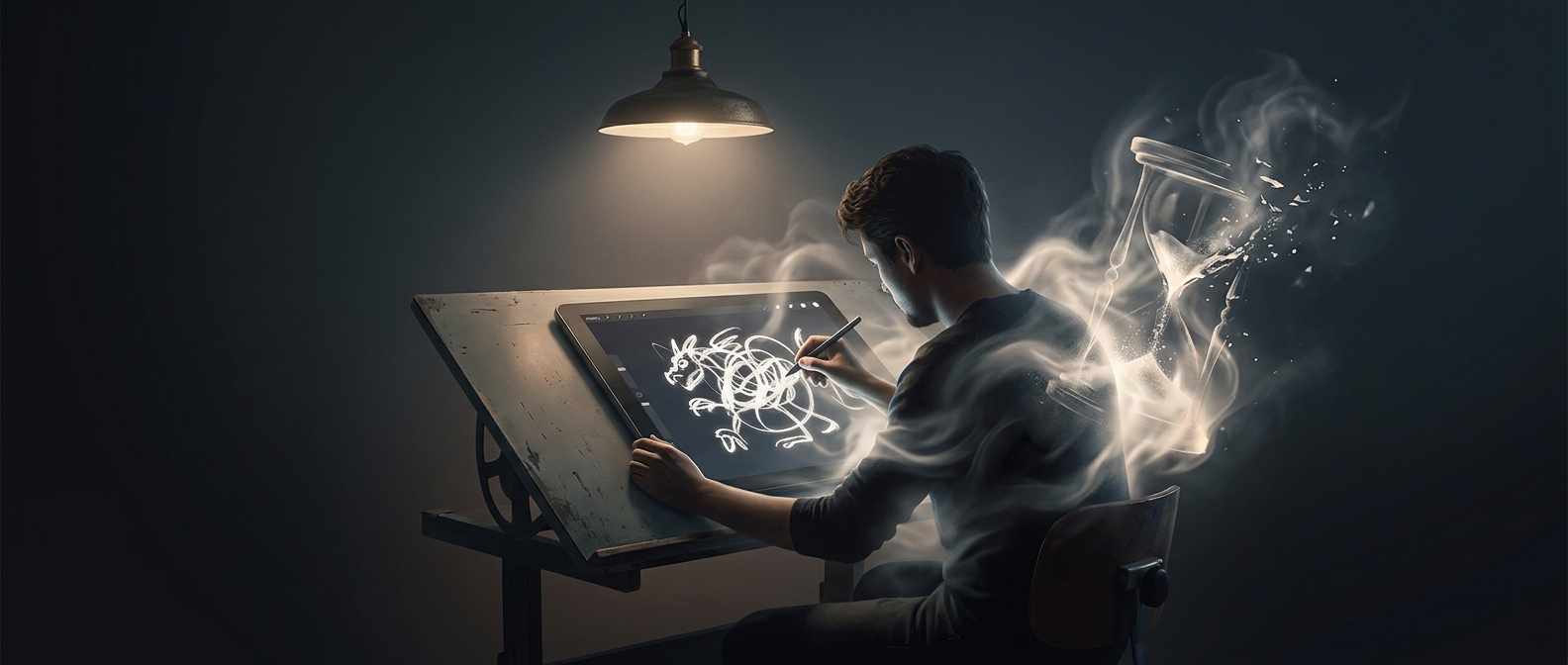
The clock changes what counts as a good drawing
Pictionary rewards a sketch that communicates, not one that looks polished. Under a short timer, an artist cannot carefully render every part of a complicated phrase. The practical move is to pick the most distinctive idea and make it large: a defining object, an action, or a contrast that gives teammates a way in.
That creates a race on both sides. The drawer is racing to put useful clues on the page; teammates are racing to interpret them before time runs out. A rough drawing can help more than a detailed one if its first few marks point toward the right idea.
Why awkward sketches can work
A picture does not need to show the whole phrase at once. Teammates can propose guesses as clues appear, and each guess gives the drawer a chance to add or emphasize something relevant. The group is effectively building the answer together, using shared associations to bridge the gap between a hurried mark and its intended meaning.
That also makes mistakes part of the fun. An ambiguous shape can send guesses in the wrong direction, and the artist has to decide whether to clarify it or abandon the idea for a simpler clue. There is rarely time to erase and start over.
The constraint makes the game social
Without the deadline, players could keep refining a picture until it became clear. The timer instead forces quick choices and leaves room for interpretation, surprise, and laughter. The drawing is only half the puzzle: the other half is how quickly a team can agree on what it might mean.