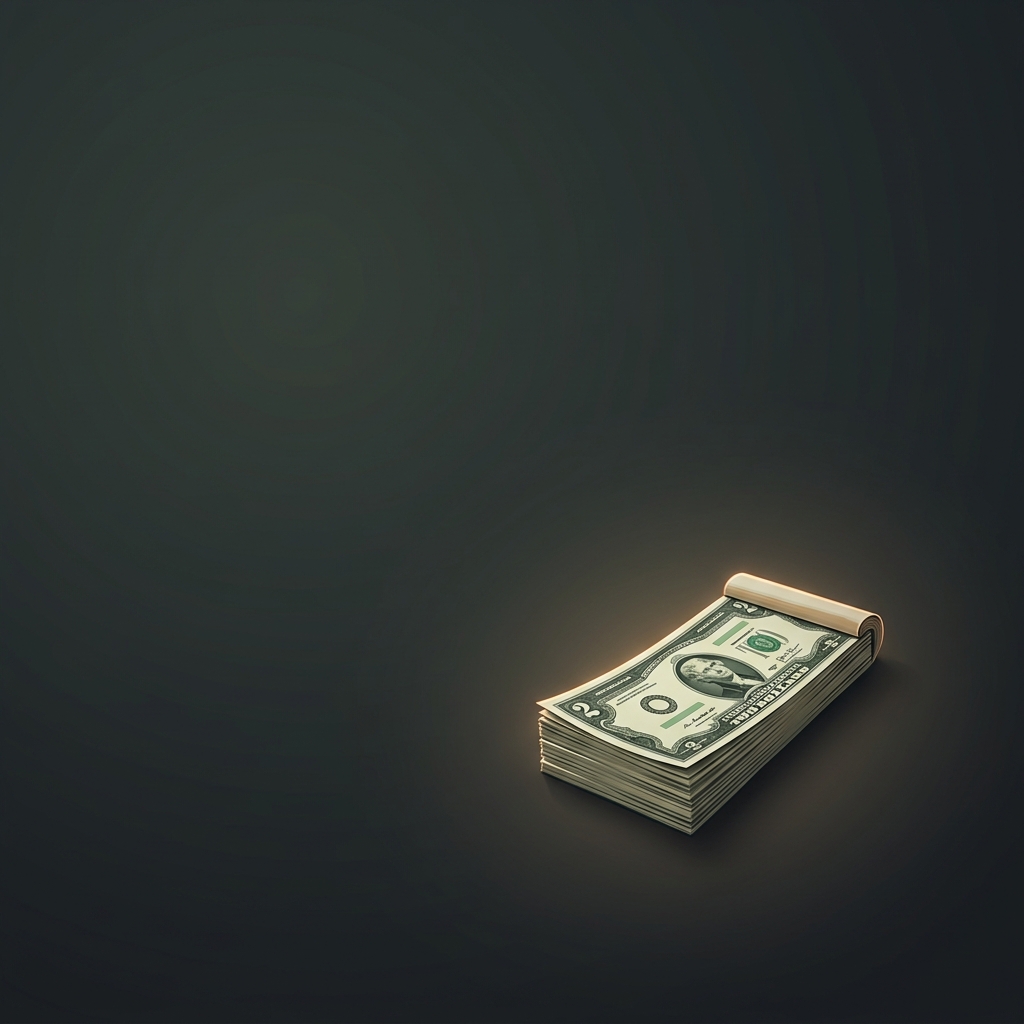
How a Sheet of $2 Bills Becomes Spendable Cash
A tear-off pad changes the presentation, not the value. The bills in Wozniak’s pads are genuine U.S. currency; perforations simply make it possible to detach one note at a time. Once separated, a bill can be handed over like any other $2 note. Its unusual appearance may invite a second look, but the payment is still ordinary money.
The Difference Between Money and Its Packaging
Cash is designed to circulate as individual notes, while a sheet of uncut bills is a novelty format. Perforating the sheet bridges those two uses: it preserves the visual surprise of a connected pad while allowing each bill to enter everyday circulation. The perforation is a practical tear line, not a feature that creates value.
That distinction matters in a transaction. A seller accepts a note because it is genuine currency and can be spent or deposited—not because it came from a pad. The sheet’s presentation may make the exchange feel like a prank, but the economic function is straightforward: one detached $2 bill pays $2.
A Small Surprise at the Point of Payment
The format turns a routine exchange into a brief moment of uncertainty: is this a homemade prop, or actual cash? The answer is visible once the note is detached and recognized as a real bill. In other words, the joke depends on the gap between how money usually arrives—one note at a time—and how this money is packaged: like stationery.