A thread turned a maze into a path
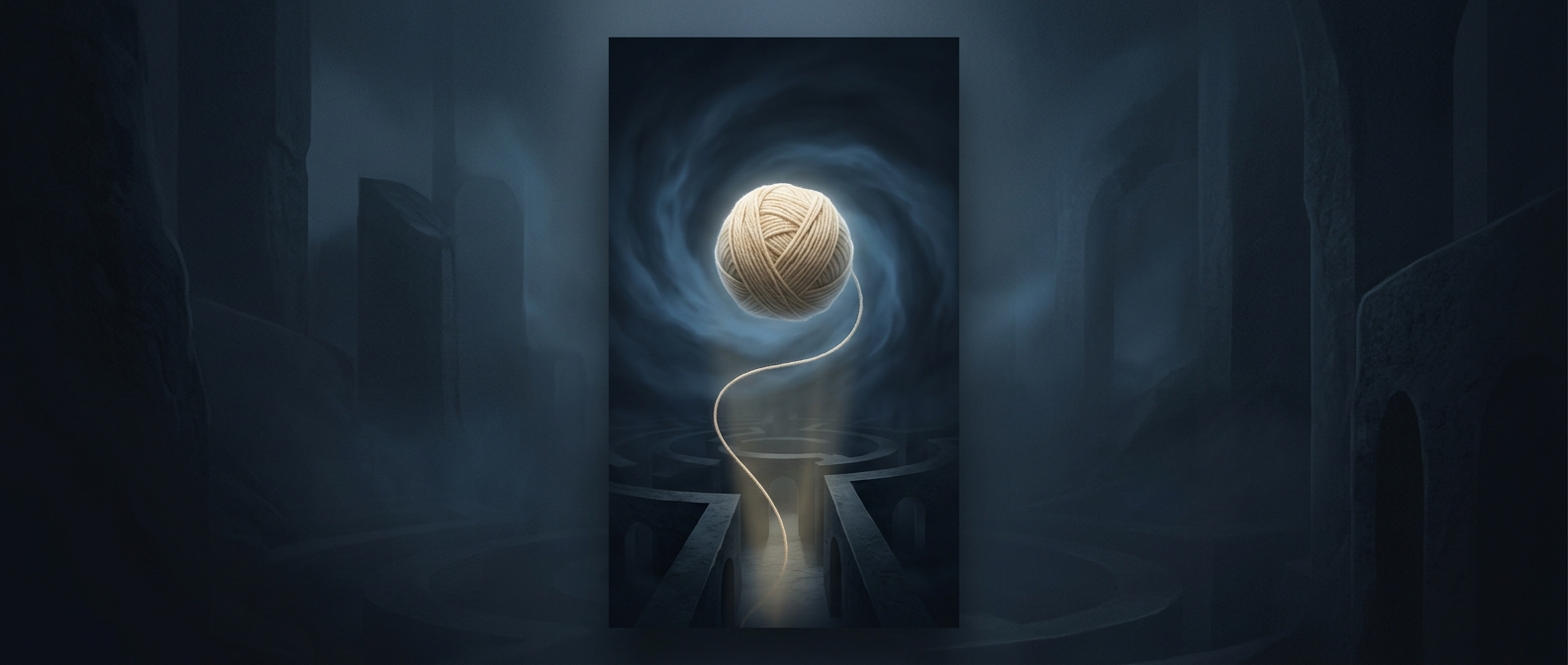
A labyrinth is dangerous not simply because its passages are confusing, but because every turn can make the way back harder to remember. In the Greek myth, Ariadne’s thread gave Theseus a continuous route through it. He could let the yarn unwind as he went in, then follow the same line back after confronting the Minotaur.
The ball mattered because it kept the thread manageable: it could pay out gradually without becoming a loose, tangled length. The thread was not a map of the labyrinth. It was a physical record of the route Theseus had actually taken.
From yarn to a way through a mystery
An old English word for a ball of yarn was clew. The name suited the object in the story, but the thread’s role also made “clew” a natural metaphor for anything that guides someone through confusion. Over time, the word’s spelling shifted to “clue,” and its meaning moved from a literal guide-line toward a hint that helps solve a problem.
That change preserves the myth’s central image. A clue does not have to reveal the whole answer; it gives you something to follow. Like Ariadne’s thread, a useful piece of evidence helps connect one step to the next—and can lead you back through a tangle to where the answer began.